

The Gospel of Jesus Christ is not private property.
The Church is not a printing press. Not a media company. Not a brand.
The Body of Christ is a Living House.
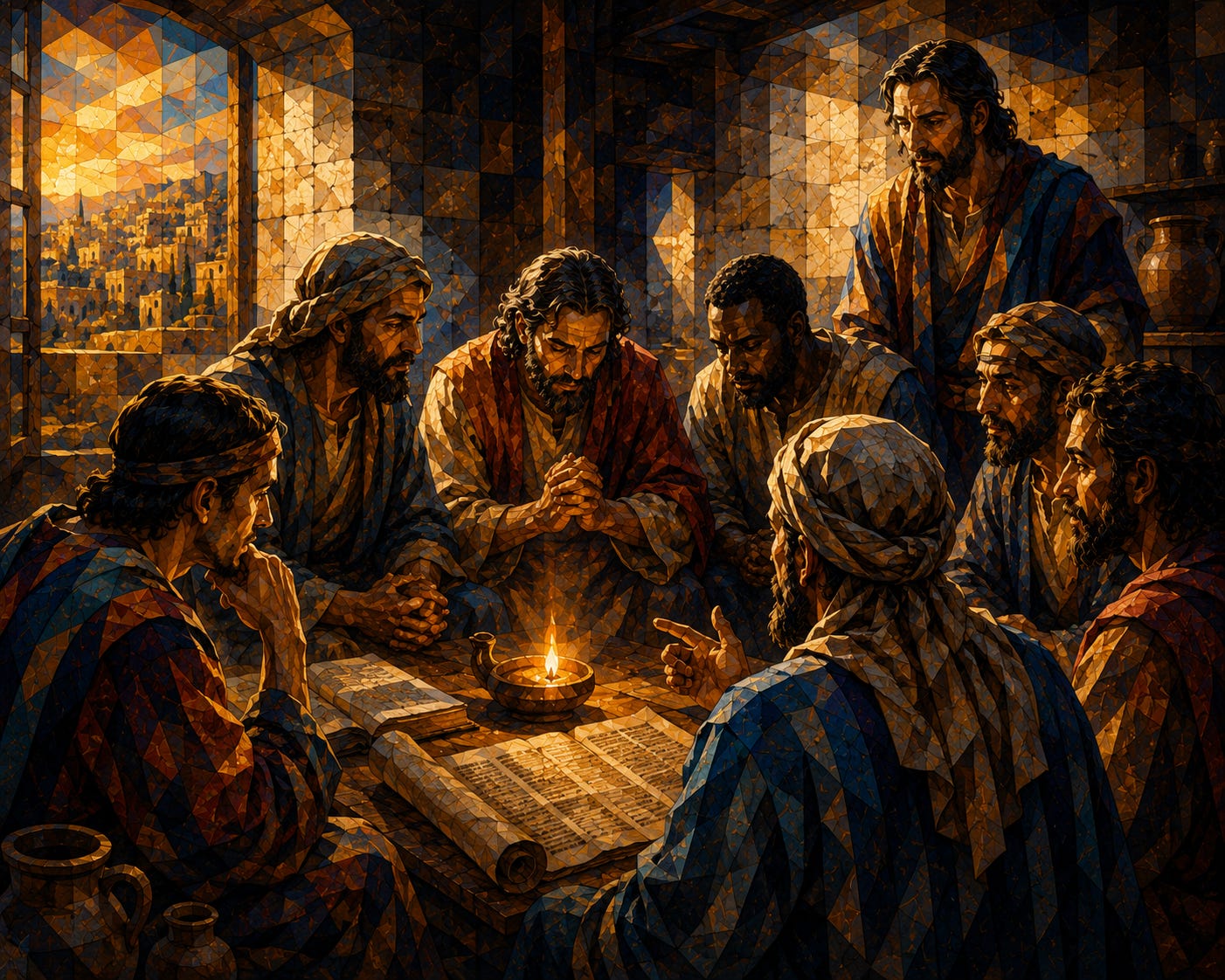
The Word is growing in Jerusalem. The Gospel has passed through persecution, martyrdom, prison, famine relief, Gentile conversion, and the death of Herod. Acts 12 ends with a king eaten by worms and the Word of God multiplying.
That contrast is not decorative. It is the architecture of history. Human kings rot. The Word runs its free course.
Barnabas and Saul return from Jerusalem, completing their ministry of relief. The famine gift has been delivered. The Jerusalem connection is intact. Antioch has received, given, learned, served, and now stands ready.
“Now in the church that was at Antioch there were certain prophets and teachers.”
Christian publishing begins with men of faith gathered to seek God’s will. They do not invent the Gospel. They receive the commission. They do not assume the authority. They ask for it.
Barnabas, Simeon Niger, Lucius of Cyrene, Manaen.
And Saul.
The Holy Spirit dwells with such men. A Levite from Cyprus, a brother with a Latin nickname that means black, a North African and an elite brought up with Herod the tetrarch, not to mention the Pharisee, the trained scholar, former persecutor and chosen vessel.
This is catholicity. The Church is already international. The Gospel gathers Jew, African, aristocrat, Levite, Cypriot, rabbi, Greek and Roman into one congregation.
Antioch is not a demographic project.
Antioch is a miracle.
A narrow church publishes narrowly. A tribal church publishes tribally. A self-protective church publishes anxiously. A church gathered by the Word across natural divisions is not bound.
“As they ministered to the Lord and fasted, the Holy Spirit said, ‘Now separate to Me Barnabas and Saul for the work to which I have called them.’”
They do not go first either to market or synagogue. They do not call a voting assembly. They do not host a planning meeting.
They minister.
They worship.
Praise before preaching. Fasting before sending. Listening before speaking.
Receiving in order to publish.
The Church does not become a publishing house by deciding it needs reach. The Church becomes a publishing house when the Word of Jesus Christ so governs its worship that the Holy Spirit presses that Word outward.
Noise is not mission. Energy is not mission. Fanfare is not mission. Fundraising is not mission.
Humans can generate endless activity and miss the mark grievously.
Antioch does not send Paul and Barnabas because they are anxious. They are not responding to a need. They are not trying to achieve anything for God. They are invested in prayer and praise of God in the Scriptures.
Then God moves.
“Separate to Me Barnabas and Saul.”
Set apart.
Not self-appointed. Not by popular vote. Not because they are eager or it is on their hearts. Because they are claimed for a work already determined by Jesus Christ.
Christian publishing is not self-expression. It is assignment.
“So, being sent out by the Holy Spirit, they went down to Seleucia, and from there they sailed to Cyprus.”
They are sent. They go.
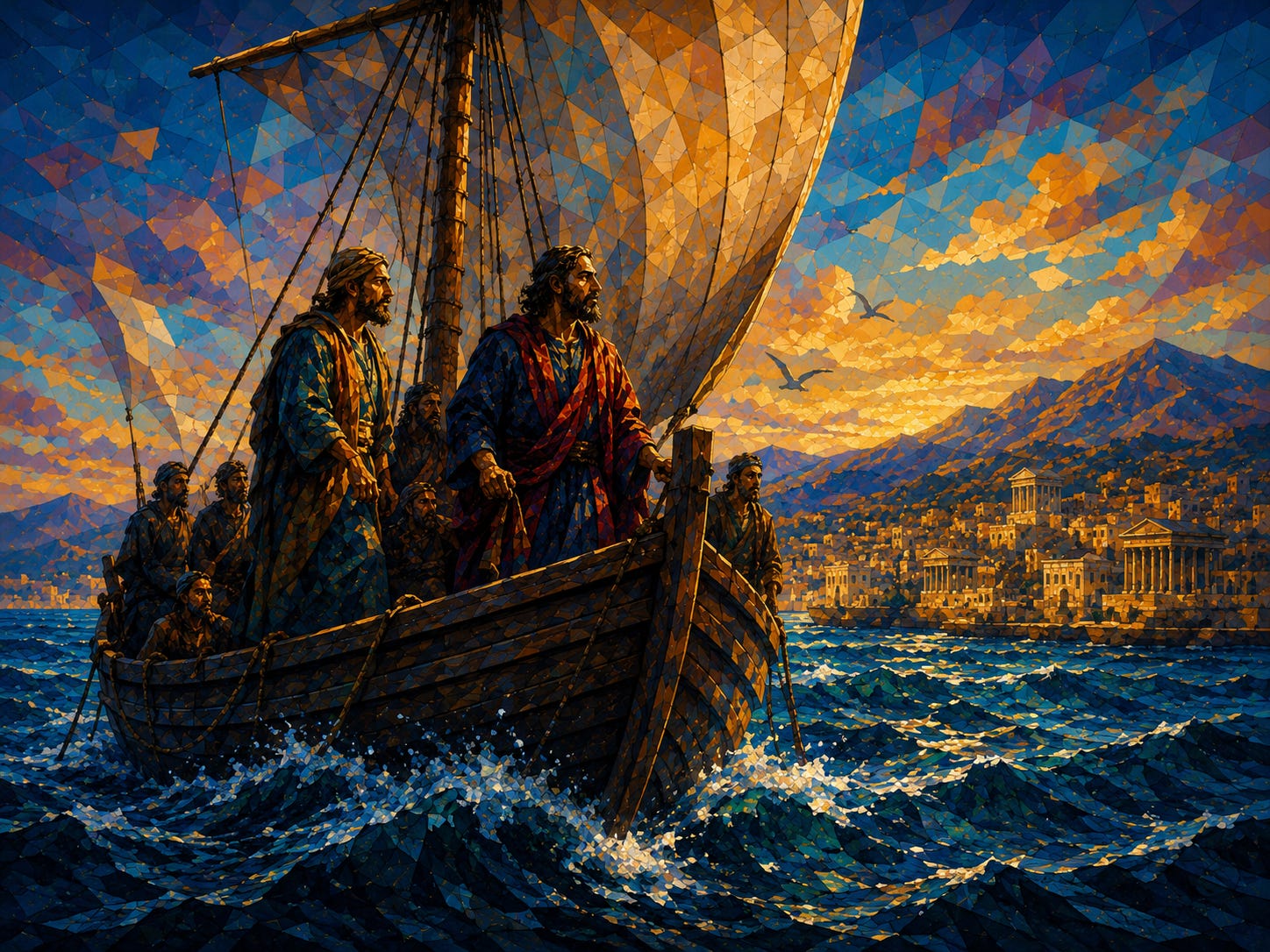
Obedience is simple. Obedience is not understanding. Understanding dawns after obedience has done its teaching work.
For Paul, this means ships will become pulpits. Roads will become arteries. Islands will become hearing rooms. Synagogues will become riots. Roman officials will become pupils. Sorcerers will be exposed.
All so that the Word of God given to Antioch may do its work of entering the public world.
To publish is to make profane. The Latin publicare means to make common, to make open, to bring into public possession. Profare means to “take it outside the temple.”
The first stop is Cyprus, Barnabas’s homeland. When they arrive at Salamis, “they preached the word of God in the synagogues of the Jews.”
The synagogue is the place where Moses and the Prophets are already heard. The missionaries begin where the vocabulary of promise already exists. They do not begin with novelty. They begin with fulfillment. They publish what is already written in order to proclaim what has now been revealed.
The Christian publisher is not a guru. He is not an influencer nor spiritual entrepreneur. He is a herald. He announces the King’s decree. He bears witness to the crucified and risen Jesus. He opens the Scriptures and says, “This is that.”
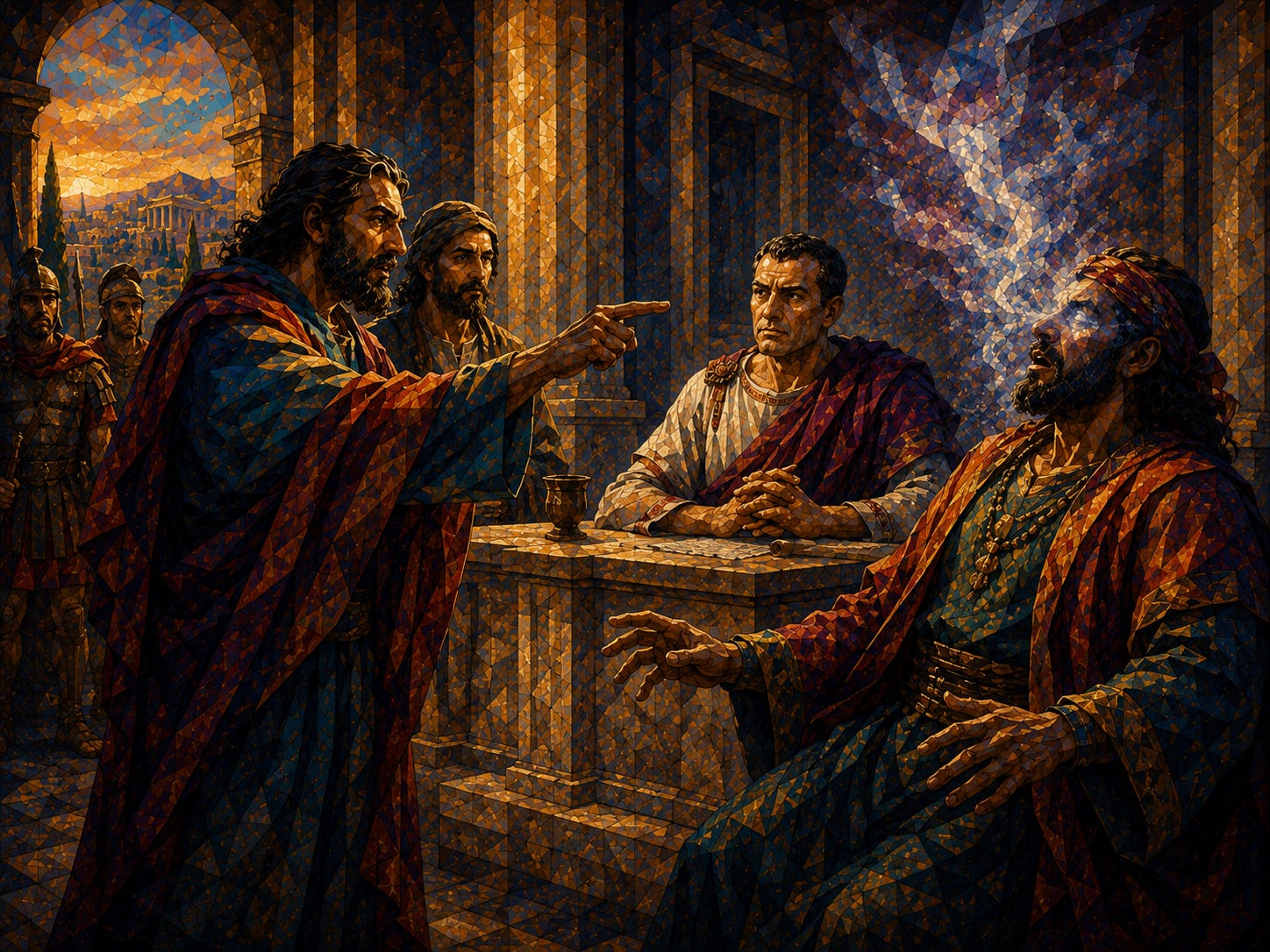
From Salamis they pass through the island to Paphos. There the mission reaches the court of Sergius Paulus, the proconsul. Luke calls him an intelligent man. He summons Barnabas and Saul and seeks to hear the Word of God. He does not seem to be looking for a miracle, but he is about to get one.
“But Elymas the sorcerer withstood them, seeking to turn the proconsul away from the faith.”
It is the law of sin that when we want to do good, evil is right there close at hand. So also, it is a fact: whenever the Word approaches public authority, counterfeit words will rise up and react.
Elymas, which means something like “Great Wise One,” is also called Bar-Jesus, or “Son of Salvation.” Luke tells us he is a Jew, a false prophet, and a magician. He has religious vocabulary, spiritual reputation, and access to power. He is not outside the court shouting from the street. He is inside, near the ear of the one who matters.
This is how falsehood works. It embeds itself near power. It becomes advisory. It learns the signs of wisdom. It does not always deny religion or shout folly. Often it mimics light while casting shadow from the corners.
Paul does not treat this as a sincere disagreement.
Filled with the Holy Spirit, he says, “O full of all deceit and all fraud, you son of the devil, you enemy of all righteousness, will you not cease perverting the straight ways of the Lord?”
The contrast is absolute. Bar-Jesus by name. Son of the devil by truth.
Paul is not being mean. Paul names the thing according to its nature. Elymas is not just confused, not “a bit deceived,” or “somewhat ignorant.” He is actively turning away from the Word. He is perverting the straight ways of the Lord and causing others to do likewise.
Paul’s advocacy is not a carte blanche freedom for Christians everywhere to embark on campaigns of holy name calling. There is a time to teach patiently. There is a time to answer objections. There is a time to reason from the Scriptures.
But there is also a time to stop pretending that sabotage is dialogue.
Arguing with the devil is the definition of losing.
Paul exposes him.
Then comes the apostolic judgment: “And now, indeed, the hand of the Lord is upon you, and you shall be blind, not seeing the sun for a time.”
Immediately mist falls on the sorcerer, and he wanders about seeking someone’s hand. The man who blinded others is now exposed as blind himself. The one who perverted the straight path must now grope for a way.
“Then the proconsul believed, when he saw what had been done, being astonished at the teaching of the Lord.”
The powerful man believed when he saw, but he was also astonished at what he heard. This is crucial. The miracle cleared the road. The teaching carried the King.
Signs do not substitute for God’s Word. Signs serve. Wonders vindicate. Judgment protects the Word. But faith comes by hearing the Gospel of Jesus Christ: His death for sinners, His resurrection from the dead, His enthronement at the right hand of the Father, His present reign, His coming judgment, His forgiveness, His Baptism, His Supper, His kingdom.
Publication requires confrontation. Not every opponent is a seeker. Not every objection is honest. Not every spiritual figure is merely another perspective. Some voices exist to turn men away from the faith.
This does not mean becoming reckless, cruel, or theatrical. Paul is not posturing. The authority is not his temper. The goal is not humiliation as entertainment. The purpose is for Sergius Paulus to hear the teaching of Jesus without obstruction.
Remove the fog.
Paul and his party sail from Paphos to Perga in Pamphylia. There John Mark departs from them and returns to Jerusalem. Luke gives the fact without drama, but the later conflict between Paul and Barnabas shows that this departure mattered. Mark’s leaving was not treated as a small scheduling adjustment. It became a real wound in the missionary work.
Luke does not airbrush this. The Holy Spirit sends Paul and Barnabas. They take along John Mark.
The Word triumphs. A proconsul believes. A false prophet is judged. And still, the unsent one leaves.
Was Mark’s departure a failure? It is surely not the end of the story. Paul’s later restoration of Mark proves that. Yet the mission is greater than the missionary. The Word is greater than the worker.
Being sent is the thing which sustains.
That is another law of Christian publishing. Men will tire. Men will fear. Men will leave. Men will quarrel. Men will later be restored. But the Word of God continues.
We must remember, thereby, two kinds of faithfulness.
We must care for the weak, and we must not let weakness halt us.
We must publish from worship. We must call men to publish. We must publish the Word, not dreams. We must publish to the world that is, not the world as we would like it to be. We must publish from faith for faith, despite attrition, against great opposition, and until the tree is so brown there is no more voice nor paper left.
We are Antioch now.
Everyone is publishing. Every phone is a press. Every man broadcasts. Any fool can have a following of two or three. Every lucky Dick can wear the headdress of popularity.
The answer is not a battle between maintenance and mission.
The answer is publishing.
Worship like Antioch. Pray like Lucius and Simon. Fast, if you will, like Barnabas.
Then speak.
For whom He foreknew, He also predestined to be conformed to the image of His Son, that He might be the firstborn among many brethren.
Moreover whom He predestined, these He also called; whom He called, these He also justified; and whom He justified, these He also glorified.

I liked the entire article. Especially your highlight that understanding develops as obedience fuels it. That is a point in Jesus’s dialogue with Judas (not Iscariot) in John 14.