

When Alexander the Great stood over Diogenes of Sinope, he met a man who could not be leveraged. No wealth to tempt him. No status to threaten. No fear to press.
The most dangerous man in the world met a Stoic, and all the philosopher would say to him was, “Get out of my light.”
To this insult, Alexander smiled and then announced to all around, “If I could not be Alexander, I would be Diogenes.”
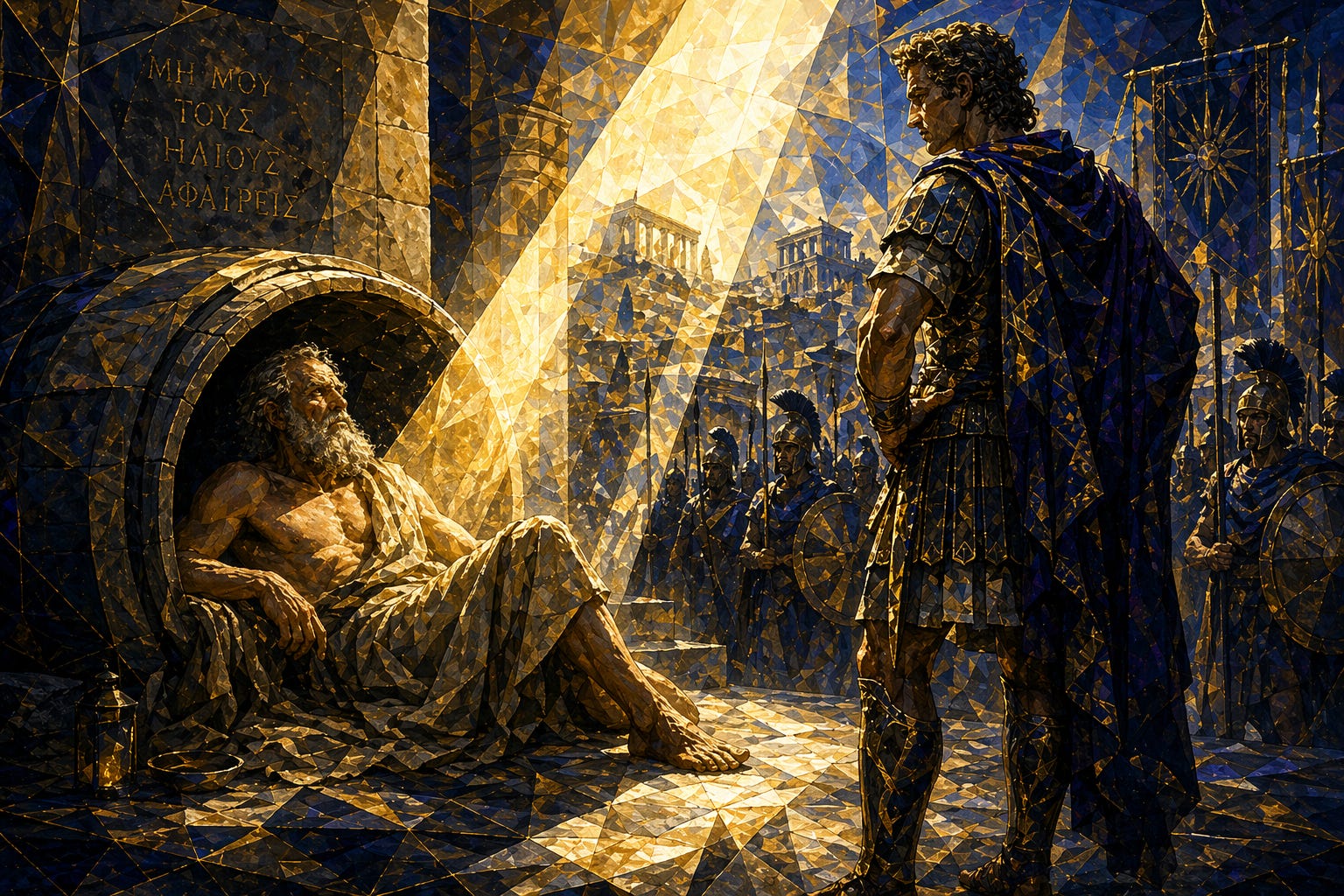
Most men bend because they have something to lose. Diogenes removed the category. Alexander recognized it immediately. Not because he wanted to live in a barrel, but because he understood the freedom that comes when a man cannot be coerced.
This is not poverty as deprivation. It is poverty as weapon. A stripping-down so severe that the world loses its grip. And that is why Stoicism still matters. It is not about squalor. It is about sovereignty of spirit.
What the Beggars Tried to Build
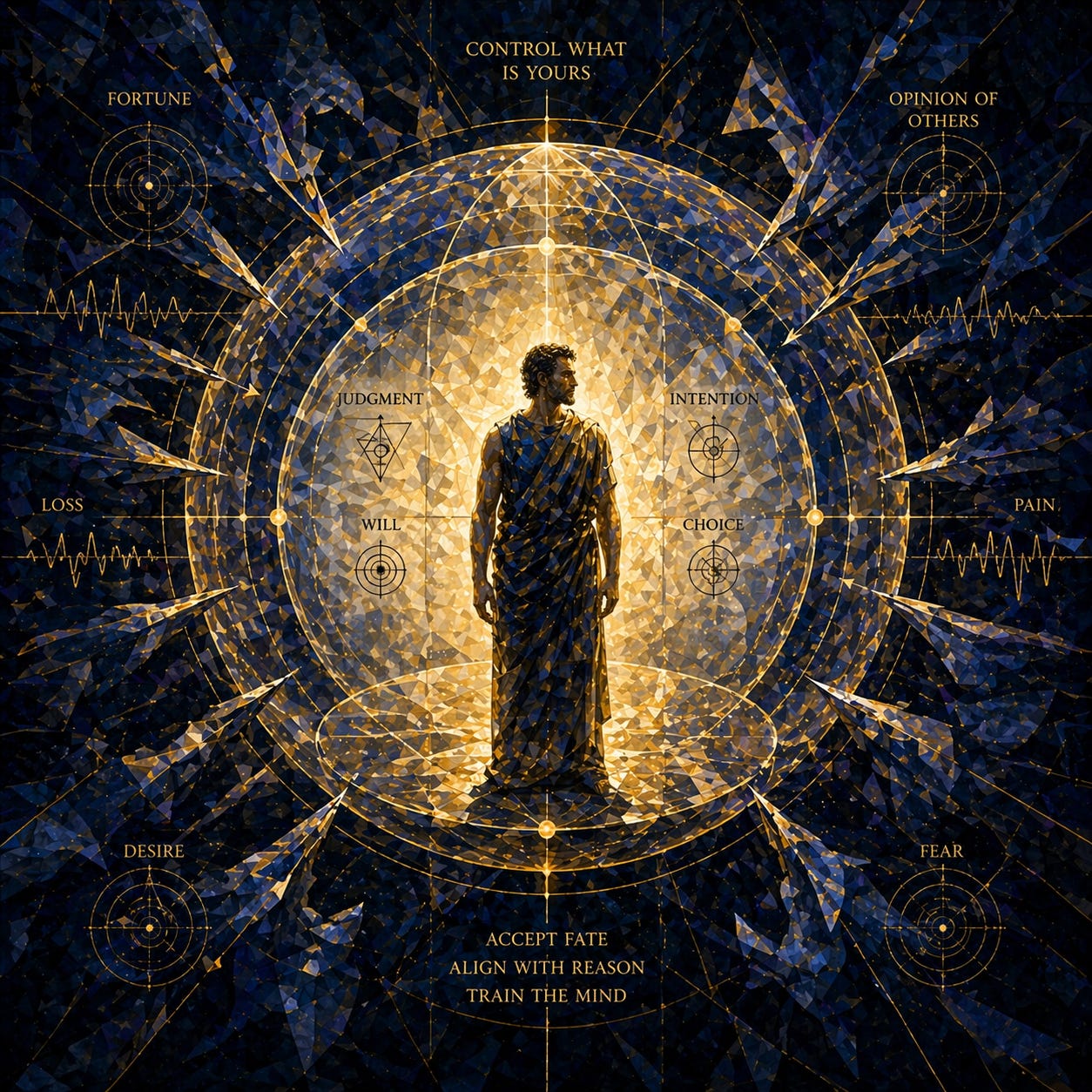
The later Stoics—Epictetus, Seneca, Marcus Aurelius—saw the same problem and systematized a response. Their move was not to discard the world, but to classify it.
Control what is yours; release what is not
Accept fate; align with reason
Train the mind to remain undisturbed
The Stoic man is internally fortified. He does not need the barrel. He can stand in a palace and still be free.
This is why Stoicism has returned. It translates well into modern pressure: uncertainty, volatility, loss of control. It offers a clean proposition—stability without dependence.
Online, it has become a stripped-down doctrine: endure; detach; discipline; do not react.
It promises a man who cannot be shaken.
Where Stoicism Stops
Stoicism achieves something real. It breaks the tyranny of circumstance. It produces men who can endure war, loss, exile, betrayal, and still stand. But it does so by narrowing the field.
The Stoic solution depends on reducing the weight of the external world. If nothing outside you ultimately matters, then nothing outside you can destroy you. The Stoic becomes immovable by redefining the stakes.
That may be a fair trade, but it is a trade nonetheless. It is a philosophy of interior control, not ultimate truth. It does not solve the question of judgment. It sidesteps it.
The Christian Face
Christianity does not permit such crass reductionism.
It agrees on one point: fear of man is bondage. Wealth cannot save. Status is vapor. The one who stands before kings without trembling has already stepped outside the system of control.
But Christianity stands directly on the question that Stoicism leaves unresolved. There is judgment. Not abstract. Not metaphorical. Not dissolvable through mental discipline.
God’s wrath is coming.
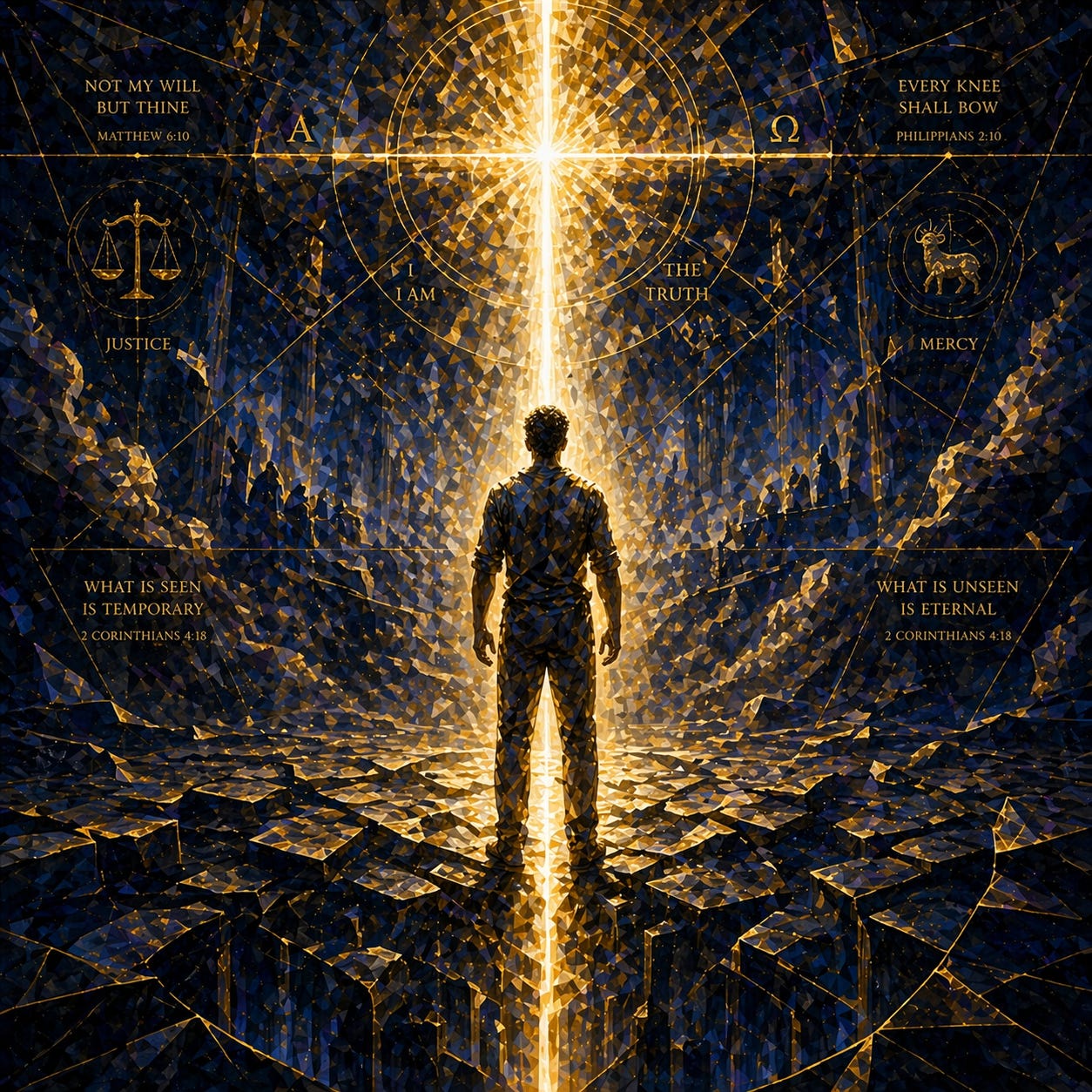
Christianity does not say, “Reduce the importance of externals.” It says: the externals will be judged, and so will you. That changes everything. Because now the goal is not detachment from consequence. It is alignment with truth before a living Judge.
The Limit of Fearlessness
Diogenes stands before Alexander without fear. That is real. That is rare. But his fearlessness is grounded in dismissal. He is, in the end, a scoffer.
If death comes, it comes. If power crushes him, so be it. He has already decided it does not matter. But that is not peace. That is abandonment.
Christianity does not allow this conclusion. Death matters. Justice matters. What is done in the body matters. What is loved, chosen, rejected—all of it stands.
The difference is not subtle. It is absolute. Stoicism removes fear by lowering the value of what can be taken. Christianity removes fear by anchoring the man beyond what can be taken, and then raising the stakes of what cannot be escaped.
Alexander’s Insight
Alexander saw in Diogenes what he himself pursued through conquest: a state where nothing external dictates the man. He sought it through expansion. Diogenes through subtraction. Both aimed at the same target: invulnerability. But neither system answers the final court.
Alexander dies. Diogenes dies. Their immunity to one another does not grant immunity to what stands above both.
Modern Stoicism functions as a survival tool. It trains composure. It cuts emotional excess. It stabilizes men in chaos. In a culture of volatility, it feels like bedrock. But it often arrives amputated:
Discipline without truth
Detachment without love
Endurance without judgment
It becomes a way to feel unshakable without asking whether one stands rightly. It offers strength without submission. It spreads like gangrene rather than like wildflowers.
Christ: a New Center
The Christian man is not called to be unfeeling, nor merely unshaken. He is called to stand. Not because nothing matters, but because everything does. He does not fear Alexander. He does not worship comfort. He does not cling to life as ultimate.
But he does not dismiss judgment. He lives before it. And that produces a different kind of immovability. Not the stillness of reduction, but the stillness of alignment.
To be Diogenes is to become ungovernable by the world. To be Stoic is to become untroubled by the world. To be Christian is to stand rightly before the One who governs it.
The first two can make a man formidable. Only the third answers the final question.
Because the sunlight is real. The empire is real. Alexander’s sword is real.
And none of them get the last word.

Brilliantly thought through and expressed. Thanks.
Great writing ...reminded me of Colossians 3:1-4.