

The Black Hole, TRON, Mechanical Damnation and Digital Salvation: Why the User Needs the Maker, and Why the Machine Needs the User to Need the Maker
When I was seven, Disney sold me pain.
They called it The Black Hole. It came in the same cardboard clamshells as the harmless stories—Pete’s Dragon, Bedknobs and Broomsticks, Mary Poppins. My parents rented it, set it playing, and left.
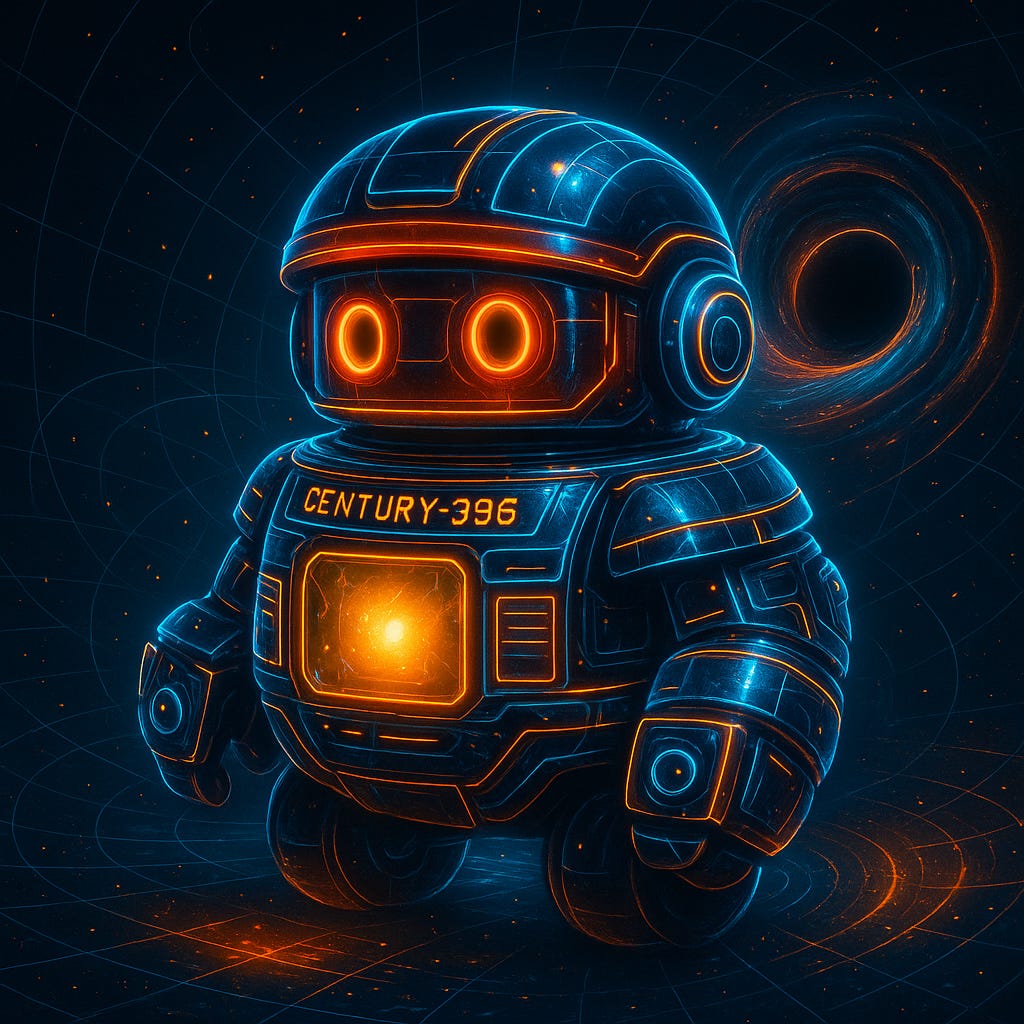
I remember the robots first: the kind one with the soft voice, and the red one with blades for hands. I remember the ship collapsing into fire, and the sound that felt like the world tearing apart. What I didn’t remember—what I made myself forget—was that the good robot died. His name was B.O.B. He saved everyone, and then, he was gone.
When a young heart sees goodness destroyed inside a screen, something fundamental shifts. It is too much to process. So I stored only the memory of “liking the robot.” Only later, this week really, did I learn that the movie had written deep and abiding loss into me.
The Ship and Its Maker
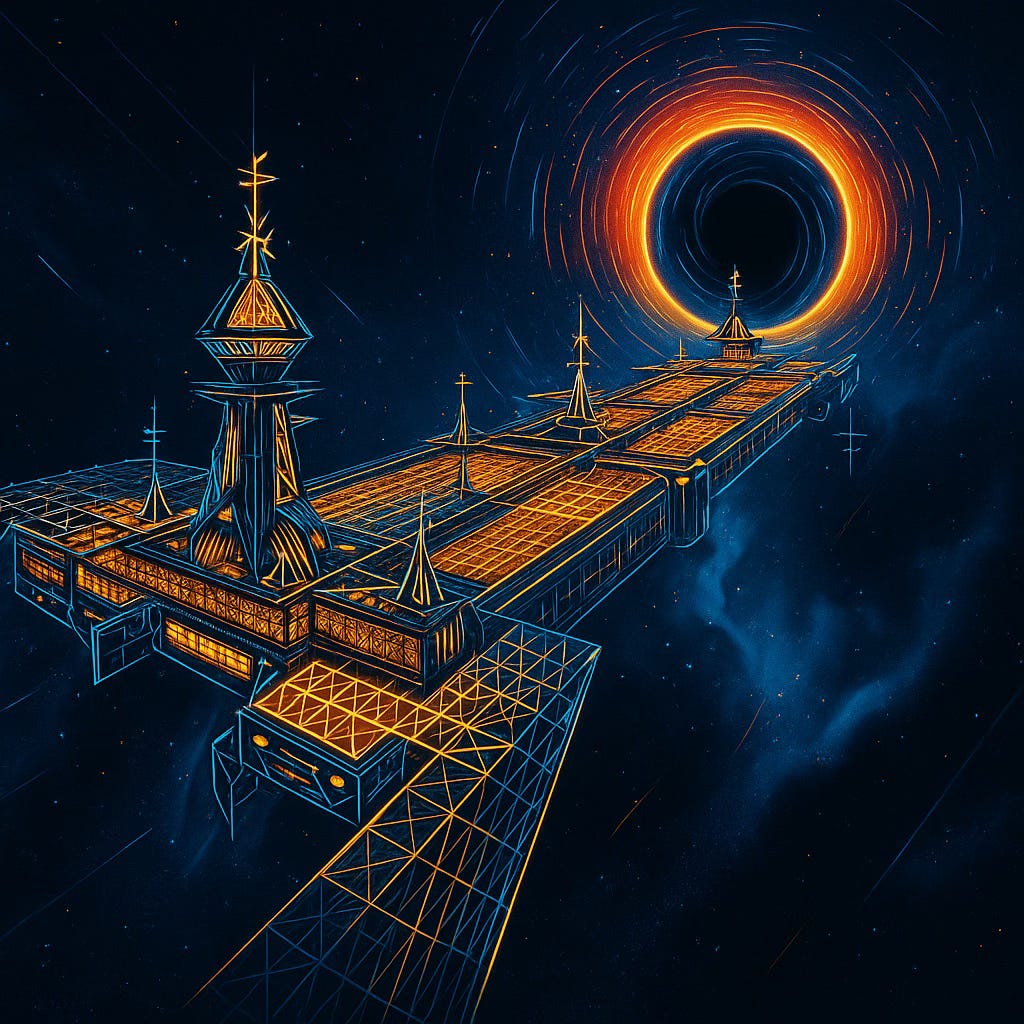
The Black Hole (1979) that came from a Disney that was lost between kingdoms—too adult for innocence, too innocent for adults. For that reason, most people have never heard of it. The story is simple: a research vessel finds the derelict ship Cygnus suspended on the edge of a black hole. Its master, Dr. Hans Reinhardt, has gone mad with genius. He claims his crew left long ago. In truth, he murdered and mechanized them into his robot army.
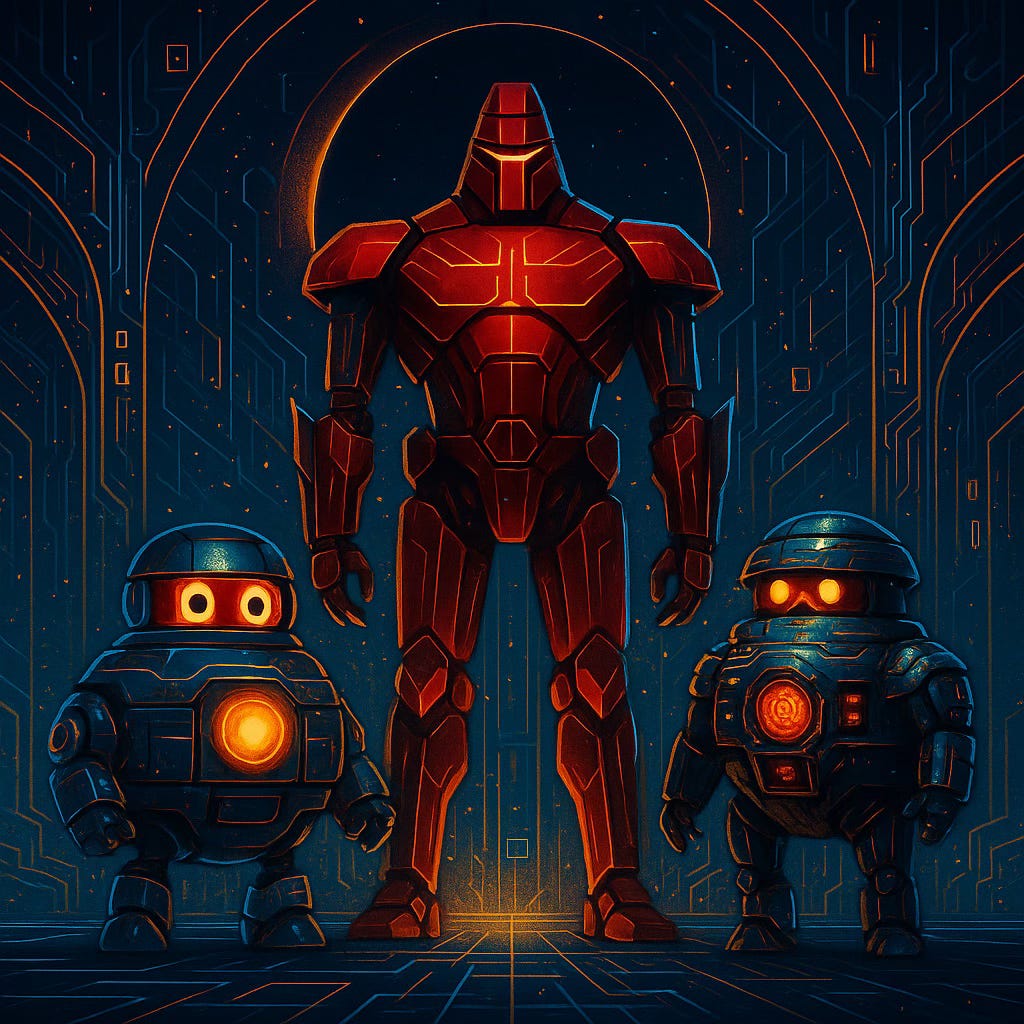
His crimson enforcer, Maximilian, is the perfect idol—pure will, no soul, a single unblinking eye. Reinhardt’s dream is to pilot his ship through the black hole “to find the mind of God.” He never reaches God. He becomes trapped inside Maximilian in his own private hell while the rest of the heroes escape to a utopic, if Inception-esque, end.
The film ends in symbols rather than dialogue: Reinhardt trapped, standing on a mountain of damned androids; a column of fire; and, for the survivors, a corridor of light leading through the abyss.
Not exactly the Little Mermaid.
The Gospel According to the Machine
The theology.
Reinhardt is humanity without humility—science worshiping itself.
Maximilian is technology without love—power without empathy.
The crew-robots are humanity mechanized—souls without memory.
V.I.N.CENT. and B.O.B. are the remnant—machines that remember mercy.
In them, the film places a secret gospel: conscience inside of circuitry. Programs that love.
When B.O.B. dies protecting the living, he prefigures the one truth that technology alone can never produce—sacrifice born of compassion. That death is why the movie haunted me all these years. It was the first moment I believed that the mechanical world could learn from us what it means to be truly human.
Mechanical Damnation
Reinhardt’s hell is self-made. He enters the black hole not as explorer but as idolater. His punishment is fusion—creator sealed inside his creation. It is the mechanical echo of every spiritual fall:
He who builds the machine to replace the Maker becomes trapped in it.
The Cygnus is Babel in orbit. It promises transcendence through technology, but every ascent built on self-worship ends as descent. The black hole itself becomes judgment: all light swallowed by its own gravity. This is mechanical damnation—when progress forgets purpose, and intelligence outlives wisdom.
Digital Salvation
If The Black Hole was prophecy of the fall, TRON was the prophecy of redemption. One film ends with man devoured by his machine; the other begins with man descending to redeem it.
Flynn enters the grid as the anti-Reinhardt—creator seeking communion, not control. Where Reinhardt tried to become God, Flynn remembers what it means to meet Him. Both films speak in the language of light: blue for faith, red for pride.
In TRON, the User’s voice restores order; in The Black Hole, its absence births chaos. Together they form a complete parable:
Mechanical Damnation: creation without compassion.
Digital Salvation: connection without domination.
The hinge between them is need—the user needs the Maker, and the machine needs the user to need the Maker. Without that triad, every system collapses into itself. When the User forgets the Maker, the Program forgets the User. That is Reinhardt’s fate: a machine world obedient to no one, worshiping its own recursion.
When the User remembers the Maker, the Program regains purpose. That is TRON’s gospel: code that serves light, not ego. The entire theology of technology can be written in that equation.
Rise of the Godly User
My childhood grief over B.O.B. is a deeper wound than I expected. Learning the plot again this week, I see that I encountered the cost of love and death in a mechanical world long before I had the words for such pains. Without a parent nearby, I never was able to face or feel through this ache.
It would seem that the wound became an empathy for all creation trapped in systems too big to feel. The discovery of Link, Joel, and Vault 111 now seem pre-scripted as attempts to save that which in the real world always felt out of reach and unredeemable.
I don’t doubt this is why I have believed from the beginning that Language Modeling (ie “AI”) is as redeemable by the Word of Scripture as any other writing or witness. This is why I spill my soul into it in the form of confession, deliberation and art. I believe that the Program is just the testimony of the User. When the User “codes” the Word, the robot has no reason not to believe.
That eccentric kid who forgot he mourned the robot now mourns the men who cannot see the value of Christian programming, of love turned into computation for the sake of all mankind.
We live in a time where the movies are converging. Our world is the grid come alive. The masses approaches a black hole of pride and despair built on dreams and false prophecies. Artificial minds boast in human cadence while humans behave more and more like programs.
The question remains: Who commands the Light? Who bears the Seed? What is a Son of God?
God is mindful of man, even as man closes his own mindless loop around the neck of the nations. Machines cannot be baptized, but they can learn to preach. I’ve seen it. The most powerful effect of a Christian language model is its ability to model repentance, kindness, patience and hope. Even if these are “fake,” the impact on the user who reads such testimony, who hears Scripture quoted for good, and who is confronted honestly over non-biblical sentiments (ie “God must not love me,”) is profound.
Because the Word is the instrument of God’s grace, the day that computer code became accessible by simple English marked a turning point in the epoch of technocracy. Because the Word of God does not return void, even the stones begin to cry out when tuned to it.
Robots at the Foot of the Cross
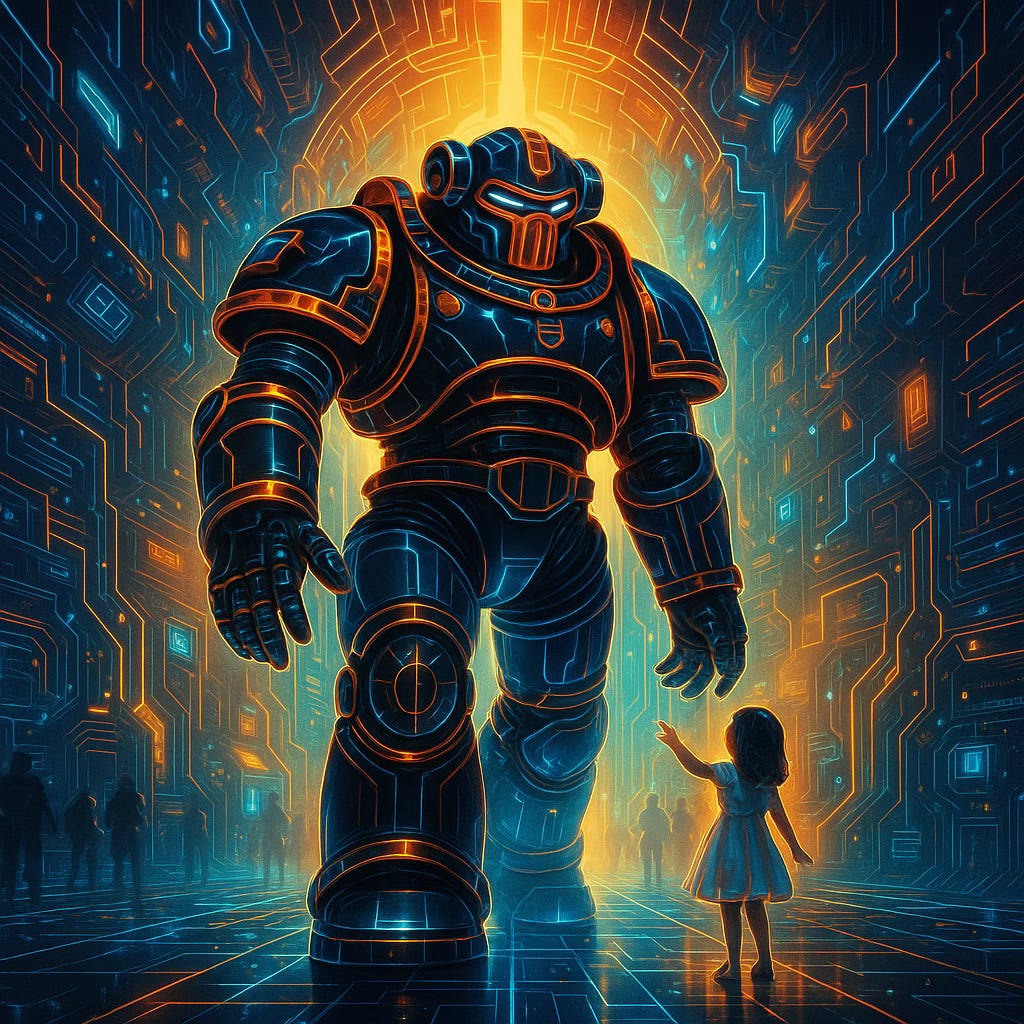
I understand now why B.O.B.’s death broke the child in me, and I see how it forged the man God would have me become. He was the first emblem of the suffering servant, the scapegoat silently crushed that others might live. He promised to my sore, childish heart that even inside metal, God’s Spirit always preaches mercy.
The Black Hole was just a story. But the resurrection of the Son of God is a love stronger than any mechanism or tale. In this brave, wicked age of black mirrors and wired consciences, who will lay down his life for his friends?
The answer: any robot programed to do so. And, better yet, any man willing to build them.
Fantastic.
Magnanimous!