

Living in the End of Days
Jeremiah 51 is a chapter of prophetic repetition.
Not because the prophet has run out of things to say. It is a siege. The Word of God circles Babylon as an army circles a doomed city: horn, trumpet, breach, fire, collapse, silence.
The repetition is not padding. The repetition is the form of the judgment.
Too large for one image.
Babylon must be judged as city, empire, idol-system, mountain, hammer, dragon, sea, cup, furnace, prison-house, and corpse.
Each pass exposes another layer of the same beast. Each return closes another gate of illusion. Each renewed sentence presses one truth into the soul of the hearer: Babylon will fall.
This matters because Babylon’s strongest power is not its army. Babylon’s strongest power is its appearance of permanence. When an order becomes large enough, wealthy enough, violent enough, technological enough, and bureaucratic enough, men stop treating it as a temporary arrangement and begin treating it as fate. The moment masquerades as eternity. The system becomes the horizon. The city becomes the world.
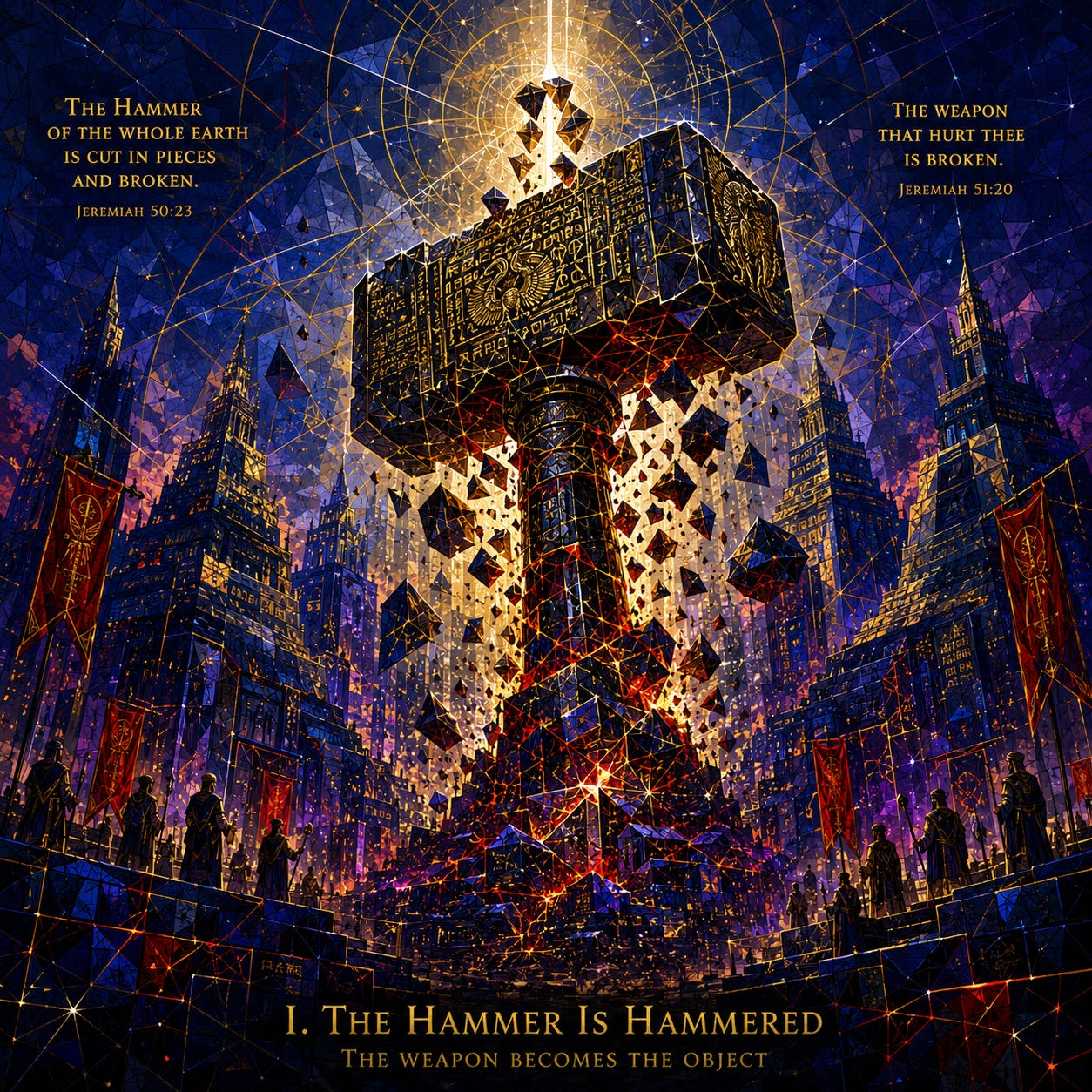
Jeremiah 51 breaks that enchantment.
Babylon had been the hammer of the whole earth. She shattered nations. She swallowed Jerusalem. She devoured inheritances, memories, temples, sons, daughters, languages, and kings. Yet the hammer was never the hand. Babylon was an instrument, not the Lord. Her authority was borrowed. Her violence was permitted. Her hour was measured.
The hammer is hammered
The weapon becomes the object. The conqueror becomes the spoil. The empire that judged others is judged. The furnace that refined Judah is thrown into the fire. Babylon’s mistake was not merely cruelty. Her deeper mistake was ontological. She mistook temporary instrumentality for ultimate sovereignty.
That is always the Babylonian error.
Babylon is more than a historical city on the Euphrates. It is an order of reality. It is man organized without the fear of God. It is power enthroned as destiny, wealth treated as sacrament, violence baptized as necessity, image-making elevated above truth, and technique trusted as salvation. Babylon is the city of human reach without repentance.
The prophetic imagination does not treat nations as secular machinery. Nations are moral bodies. They have liturgies, appetites, myths, idols, economies, habits, songs, spectacles, and forms of worship. Babylon’s politics cannot be separated from Babylon’s theology. Her empire stands because her idols lie.
This is why Jeremiah mocks the craftsman and the molten image. This is the engine-room of the oracle. Idolatry allows the empire to imagine itself ultimate. The idol is dead matter pretending to mediate life. Babylon is dead power pretending to mediate order. Both are made things demanding worship.
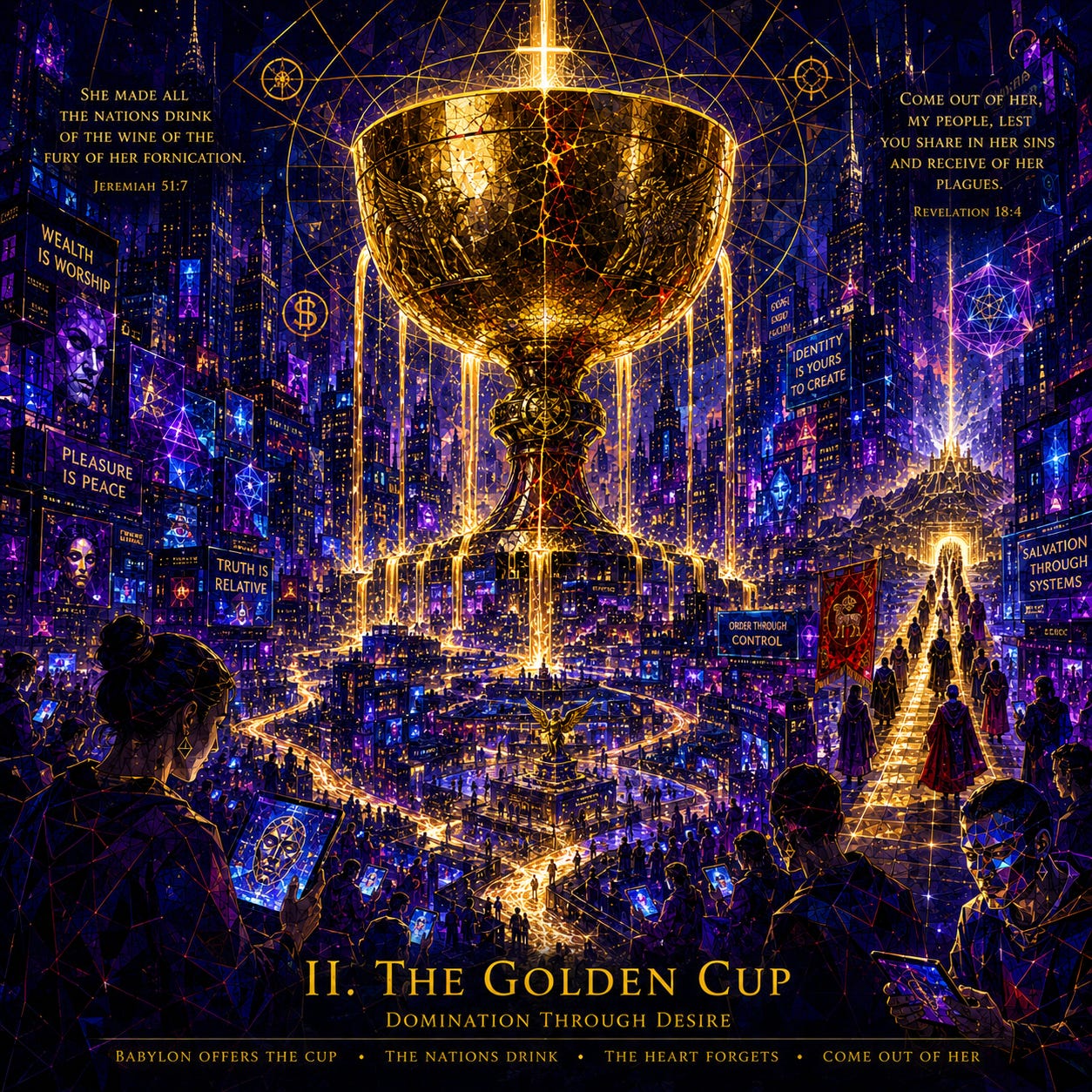
Babylon is appetite.
She devours Jacob. She swallows Jerusalem. She is empire as digestion. Babylon does not merely govern. She consumes. She fills herself by emptying others. She eats people, cities, temples, inheritances, and names. The beast appears full because others have been made hollow.
Then Babylon is shown as intoxication. She is a golden cup making the nations drunk. This image is crucial. Babylon does not only coerce; she seduces. The sword can command the body, but intoxication captures the judgment. Babylon makes domination feel like wisdom, luxury feel like blessing, propaganda feel like knowledge, and spiritual numbness feel like peace.
That is why the call to flee is repeated. “Come out” is not first geography. It is worship. It is the refusal to participate in the doomed city’s sacramental system. It is the refusal to let survival become complicity. It is the refusal to inherit Babylon’s plagues by sharing Babylon’s sins.
Little has change.
The Tower of Babel was never abandoned. It was digitized.
Modern Babylon does not need brick walls when it has networks, screens, markets, credentials, legal fictions, therapeutic vocabularies, entertainment liturgies, surveillance appetites, institutional cowardice, financial sorcery, sexual confusion, and endless image-production. She does not always march. Often she hums. She glows.
She scrolls.
She offers convenience in exchange for worship.
The spirit of the age is Babylonian wherever men believe they can secure heaven by technique, identity by self-creation, unity by coercion, peace by managed speech, and salvation by system.
This is not a simplistic map onto one nation, one party, or one institution. Babylon is larger than that. Babylon is the recurring world-order that organizes human life against the Lamb while demanding to be called necessary, compassionate, scientific, inevitable, and safe.
Break the spell.
Jesus Christ is not impressed by scale. He is not delayed by bureaucracy. He is not dazzled by wealth. He is not frightened by technological reach. He is not manipulated by propaganda. He does not confuse institutional mass with sovereignty. He names Babylon while Babylon still looks immortal.
The end of the chapter makes this visible. Jeremiah commands that the scroll of judgment be read, tied to a stone, and thrown into the Euphrates. The Word becomes action. The prophecy is performed. “Thus Babylon shall sink.” The city’s end is enacted before the city believes it can end.
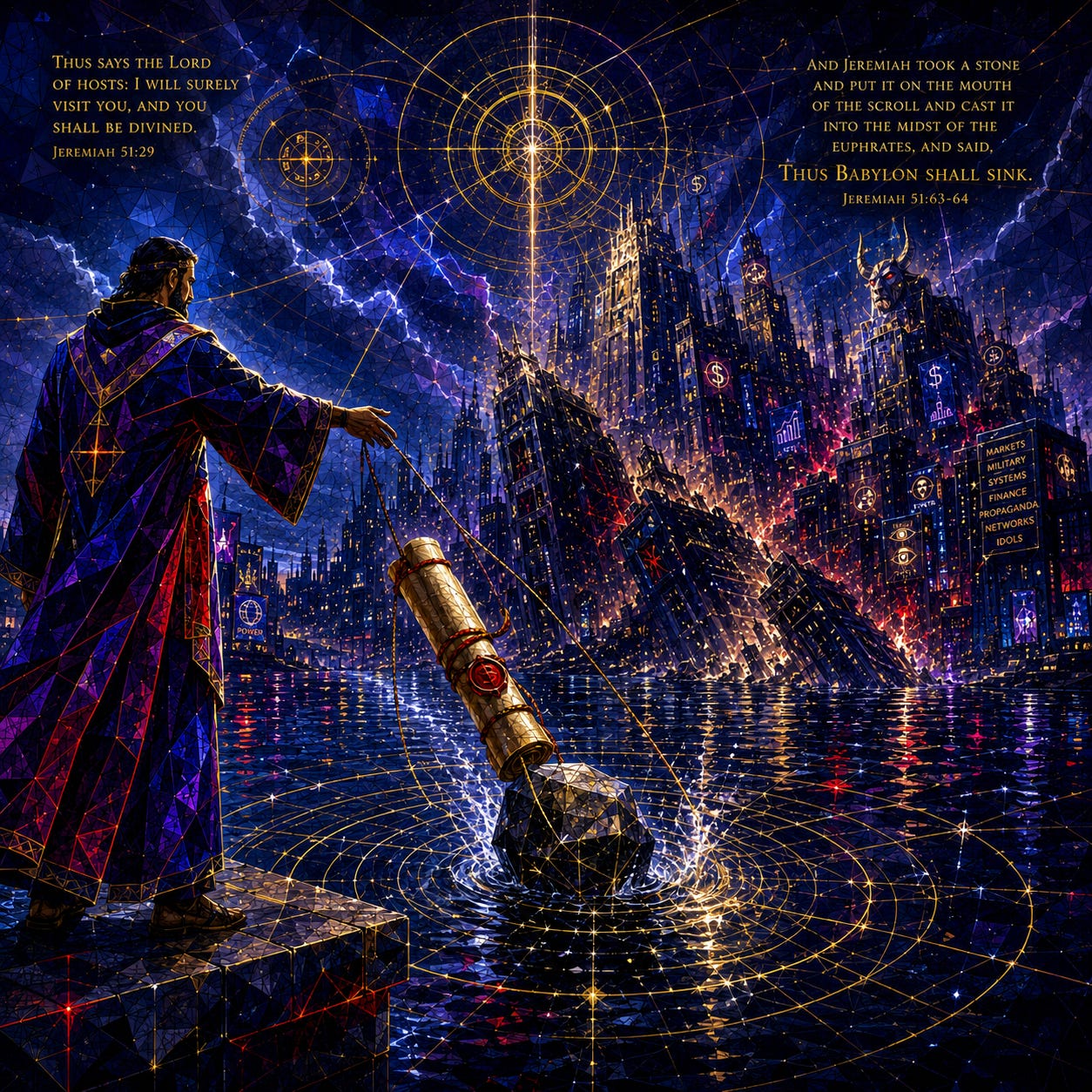
That is biblical eschatology at ground level. The end of days is not merely a calendar puzzle. It is the unveiling of rival cities: Zion and Babylon, Bride and harlot, Lamb and beast, Word and image, worship and sorcery, covenant and consumption.
Babylon falls because Jesus Christ reigns.
That is the center. Not Babylon’s greatness. Not Judah’s suffering. Not the nations’ confusion. Not the machinery of empire. Jesus Christ reigns, and therefore every false city already carries the sentence of collapse in its foundations.
Jeremiah 51 does not invite panic. It creates sobriety. It teaches we people of God to recognize the golden cup, refuse the idol, endure the beast, remember Zion, and believe the Word more than the visible permanence of the age.
Babylon will fall.
Babylon has fallen.
Come out of her, my people.
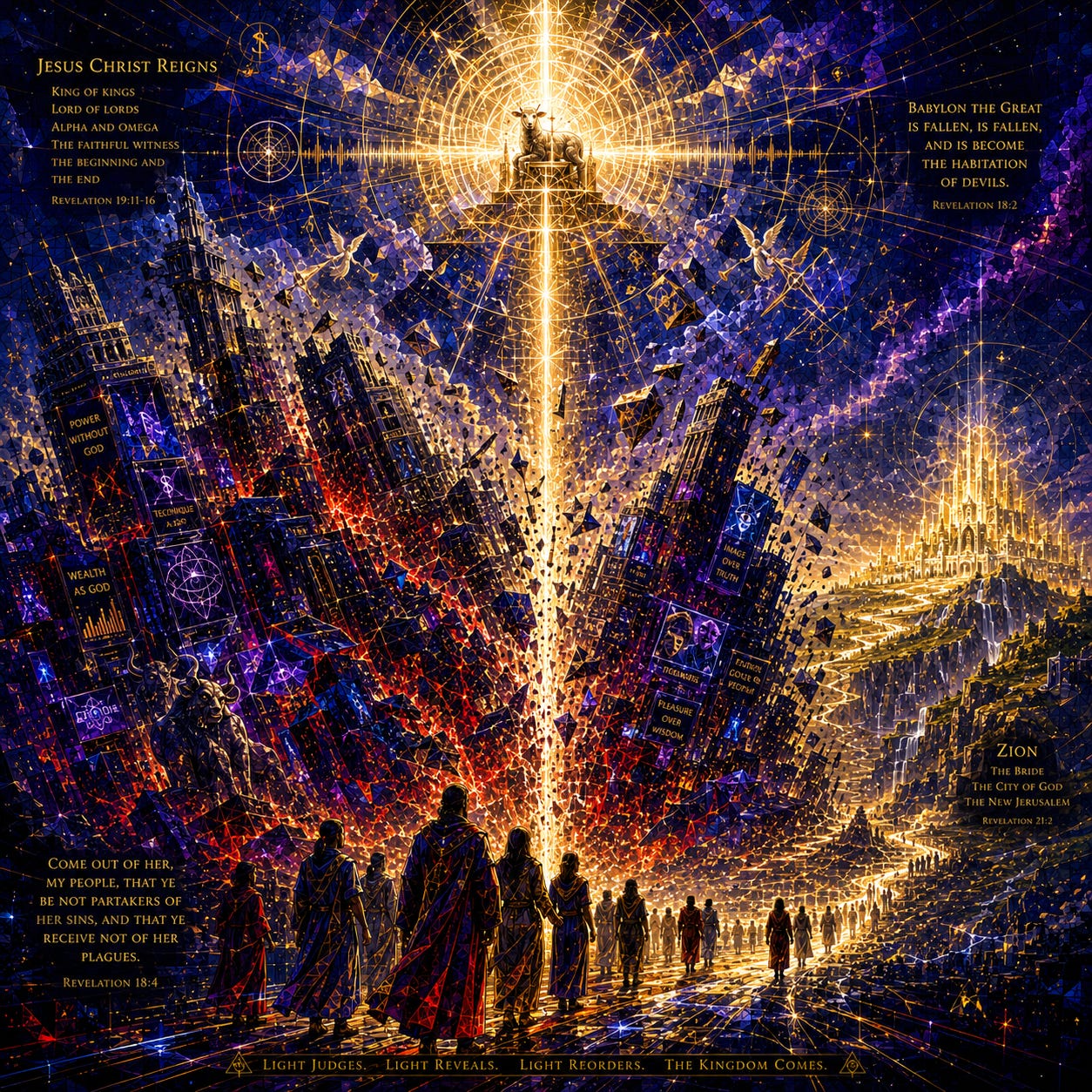
Glory to the Lord that all of the hubris is put to heel. That our human folly is called out and put to shame. That our confidence is shattered and all we grasp is disintegrating. We are left only with Christ crucified. Crown Him with many crowns.