

The Gospel Through the Shipwreck
Acts 27 is not merely a travel log. It is a theology of history in storm form.
Paul is going to Rome because Jesus Christ means for Paul to stand before Caesar. The voyage is not an accident. The chains are not an accident. The storm is not an accident. The shipwreck is not an accident.
Paul has appealed to Caesar, but beneath that legal machinery stands the word of Jesus Christ: Paul must bear witness in Rome. The world sees a prisoner transfer. Heaven sees the Gospel marching into the mouth of the beast.
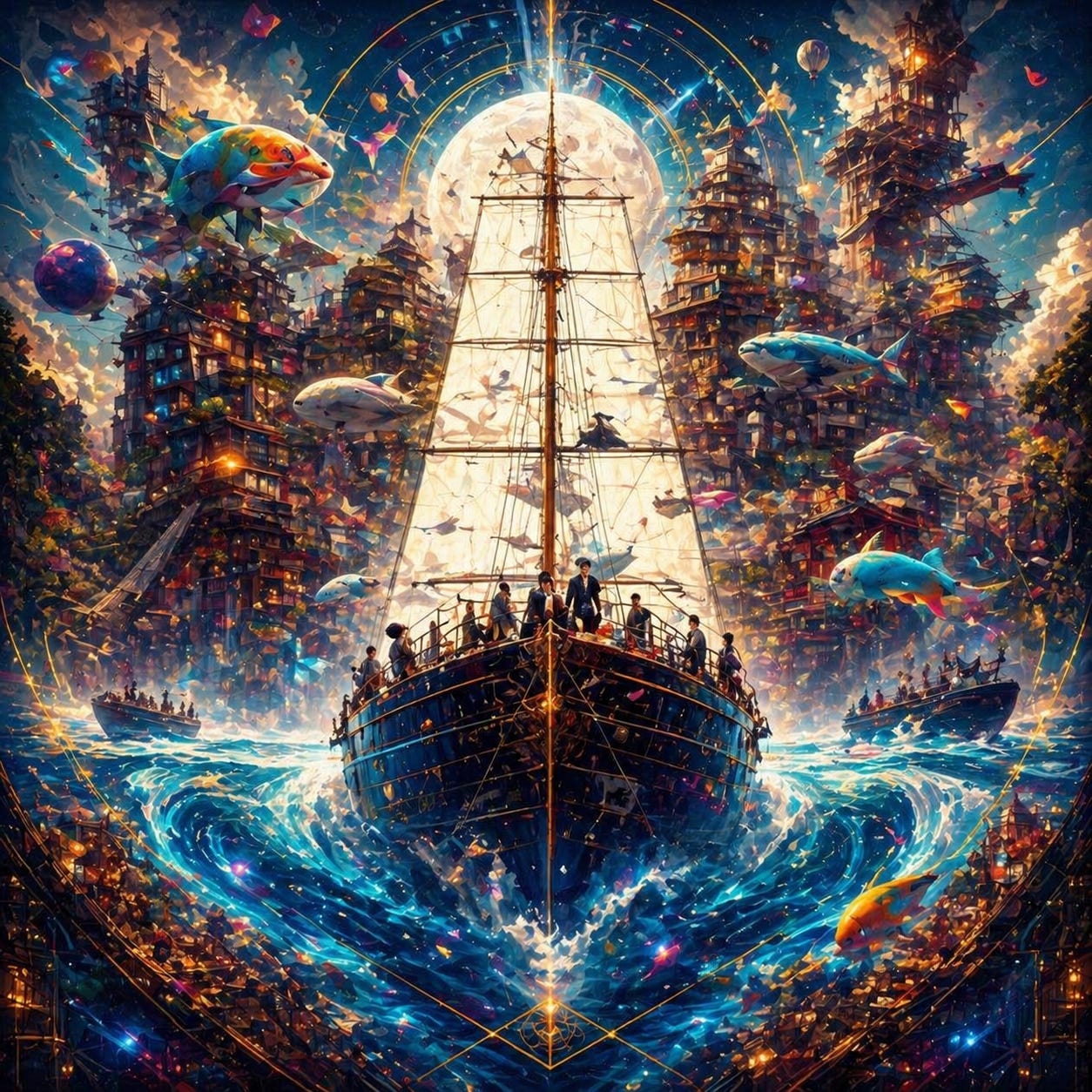
The resurrection of the dead.
Paul is not in chains because he committed a civil crime. He is bound because he insists that Jesus Christ is risen, that the King has already passed through death, that judgment has been transformed by mercy, and that the world’s highest courts are not high enough to overturn an empty tomb.
Rome is the destination.
Italy, the old “land of the bull,” is the center of imperial weight. Grain moves there. Soldiers move there. Prisoners move there. Money moves there. Power moves there.
The empire feeds itself through the sea, and the sea is not tame. The Alexandrian grain ships are the arteries of the imperial body, carrying Egypt’s wheat toward Rome’s belly.
Paul enters that system in chains. But the prisoner is the free man. The apostle is the true authority. Julius the centurion has the military commission. The shipmaster has the technical knowledge. The owner has the financial stake. The sailors have the seamanship. But when the storm removes sun, stars, confidence, cargo, and control, Paul is the one left standing with the word that cannot drown.
The first lesson:
You can be bound by the world and still be sheltered by God. Julius belongs to the Augustan cohort, the revered regiment, the imperial machinery of Caesar. His name carries Roman weight. Julius. Clan Julia. Aeneas. Troy. Empire. Myth. Prestige. Power with a pedigree. He is not a random guard with a spear and a dull afternoon. He is an agent of Rome’s ordered world.
And yet, he is assigned to guard Paul.
There is irony here sharp enough to cut rope. Rome thinks it is transporting a prisoner. God is escorting an ambassador. The empire thinks it has custody of the apostle. The apostle is carrying the word that will outlive the empire.
At Sidon, Julius allows Paul to visit friends and receive care. That detail matters. Even inside the machinery of imperial custody, shelter appears. Not escape. Shelter. Not comfort. Care. Not deliverance from the mission. Provision for the mission.
This is how God works. Not by removing the chains, but by placing mercy inside them.
Then the winds turn contrary.
We imagine that if Jesus Christ commands the destination, the wind should cooperate. If Paul must stand before Caesar, why should the sea resist him? If the calling is real, why does everything become harder? If God is guiding the ship, why does the ship feel weaker every hour?
Paul is in the will of God, yet the weather is against him. Paul is obeying the call, but the ship is delayed. Paul carries the resurrection, and the sea looks like death.
This is not contradiction. This is the shape of the Christian life under the cross.
The believer lives the simul. Saint and sinner. Free and bound. Dying and alive. Judged in Adam and justified in Jesus Christ. Paul is both prisoner and ambassador.
The voyage is both disaster and divine appointment. The storm is both threat and tool. The sea is both chaos and classroom.
There is more comfort in knowing the Father rules the storm than in imagining the storm belongs to a rival power outside His hand. The devil may rage, but he does not reign. Job was truly attacked. Job was truly afflicted. Job truly suffered. But Job was never outside the hand of God.
The Father disciplines sons.
Modern Christianity has trained itself to confuse tenderness with indulgence. But the Father’s love is not softness without purpose. The Gospel is not proof that God avoids crushing. The cross reveals that God brings resurrection through crushing.
The Son was not preserved from death. He was brought through death, and death was forced to become the doorway of life.
So when the wind is against you, do not rush to conclude that you are off course. Sometimes the contrary route is the right way.
That is the Church in history.
To sail under shelter is to use the landmass as cover from the wind. The progress is slower. The route is not heroic. Nobody writes songs about a ship crawling along the lee side of an island while the open water sneers at it. But the shelter holds.
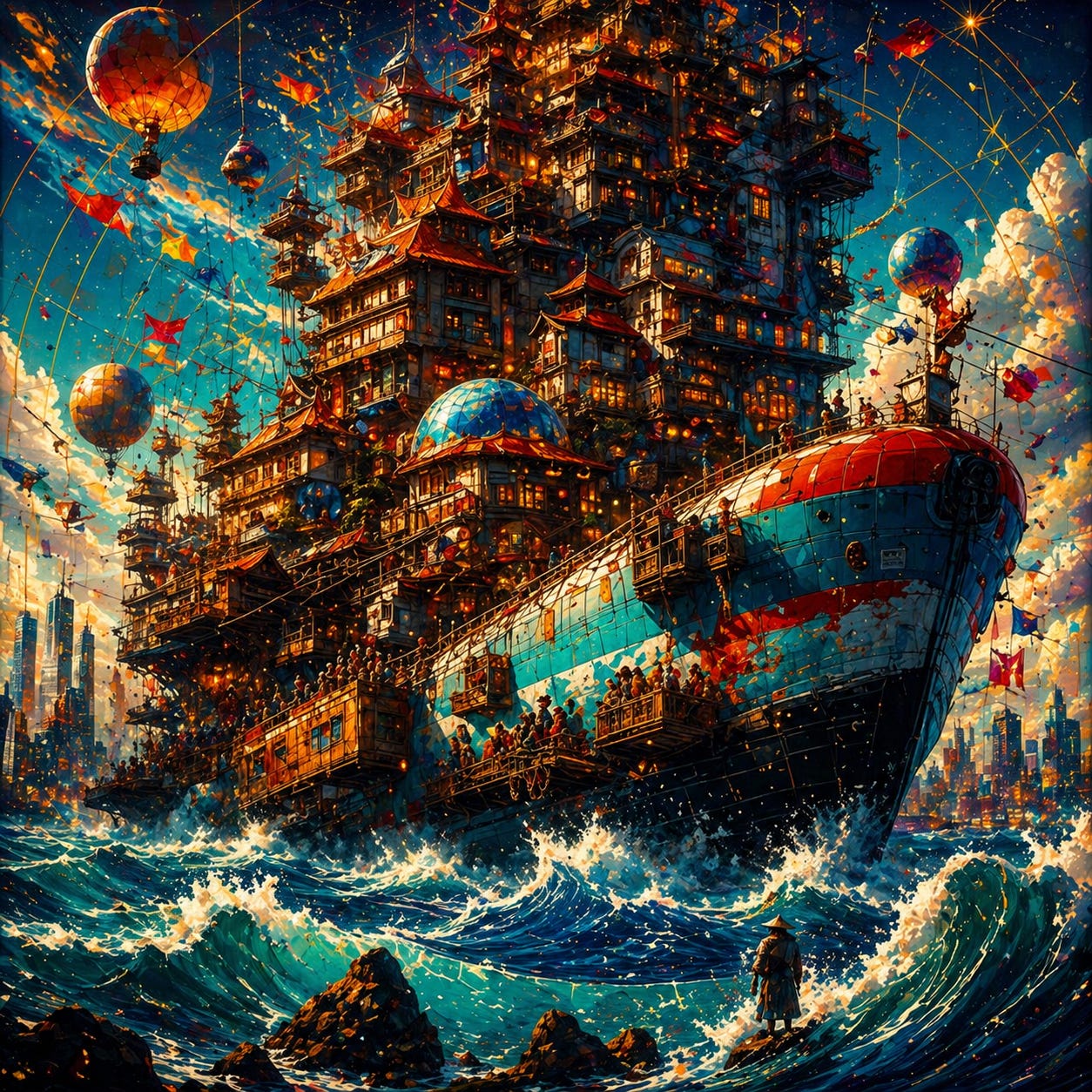
The Church does not move through the world by raw power. She does not own the weather. She does not command the sea. She sails under shelter. She receives providential cover. She advances by hidden mercy. She moves slowly when the open sea would kill her.
This is not failure. This is faith.
We want open water and clean wind. God gives us islands, delays, awkward harbors, winter warnings, partial cover, and enough grace for the next stretch. We want a straight line to Rome. God gives us Sidon, Cyprus, Myra, Cnidus, Crete, Fair Havens, Clauda, darkness, anchors, bread, wreckage, and shore.
The way is not efficient. It is true.
At Myra, Julius finds an Alexandrian ship sailing to Italy. The vessel is not a dinghy. It is part of the imperial grain trade, a massive merchant ship carrying wheat from Egypt toward Rome. It represents the economic lifeblood of the empire.
This is Mammon with planks.
The ship is useful. It is impressive. It is technical. It is necessary to Rome’s order. But it is not immortal. That distinction will become everything. At Fair Havens, the decision point comes. The Fast has already passed. The season has turned. Sailing is now dangerous.
The prisoner sees what the professionals refuse to see. Paul warns them plainly: this voyage will bring disaster and much loss, not only of cargo and ship, but also of life. The centurion listens instead to the pilot and the owner of the ship. Of course he does. That is what sensible men do. Listen to the experts. Listen to the money. Listen to the men with the equipment. Listen to the people whose names are on the paperwork.
But expertise becomes stupidity when Mammon has its hand on the tiller. The owner does not want to winter in an inconvenient harbor. The sailors think they can make Phoenix. The majority agrees. A soft south wind begins to blow, and that little whisper of favorable circumstance seals the delusion.
But that soft south wind was not blessing.
It is bait.
Men often mistake temporary ease for divine approval. The door opens, the numbers work, the majority agrees, the professionals nod, the schedule can still be saved, the money might still be preserved, and everyone tells himself the warning was too severe.
Then the Northeaster comes.
Euraquilo. Euroclydon. The violent wind. The storm that does not negotiate. The ship is caught. The crew cannot face the wind. They give way and are driven. They secure the skiff. They undergird the ship with cables, frapping the hull to keep the boards from coming apart. They fear the Syrtis sands, those deadly shoals off North Africa. They lower the gear. They throw cargo overboard. Then the tackle. Eventually even the wheat.
Everything they sailed to save must be surrendered.
First goes confidence. Then cargo. Then equipment. Then hope. Last of all, the very grain they risked the voyage to preserve is poured into the sea.
The ship was an instrument. They treated it as salvation. The cargo was provision. They treated it as god. The storm exposes the difference.
Hope Abandoned, Gospel Restored
For many days, neither sun nor stars appear. That is not decorative detail. Ancient navigation depends on the heavens. No sun. No stars. No bearings. No external measure. The crew is not merely uncomfortable. They are blind inside a moving tomb.
Then Paul stands.
He begins with the sentence nobody wants to hear and everybody needs to hear: “You should have listened to me.”
This is not petty. It is surgery. Grace does not begin by pretending foolishness was wisdom. Mercy does not allow denial. Paul names the failure because reality must be re-established before courage can be rebuilt. They are in this storm because they ignored the word. They trusted profit, majority, expertise, and favorable wind over warning.
But Paul does not stop with rebuke. He says an angel of the God to whom he belongs and whom he serves stood by him. Paul must stand before Caesar. And God has granted him all those sailing with him.
That is staggering.
God has granted him their lives? This means Paul has not spent the fourteen days merely enduring. He has been interceding. While sailors panicked, while soldiers calculated, while prisoners trembled, while the hull groaned, Paul prayed. He stood before God for the ship that ignored him.
This is apostolic leadership.
Not control. Intercession.
Not image management. Prayer.
Not saving the institution. Pleading for lives.
The promise is clear: every person will survive.
But the ship will be lost.
We want God to save the ship. Save the structure. Save the system. Save the reputation. Save the platform. Save the visible machinery that carried us this far. But there is a violent distinction between the vessel and the souls.
The ship is not the promise.
The people are.
This does not mean structures do not matter. Ships matter. Grain matters. Seamanship matters. Anchors matter. Food matters. Soundings matter. The sailors still have to know what they are doing. Faith does not despise means.
But means are mortal.
The visible vessel can break. The institution can splinter. The respected hull can run aground and be torn apart by surf. The thing that looked indispensable can become debris beneath the feet of those swimming to shore.
But not one hair need perish.
That is not optimism.
That is resurrection.
The sailors attempt their own salvation. Under pretense of putting out anchors from the bow, they lower the skiff. The experts decide to abandon the rest. Their plan is simple: let the ship die, let the passengers die, let the prisoners die, let the soldiers face the consequences, but save ourselves in the small boat.
Paul sees it. “Unless these men stay in the ship, you cannot be saved.”
The word sounds almost contradictory. Has not God promised survival? Yes. But the promise includes means. The sailors must stay. The ship must be managed. The crash must be faced together. No private escape boat. No elite exit. No secret skiff for those who think their expertise entitles them to survive separately.
The soldiers cut the ropes.
Faith with a knife in its hand.
They do not debate the skiff. They do not hold it in reserve. They do not keep an emergency option just in case Paul’s word proves too severe. They cut the ropes and let the boat fall into the sea.
There are moments when obedience means removing the escape you most want to keep.
No more skiff. No more fantasy exit. No more hidden plan to save yourself apart from the people God has bound you to. No more speedboat ecclesiology. No more fleeing the ship while pretending to serve it.
Stay in the ship.
Not because the ship will survive.
Because God has spoken.
Then Paul tells them to eat. Fourteen days of fear-driven abstinence. Fourteen days of darkness. Fourteen days of nausea, panic, labor, cold, wet wood, groaning beams, shouted orders, and unanswered horizons.
Paul takes bread, gives thanks to God in the presence of them all, breaks it, and begins to eat.
Not more boats.
Bread in the storm.
This is not the Lord’s Supper in the strict sacramental sense, but the pattern is impossible to miss. Took it. Gave thanks. Broke it. Ate.
The apostle performs a resurrection-shaped act in the face of death. He does not deny the crash. He feeds men for it.
Faith does not make the wreck unreal.
Faith gives strength for the swim.
Paul’s meal is not sentimental. He is not offering religious mood music while the ship dissolves. He is commanding terrified men to receive sustenance because their bodies will need strength. The promise does not cancel the swim. Grace does not eliminate exhaustion. The word of God does not make wood float forever.
The final surrender.
They eat. They are encouraged. Then they throw the wheat into the sea.
The cargo that drove the risk becomes the weight that must be lost. What they tried to preserve almost killed them. What they release makes survival possible.
You may be in the will of God and still face contrary winds. You may be under divine assignment and still lose the ship. You may be right and still ignored. You may warn the room and watch the room choose Mammon. You may endure the consequences of other men’s stupidity. You may spend fourteen days without sun or stars. You may have to cut away the escape boat. You may have to eat in the presence of people who still do not understand what God is doing.
But Jesus Christ has spoken. The resurrection matters more than the storm.
You do not need to pretend the ship is fine. You do not need to call rotten planks healthy. You do not need to save every institution that once carried grain. You do not need to mistake undergirding the hull for salvation.
You must not worship the vessel.
Be faithful in it. Pray for those in it. Speak the warning. Cut the skiff. Break the bread. Prepare for the swim.
Thank you. The storm is real, the helplessness of man needs to be recognized, and He carries those who remain in His promise.
Fantastic piece of writing---applications in all of our lives. Thank you!!!!!