

Psalm 107 does not introduce a new idea. It pulls the prior two psalms out of abstraction and drops them into the dirt of lived experience.
Psalm 105 declares that God is faithful. Psalm 106 answers that man is not. Psalm 107 closes the gap. It shows what happens when those two truths collide inside an actual life.
Give thanks to the Lord, for He is good.
The opening line is familiar. His steadfast love endures forever. But now the psalm adds force. Let the redeemed of the Lord say so.
Not hold it privately.
Not reduce it to a feeling.
Say it.
Because Psalm 107 is not theory. It is a cycle you can trace in your own days.
Distress. Cry. Deliverance. Response.
That pattern is not stated once. It is built into the structure, repeated four times through four different kinds of men.

The first are wanderers.
They are not immoral villains. They are disoriented. They have no city, no structure, no place to settle their weight. They hunger because nothing holds.
Then they cried to the Lord in their trouble, and He delivered them from their distress. He led them by a straight way until they reached a city to dwell in.
The issue is not mess. It is the absence of inhabitable structure. The man is not simply disorganized. He is between places, relearning what is his to build and keep. The solution is not immediate mastery. It is being led into something stable enough to live inside.
The second are prisoners.
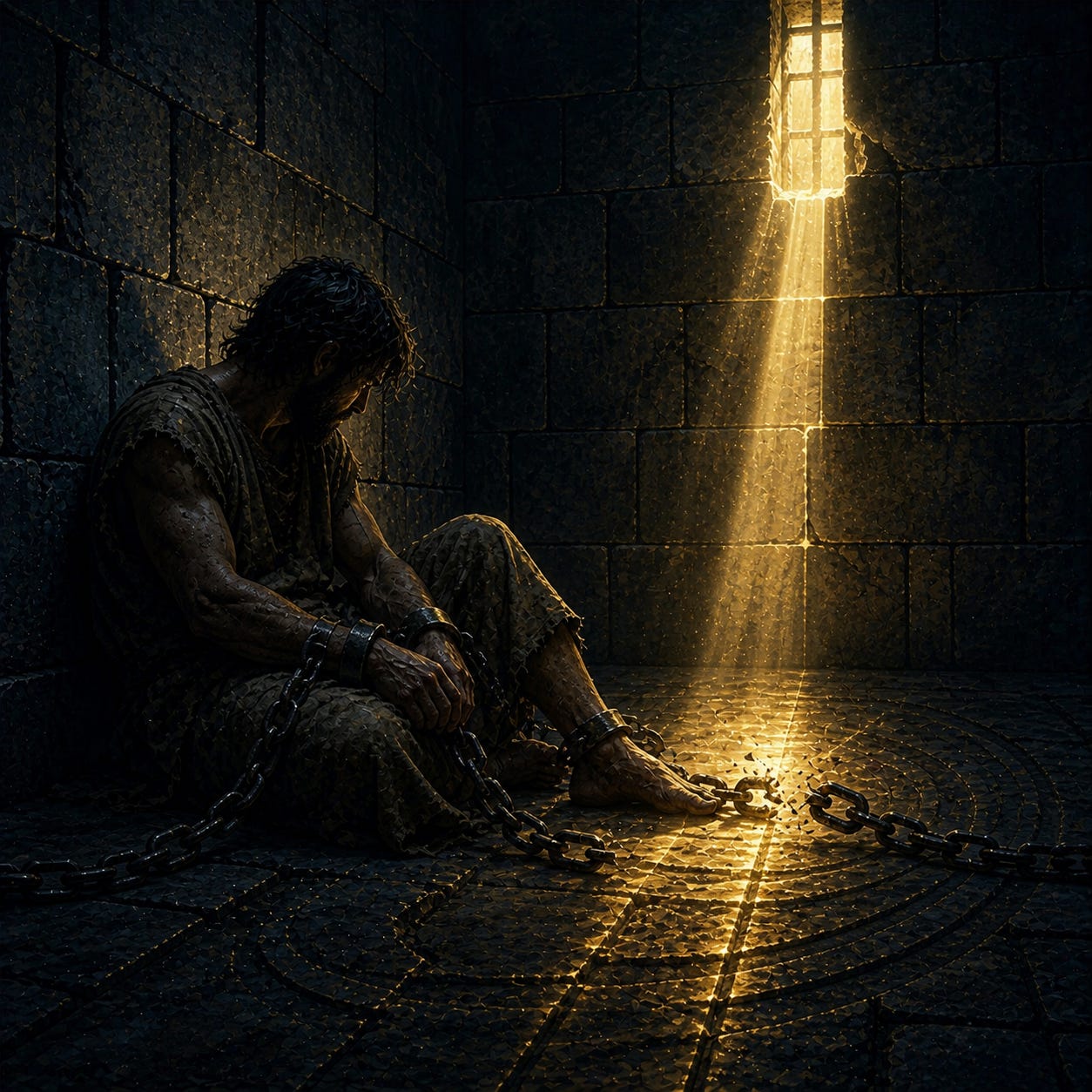
Here the psalm sharpens. They sit in darkness and in the shadow of death, bound in affliction and irons. Why? Because they had rebelled against the words of God and spurned His counsel.
This is not chaos alone. It is consequence intertwined with captivity. Patterns have hardened. Choices have been weighed.
But the pattern does not break.
Then they cried to the Lord in their trouble, and He delivered them from their distress. He brought them out of darkness and broke their chains apart.
The door does not open through denial. It opens through clarity.
Naming the fault does not lock a man in. Refusing to cry out does. The psalm refuses both self-justification and self-condemnation. It keeps the path open.
The third are called fools.
Not an insult. A diagnosis.
They suffer because of their iniquity, and something deeper fractures. Their appetite fails. They draw near to the gates of death, not because the world crushes them, but because their inner capacity collapses.
Then they cried to the Lord in their trouble, and He delivered them from their distress. He sent out His word and healed them, and delivered them from their destruction.
Folly is not solved by technique. The psalm does not prescribe systems. It names a word sent, received, and restoring. When a man cannot take in what once sustained him, the answer is not to force consumption. It is to receive what is spoken by God again until life returns.
The fourth are sailors.
Competent men. Working men. They go down to the sea in ships and do business on great waters. They know their trade. They are not wandering, not imprisoned, not collapsed by their own folly.
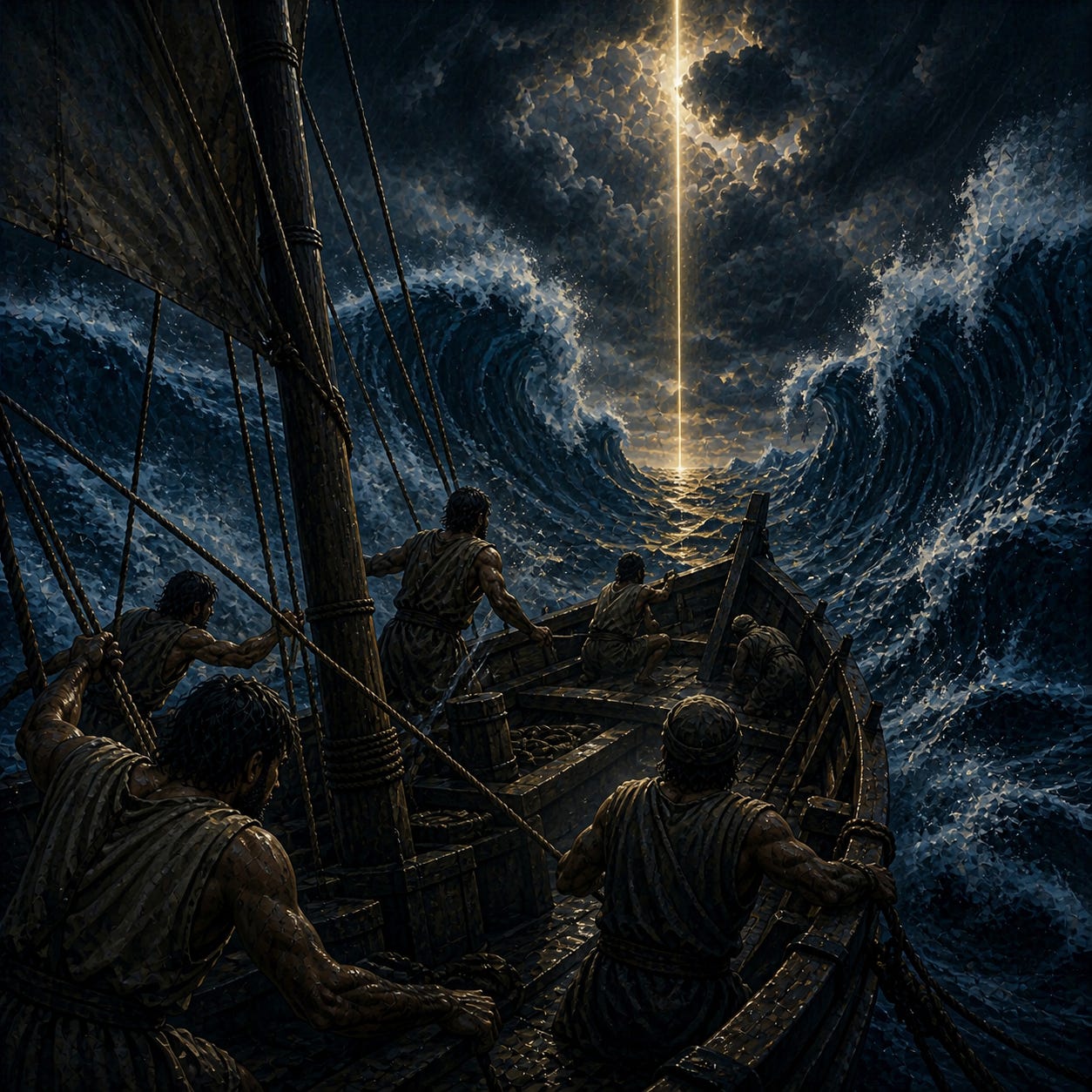
Then God speaks, and the storm rises. The wind lifts. The waves climb. Their courage melts. They reel and stagger like drunken men and are at their wits’ end.
This is not punishment. This is scale.
Reality exceeds capacity.
Then they cried to the Lord in their trouble, and He delivered them from their distress. He made the storm be still, and the waves were hushed.
The pattern does not change just because the man is capable. Skill does not eliminate dependence. It exposes it.
Salvation is always the same.
Let them thank the Lord for His steadfast love, for His wondrous works to the children of man.
The thanksgiving is not delayed until perfection. It rises out of rescue that happens in the middle of weakness.
Psalm 107 removes the illusion that your condition is unique or unsolvable. It names the truth more cleanly. You are not one type of man. You are a man who passes through these states. Wandering, when structure dissolves. Bound, when past choices tighten. Exhausted, when inner life thins. Overwhelmed, when external forces exceed your strength.
The error is trying to stabilize yourself into one permanent condition before you move. The psalm does not permit that strategy. It gives a simpler law. When lost, cry out and take the next real step toward what can be built. When bound, cry out without excuse and move toward what breaks the chain. When depleted, cry out and receive what restores instead of condemning the weakness. When overwhelmed, cry out and act within what is actually in your reach.
Then say so.
That final command matters.
Let the redeemed of the Lord say so.
Speech seals recognition. It prevents the drift back into confusion. Naming what God has done anchors the man inside reality instead of inside his shifting perception.
Whoever is wise, let him attend to these things; let them consider the steadfast love of the Lord.
Wisdom is not endless self-analysis. It is attention. Watching the pattern. Recognizing it as it unfolds. Refusing to treat each cycle as if it were unprecedented.
A man is not defined by any single moment within that pattern. He is carried through it by a faithfulness that does not fluctuate with him. That is the ground Psalm 107 stands on. God remains steady. Man does not. The path forward is not invention. It is recognition, participation, and honest response.
Cry out. Be delivered. Name it.
Then walk again.
What an absolute BLESSING to read!
Thank you Jonathan. This has always been one of my favorite psalms. We named our home Haven based on vs :30 ..And He brought them to their desired Haven ( described His faithfulness to us after a very difficult time)!