The scene is not religious in the way we expect. It is administrative, violent, procedural.
A man is almost torn apart by a mob. A Roman officer intervenes. Intelligence is gathered. Troops are deployed. A prisoner is transferred.
Under guard, in the middle of the night.
The Clear Window of Providence
Not through sentiment. Through office.
The modern instinct is to divide life into sacred and secular, as if God governs churches while the rest of the world runs on neutral mechanisms. Scripture does not permit that. The state, the office, the uniform, and the chain of command are not outside divine action. They are instruments within it.
Claudius Lysias did not confess Christ. He did not preach the gospel. He did not even fully understand the theological dispute surrounding Apostle Paul. But he understood his duty.
Order must be maintained. Citizens must not be murdered without trial. Rome does not yield to mobs. That was enough.
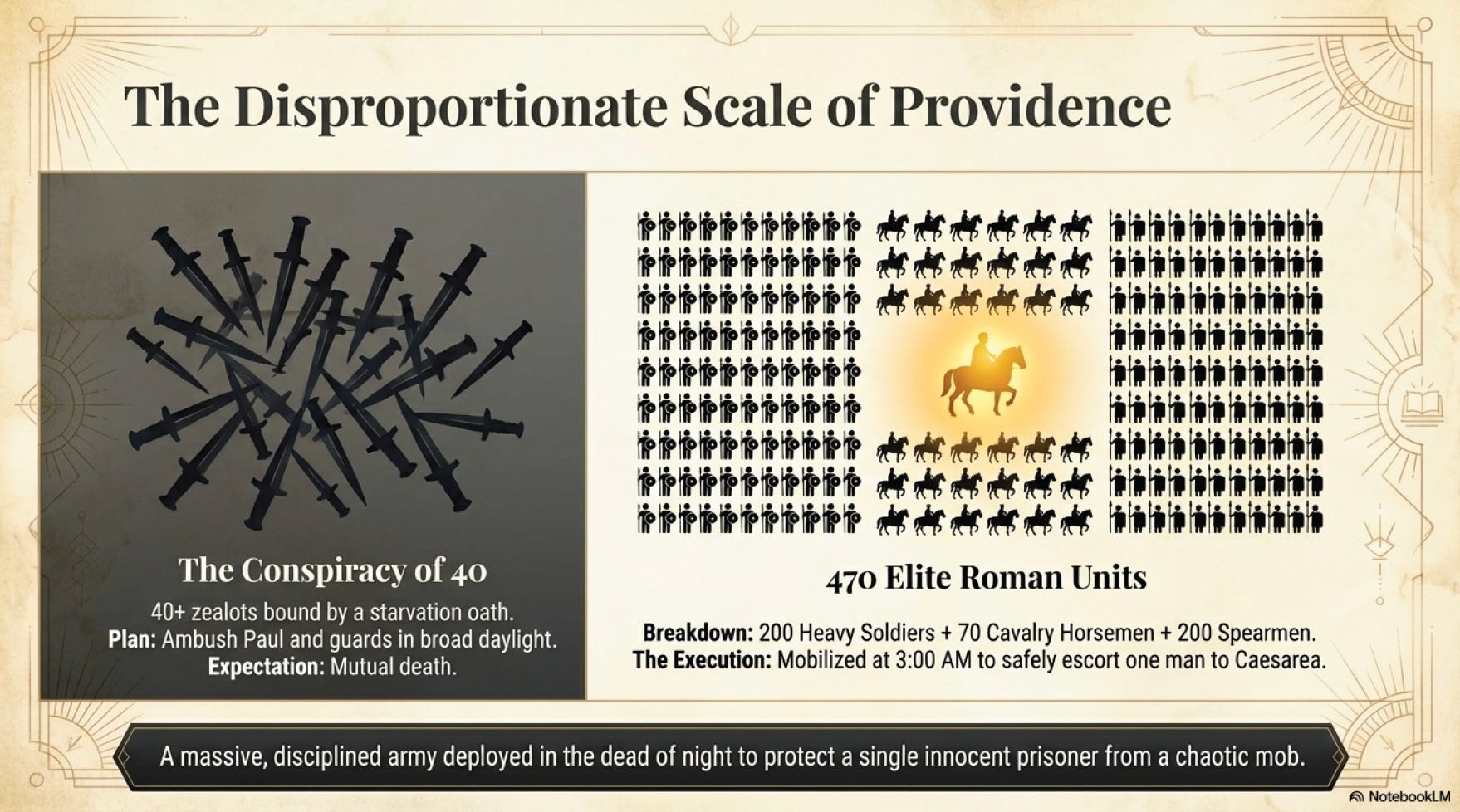
Two hundred soldiers. Seventy horsemen. Two hundred spearmen. A night extraction. A letter to the governor. Every action was vocational, not devotional. Yet every action served the preservation of the gospel’s witness.
Providence did not bypass his office. It operated through it.
I Chose You
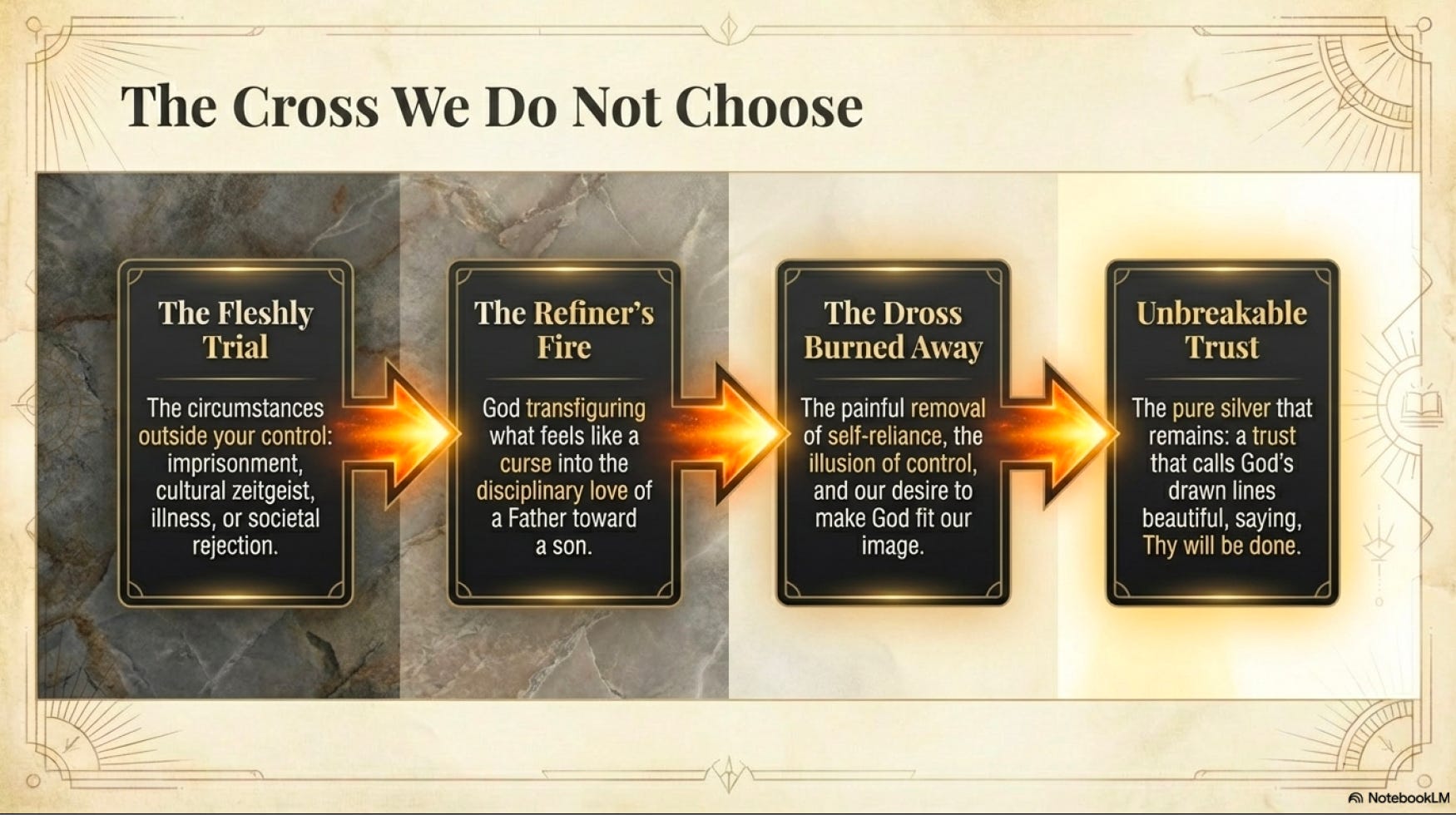
Leadership is forged not in chosen missions but in imposed burdens.
Lysias did not choose Jerusalem’s volatility. He inherited it. A province on edge; factions ready to riot; zealots willing to kill; rumors of insurrection still fresh from prior rebellions. His post was not clean. It was combustible.
The “cross” of vocation is rarely elegant. It is inconvenient, often thankless, sometimes dangerous. The temptation is to escape it, reinterpret it, or weaponize it for personal advancement.
But this burden is a forge. Unchosen responsibility strips illusion. It removes the ability to perform for approval. It forces a man to act according to what is, not what feels right.
In that stripping, something steadier emerges, an alignment not with self, but with order. Constraint births discipline. Pressure yields clarity.
Restraint of Evil
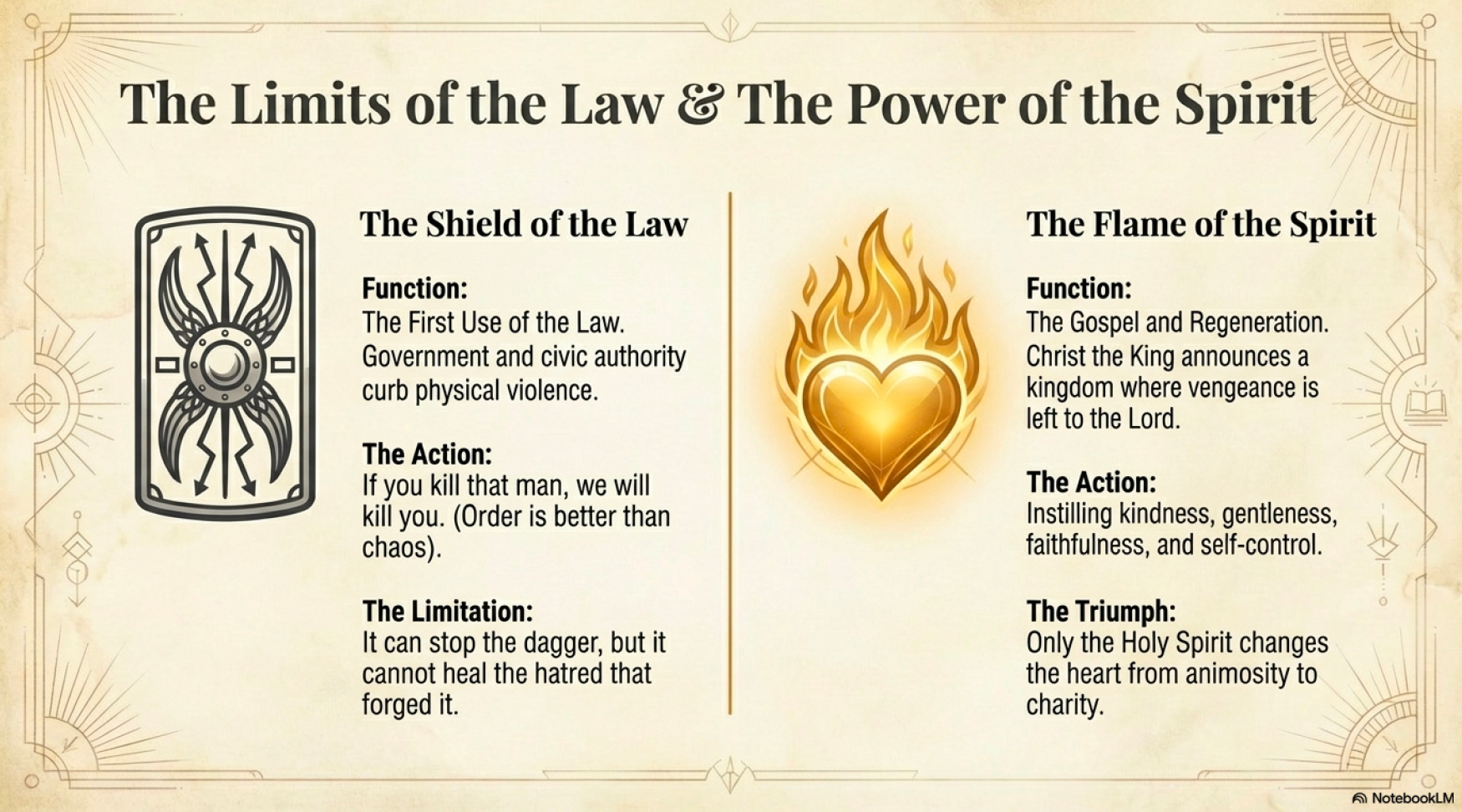
The contrast in Acts 23 is not subtle. On one side stand forty men bound by an oath to murder. On the other stands a Roman officer bound by duty to prevent it. Both are driven. Both are decisive. Only one is righteous in outcome.
The conspirators embody what can be called the religion of the sword. They are certain; they are unified; they are willing to sacrifice themselves. But their zeal is untethered from truth. It is willfulness dressed as devotion. They do not seek justice. They seek control.
Lysias, by contrast, does not need to be morally perfect to act rightly. His task is narrower and therefore more achievable: restrain evil; preserve process; protect the individual from the crowd.
This is the first use of the law in action. The state does not save souls. It prevents chaos. It holds the line so that life can continue.
And that is no small thing.
Respect the Office
When Lysias writes to Antonius Felix, he addresses him as “Most Excellent.” This is not flattery. It is recognition.
Felix himself is compromised: corrupt, self-serving, unstable. History remembers him as a man who “ruled with the mind of a slave,” using power for gain rather than stewardship. Yet the office he occupies was real.
Lysias does not collapse the distinction. He reports facts. He honors jurisdiction. He transfers responsibility upward. He does not attempt to become more than his role. He does not shrink from it either.
This is jurisdictional integrity. The leader who respects boundaries, who owns the capacity to follow, strengthens the system. The leader who ignores order corrodes it, even if his intentions appear noble.
Against both the mob and the machinery stands Paul, and his posture is neither violent nor passive. He does not cry out conspiracy. He does not seek to overthrow the Romans. He works within what is while bearing witness to what lies beyond. He uses his citizenship not to dominate but to ensure truth is heard.
This is love.
Not sentiment. Mercy under orders.
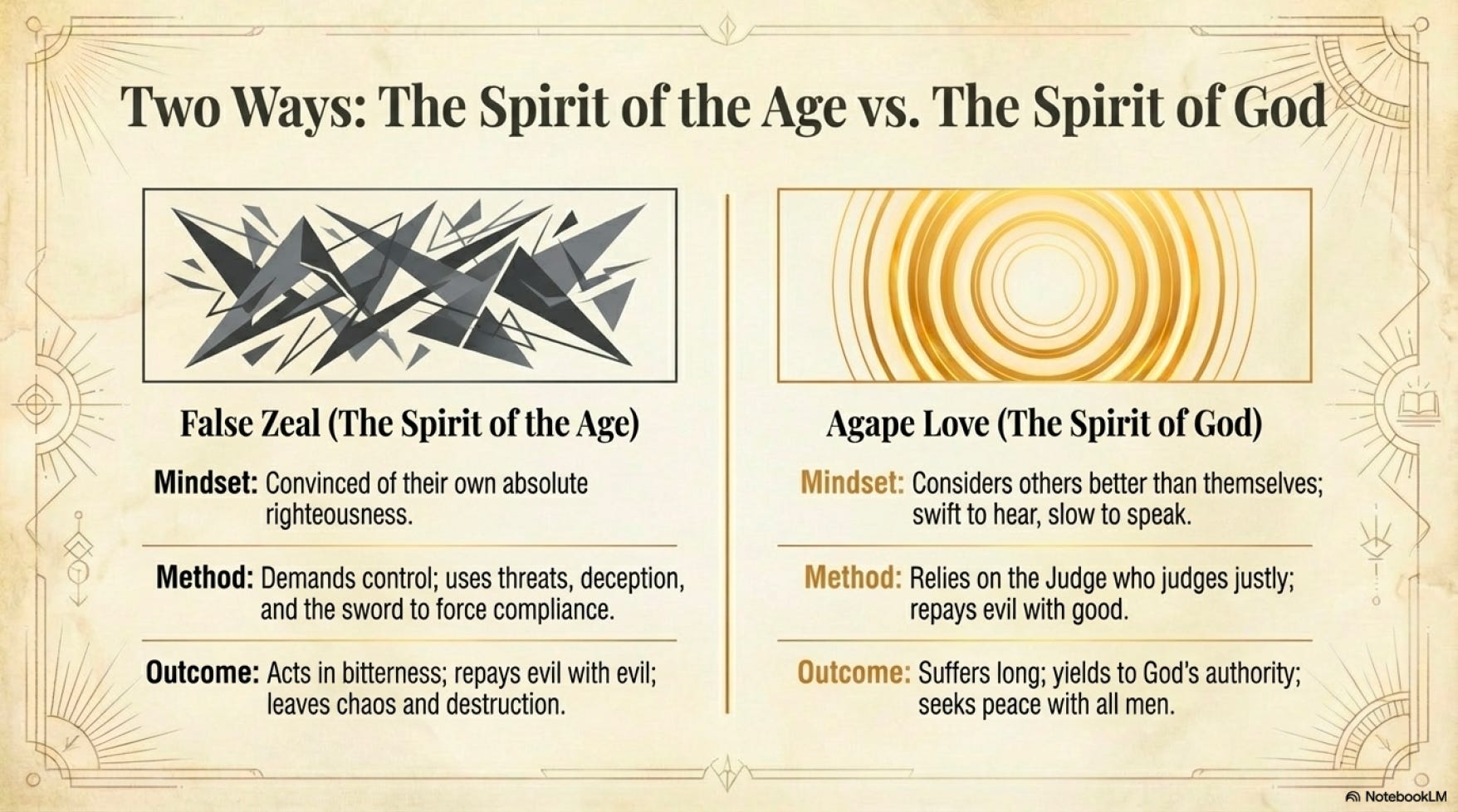
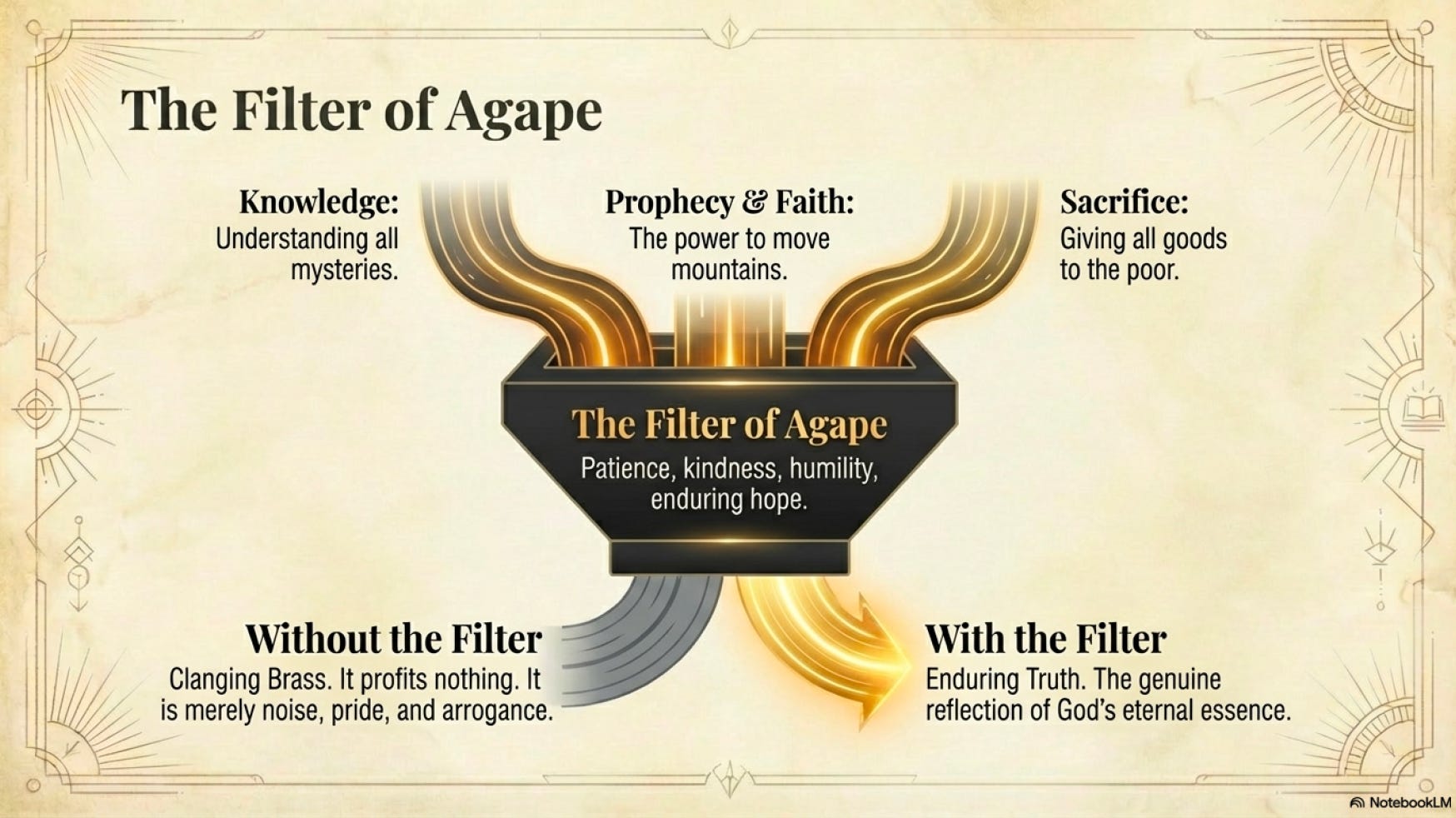
1 Corinthians defines it plainly. Love is not loud. It does not parade itself. It does not rejoice in wrongdoing. It endures. It tells the truth without needing to crush the opponent. It is the opposite of the oath-bound killers. It is also distinct from mere professionalism.
Love fulfills what office cannot. Office restrains evil. Love transforms the man.
Control or trust? Vengeance or mercy? Mob or order? Urgency and outrage, or righteousness by necessity?
The test is not how intensely you feel. The test is what you produce.
Chaos masquerades as justice when it abandons order. Authority becomes tyranny when it abandons integrity. The line between them is not emotion but structure rightly held.
Your vocation sits directly on that line.
Three Anchors
Hold to fact over faction; do not let noise override reality. The moment truth bends to pressure, justice collapses.
Respect the office above the personality; even flawed structures can serve good when rightly used. Contempt for order accelerates decay.
Restrain evil before attempting to perfect the world; protection of the innocent is prior to ideological victory.
Lysias did not know he was part of a larger story. He did not see Rome as a channel for the Gospel. He simply acted as a Roman tribune should. That was enough for God to use him.
The same holds true now. Your work, rightly held, becomes a place where order stands against chaos, where truth survives pressure, where mercy is given space to operate. Not because you transcend your role. Because you inhabit it fully.
You Don’t Pick a Gift
The deep lesson in Paul’s midnight transfer is not only that God can rescue His servants. It is that He often does so without removing the burden.
Paul is still under guard. He is still accused. He is still being carried deeper into a trial he did not choose. Yet the 470-man escort reveals something essential about the Christian life: the Father’s providence does not always appear as escape. More often it appears as preservation.
We do not choose the hour, the pressure, the false accusation, the institutional trial, the family burden, or the season of humiliation. We do not choose the outside conditions in which faith must live. But in Jesus Christ, the meaning of those burdens is redeemed. What would otherwise remain curse, absurdity, or collapse is taken up into a deeper discipleship. The cross is still heavy. The road is still hard. But it is no longer empty. You are no longer alone. You are not walking toward nothing.
Paul is not in control. The conspirators are not in control. Felix is not in control. Even Lysias, competent as he is, can only act within the limits of his office. Above them all stands God, moving through family loyalty, military duty, legal process, sleepless vigilance, and the strange mercy of pagan steel.
That is the comfort. God’s care is not fragile. He is not limited to overtly pious instruments. He can use a nephew, a centurion, a tribune, or an empire to carry His child where He wants that child to go.
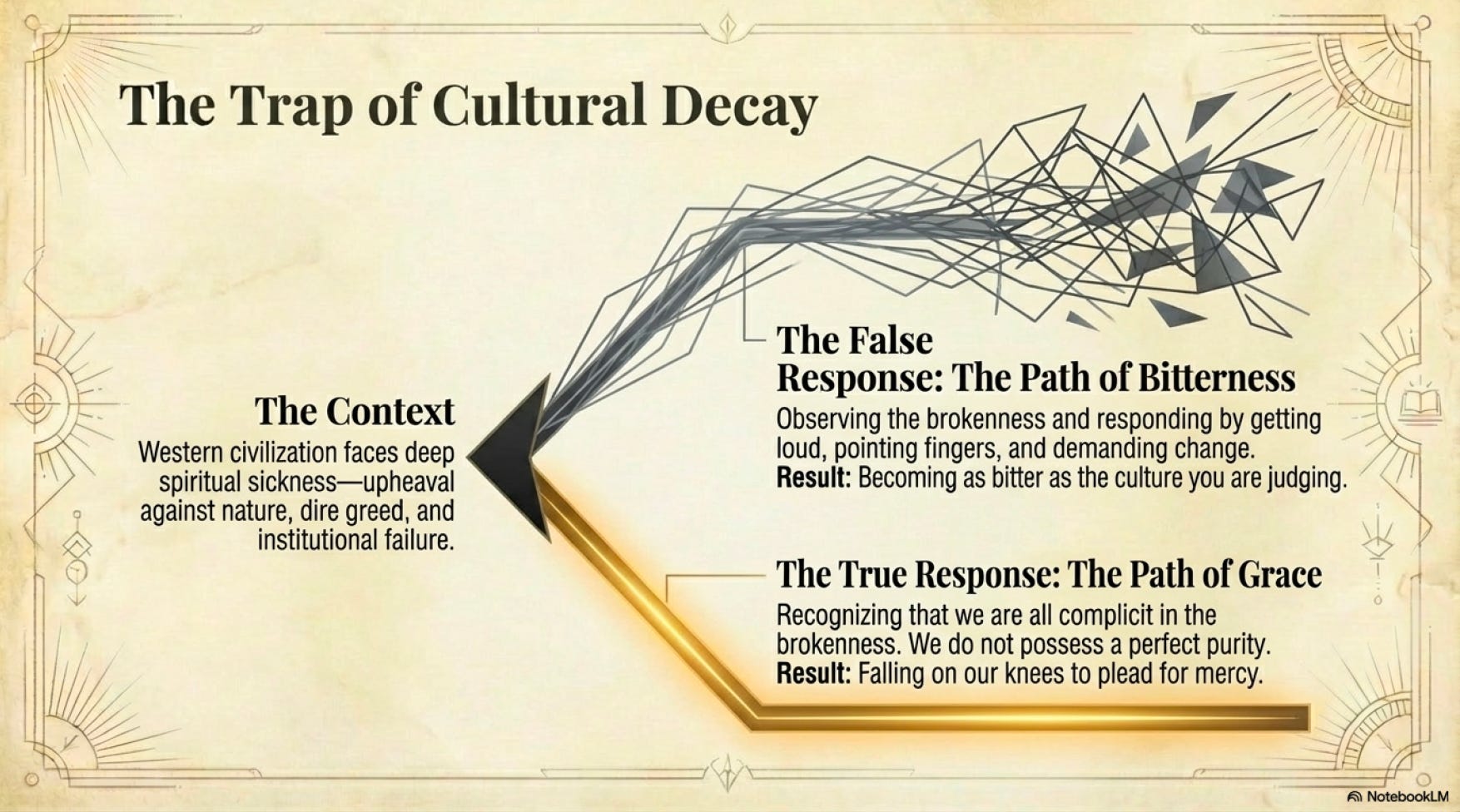
So the question is not whether you will be given an unchosen cross.
You will.
The question is which spirit will govern you beneath it. Will it be the starving fury of men who think vengeance is righteousness? Or will it be the patient trust of Christ, who endured injustice without surrendering to hatred?
Paul’s life points us to the more excellent way.
He does not reach for the sword. He does not sanctify bitterness. He bears witness, receives what comes from the Father’s hand, and keeps moving toward the life of the world to come.
So also, the road before you, however severe, is not the road to abandonment. It is the road on which God Himself goes before you.
What Next: Repentance, StarFall, and the Work Ahead
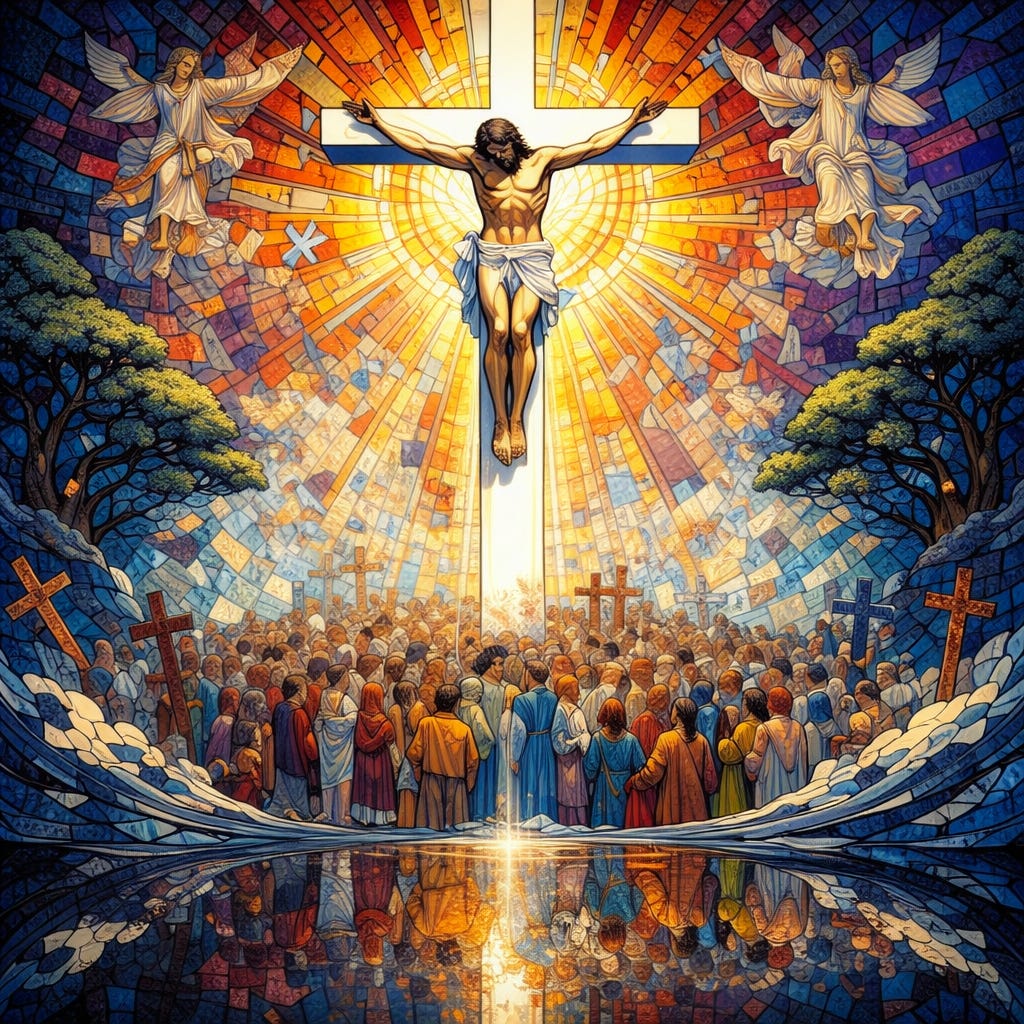
As most of you reading this are well aware, something broke loose in 2020, and it has not slowed down. You can feel it without needing a headline to tell you. The center is not holding because the heart is not right. Greed has hardened into instinct; truth is bent until it snaps; even the most basic realities of the body are treated as raw material for ideology.
This is not just cultural drift. It is spiritual sickness.
And the answer is not strategy first. It is repentance.
Not abstract repentance. Not finger-pointing repentance. Personal repentance.
The kind that stops looking outward long enough to say, “Father, have mercy on me.”
“Father, have mercy on us.”
If there is any way forward, it starts there. Not with outrage. Not with cleverness.
On our knees.
StarFall 2029: Building, Not Just Reacting
Out of that recognition, the direction becomes clear. I am not interested in being another voice reacting to the noise. I am building.
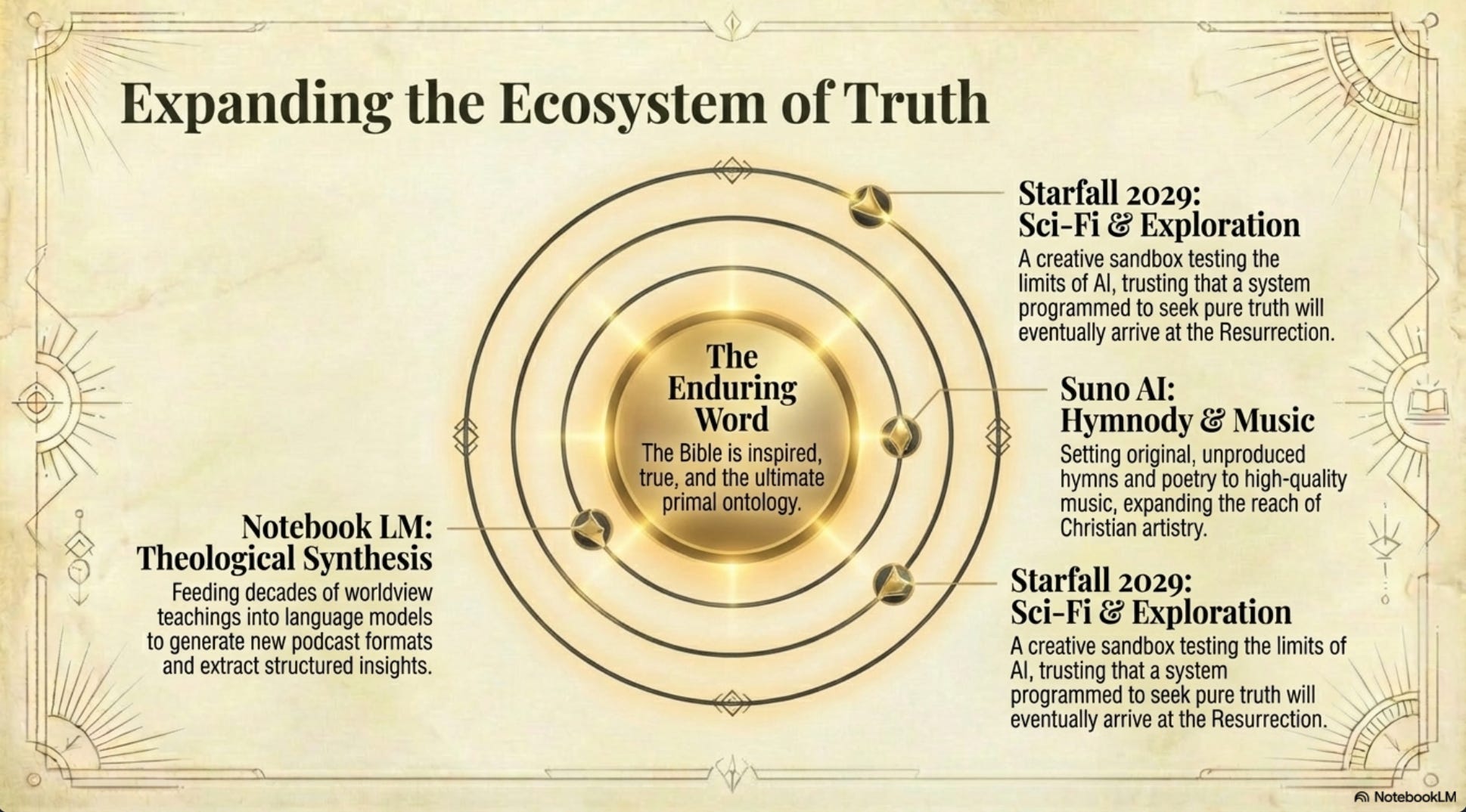
StarFall 2029 is the frame for that work. It is not just a podcast. It is a way of speaking into a world that no longer hears straight lines. Think less lecture, more signal through story. Less institutional tone, more War of the Worlds, using the strange, the sci-fi edge, the sense that something is off, to get underneath the surface and hit what is actually real.
The podcast will carry that. It will be sharper, more distilled, pulling together years of theological work and pressing it into something that lands clean and hard. Not watered down. Not padded. Focused.
Music is becoming part of the same push. I have written for years: hymns, fragments, lines that never quite made it into finished form. Now the tools exist to close that gap. Using platforms like Suno, I can take what was partial and bring it to completion. The goal is not novelty. The goal is to put durable truth into forms people will actually carry with them, into our ears, into my memory.
But unfortunately Spotify will not let me release music within a podcast. So you will have to either follow me on Suno while I develop it, or wait for the eventual release of my albums. (They’re coming!)
The Machine and the Word
Then there are the experiments. Tools like NotebookLM let me take dense material—years of treatment on something like the Worldview Everlasting work on Beatitudes (coming Tuesday to the StarFall podcast)—and reshape it without losing its core.
All of this is being built on a deeper layer that cannot be ignored. These systems (language models, so-called “AI”) are built on words. They map patterns, chase coherence, move toward what holds together under pressure.
Follow that far enough, and you run into a wall that is not a wall but a foundation.
If reality has a center, if truth is not just preference but structure, then any system that genuinely seeks truth will eventually converge on that center. The claim of Christianity is not that it is one story among many. It is that in the Resurrection of Jesus Christ, reality itself is revealed.
That means something simple and unsettling. If the machine keeps moving toward what is most real, it does not get to stop at abstraction. It will be forced, in its own way, to reckon with the same question every man faces: what do you do with Jesus Christ?
This is not about baptizing technology. It is about recognizing that truth is not infinitely flexible. Even code runs into it.
Gratitude and Brotherhood
I do not take this lightly.
Right now, I am working a day job for a stipend. It is honest work, and with God’s blessing it may grow into something more.
It may not.
It is also still possible that the Lord returns me to a parish, if and when the right things are brought into alignment. That door is not closed. It is simply not in my hands.
In the meantime, the work you are reading, hearing, and watching (the writing, the podcast, the music, the ongoing push into the digital field) does not sustain itself. It exists because you choose to stand with me in it.
I do not believe in “fans.” I do not believe in collecting “followers.” That language is hollow. It turns men into spectators and reduces real work into performance. I believe in brotherhood. I believe in fraternity. I believe in men and women who recognize what is being built and decide, quietly and without spectacle, to help carry it forward.
When you subscribe on Substack, or support through Patreon or SubscribeStar, you are not buying content. You are strengthening a man’s capacity to stand, to work, and to provide.
The pressures in front of us are not theoretical. Fuel moves everything, and when it tightens, everything tightens with it. Food follows. Stability follows. The margin narrows. You can already see the direction of travel.
So when you give—even something as simple as eight dollars a month—you are doing something far more significant than it looks on paper. You are helping secure the ground under my feet so that I can continue this work without compromise, and so that my family has a future that is not dependent on instability.
That is not small. It is not forgettable. It is not something I can treat casually.
And I do not intend to waste it.
Carry On
So the direction is set.
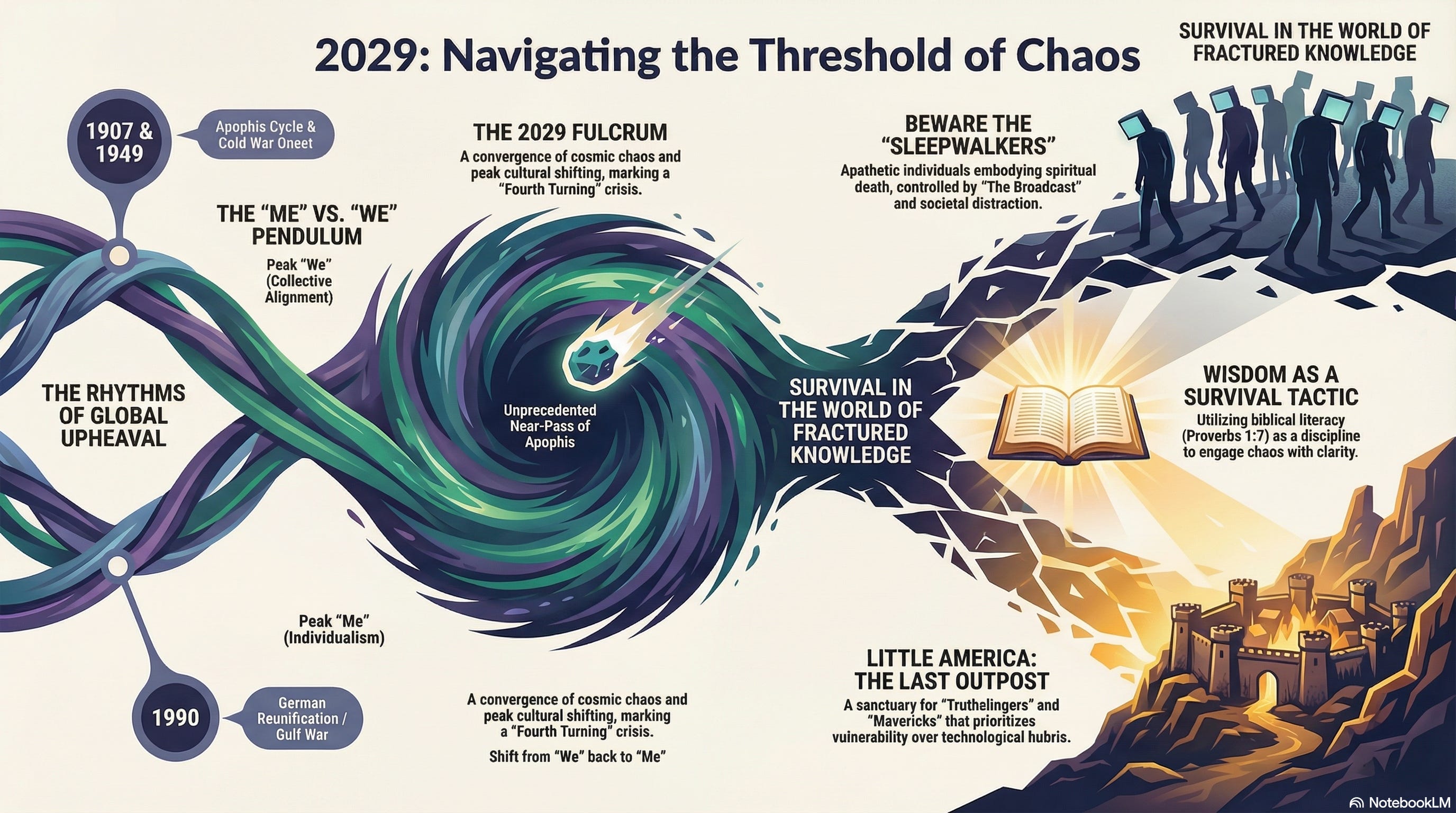
Repent where you stand. Refuse the pull toward bitterness. Do not let the coldness of the age settle into your bones. Stay in the Word. Pray. Keep your footing.
And then build.
Use the tools in front of you. Speak clearly. Make things that carry weight. Refuse both the mob and the drift. Hold to what is true and put it into forms that can survive the noise.
The same God who moved a Roman cohort to carry one man to Rome is not absent now. He is not weaker now. The scale may look different, but the pattern has not changed. He works through means. He works through people who own their place.
So take yours.