

The Vocational Threshold
There are seasons in a man’s life when the ground beneath him does not collapse so much as shift. The old structures still stand. The routines continue. The office remains occupied. Yet beneath the visible order, a deeper summons begins to press against the ribs.
Scripture calls this not destruction, but transition. Not apostasy, but threshold.
Acts 1 is a threshold moment.
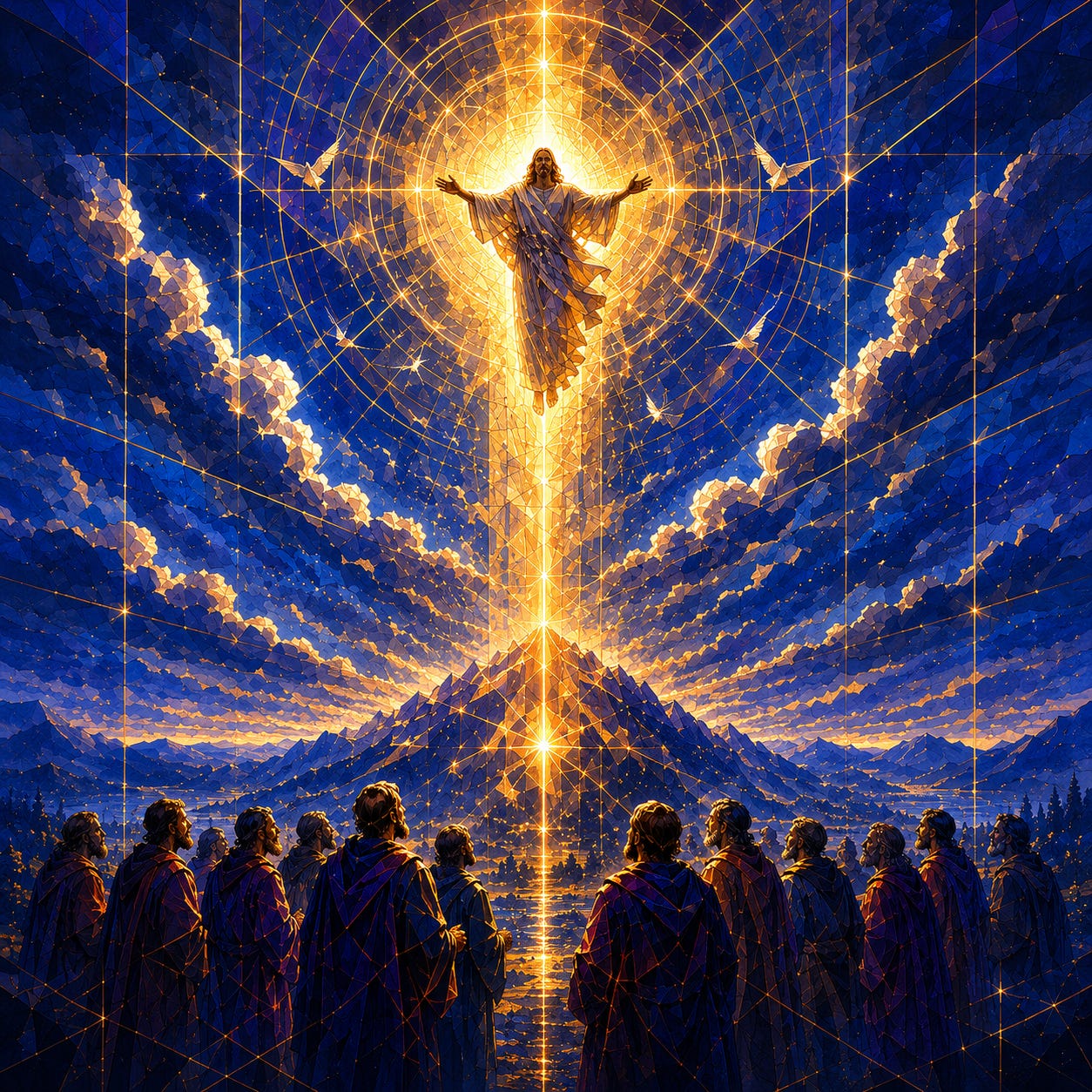
The Gospel according to Luke closes with resurrection. The Book of Acts opens with ascension. Between them stands forty days of infallible proofs, waiting, instruction, reordering, and surrender. The Church is being taught how to live when Jesus Christ is no longer standing bodily in front of them and yet is more present than ever before.
That is the age we still inhabit.
The modern church often behaves as though Christ were absent and managers were sovereign. Acts 1 destroys that illusion immediately. Luke writes to Theophilus and says his former account recorded all that Jesus “began” to do and teach.
Began.
The Gospel was not the completion of Christ’s work. It was the beginning of it. The Ascension was not His retirement from history. It was His enthronement over it. The Church therefore does not exist as a voluntary religious club managing memories of a dead founder. The Church is the Ecclesia, the called-out fellowship living beneath the active reign of the Ascended Lord.
This grounds everything about leadership, stewardship, vocation, suffering, and administration in trust.
Modern managerialism places the weight of sovereign control upon human shoulders. Pastors become executives. Institutions become machines. Metrics replace witness. Branding replaces proclamation. Exhaustion becomes normal because men begin acting as though the survival of Christ’s Church depends upon their competence.
Acts 1 announces the opposite.
Jesus Christ reigns now.
He reigns omnipresently at the right hand of the Father. Not absent. Not distant. Not merely symbolic. The Ascension is not Christ leaving the world. It is Christ filling it.
The ancient Church understood this better than many modern Christians do.
Sitting at the “right hand” of God is not about spatial geography. It is about authority. The Son of Man approaches the Ancient of Days and receives dominion over all nations, peoples, and times. The localized ministry of Galilee becomes the universal reign of the King.
This is why Acts begins not with panic, but with waiting. The disciples want timelines. They want restoration schedules. They want political outcomes. “Will you at this time restore the kingdom to Israel?”
In other words: “Can we finally take control now?”
Jesus refuses the question entirely.
It is not for them to know the times or seasons placed under the Father’s authority. Their task is not sovereignty. Their task is witness. That distinction remains one of the great dividing lines between biblical Christianity and modern institutional religion. The witness testifies to what is true. The manager attempts to control outcomes.
The illusion of control.
Even the selection of Matthias reveals this.
Judas has fallen. The betrayal has ruptured the visible structure of the apostolic band. Yet Peter does not conclude that the office itself was corrupted beyond repair. Quite the opposite. He understands from the Psalms that another must take Judas’s place.
This distinction between the man and the office is absolutely essential. Judas failed. The office remained.
The modern world increasingly cannot distinguish between institutions and individuals. If a leader collapses morally, many assume the authority itself becomes invalid. Acts refuses this conclusion. The apostolic office does not derive its legitimacy from the personal perfection of its occupant. It derives legitimacy from the Lord who established it.
Judas became desolate. The office endured.
That truth is uncomfortable because it offends modern individualism. Yet without it, no institution can survive human failure. Fathers fail. Pastors fail. Elders fail. Founders fail. Administrators fail. Entire generations drift. But the authority of the Word remains external to them all. This is why Peter roots the restoration process not in charisma, personality, or innovation, but in witness and continuity.
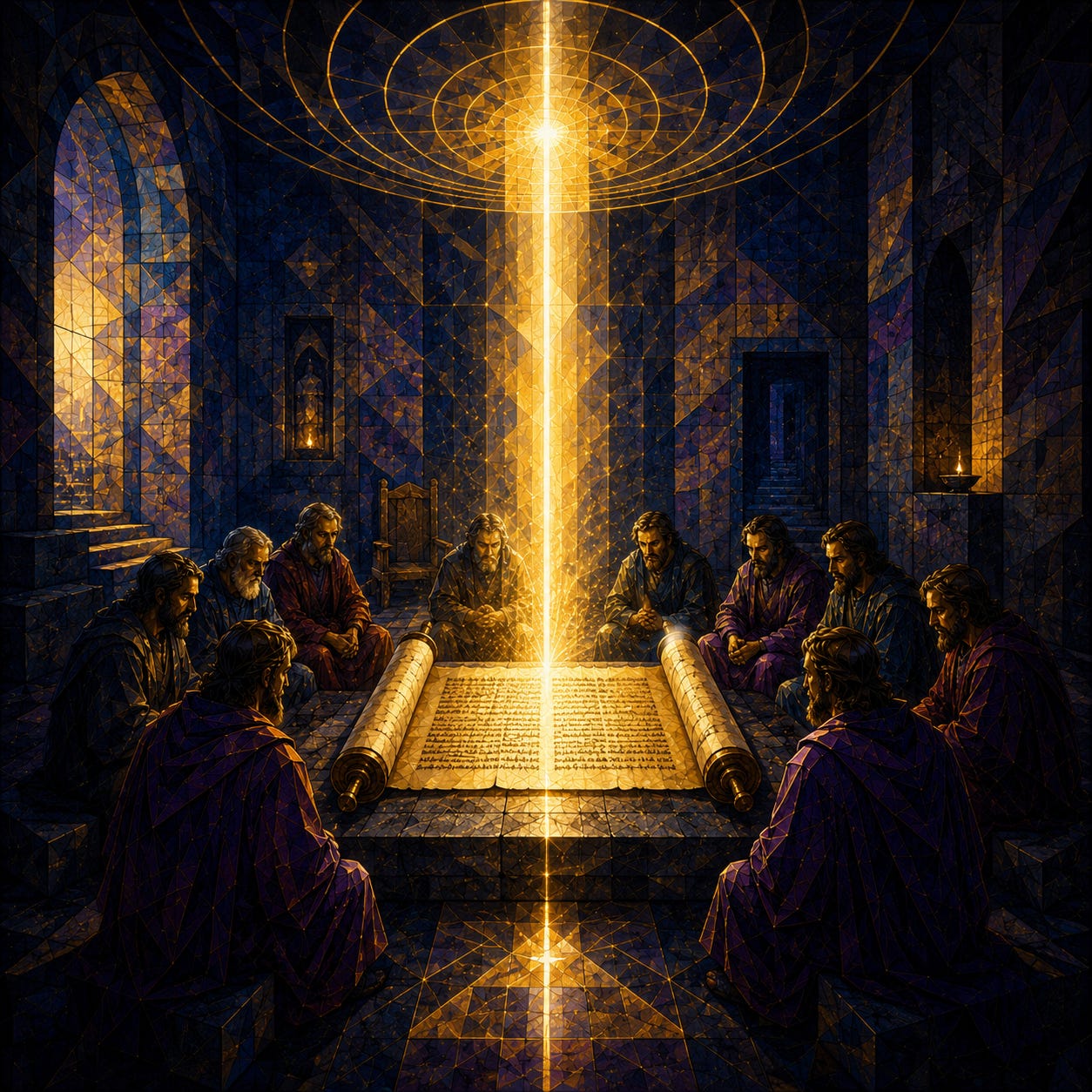
Brutally concrete.
The man must have been there from the baptism of John until the Ascension. He must have seen the ministry unfold. He must be an eyewitness to the resurrection.
No sophistry. No branding strategy. No rhetorical wizardry. No empty words.
Only witness.
Christianity is not built upon emotional atmosphere. It is built upon the physical resurrection of Jesus Christ from the dead. Acts 1 goes to extraordinary lengths to emphasize this. Jesus presents Himself alive by many infallible proofs. He invites them to touch Him. He shows the wounds. He eats before them. He appears repeatedly over forty days.
The resurrection is not a metaphor for hope. It is an invasion of objective reality. This matters because Christianity collapses instantly if reduced to subjective feeling.
Modern spirituality often treats faith as a liver quiver, a private emotional sensation, a burning in the bosom. But emotions rise and fall with sleep deprivation, hormones, grief, fear, loneliness, or biology. If faith rests upon feelings, then God Himself appears to vanish whenever the feelings disappear.
Acts anchors faith elsewhere.
Faith is trust in the trustworthy word.
The resurrection happened whether the disciples felt strong or weak. Christ reigns whether the believer feels inspired or numb. The sun still rises. Water still sustains life. Nature still follows definite laws. The world itself remains governed by an external wisdom not dependent upon human mood.
This is why Scripture and Nature function together as God’s two books. The Book of Scripture reveals His promises, commands, prophecies, and salvation. The Book of Nature reveals His order, wisdom, consistency, and sovereignty through creation itself. Both testify that reality is not chaos. Providence governs all.
They cast lots.
This moment scandalizes modern managerial instincts because it appears reckless. Yet the apostles understood something modern systems often forget: control is not the same thing as wisdom.
Casting lots was not gambling. It was surrender. The lot is cast into the lap, but the whole disposing thereof is from the Lord.
Or as I like to say: the pips are from Jesus.
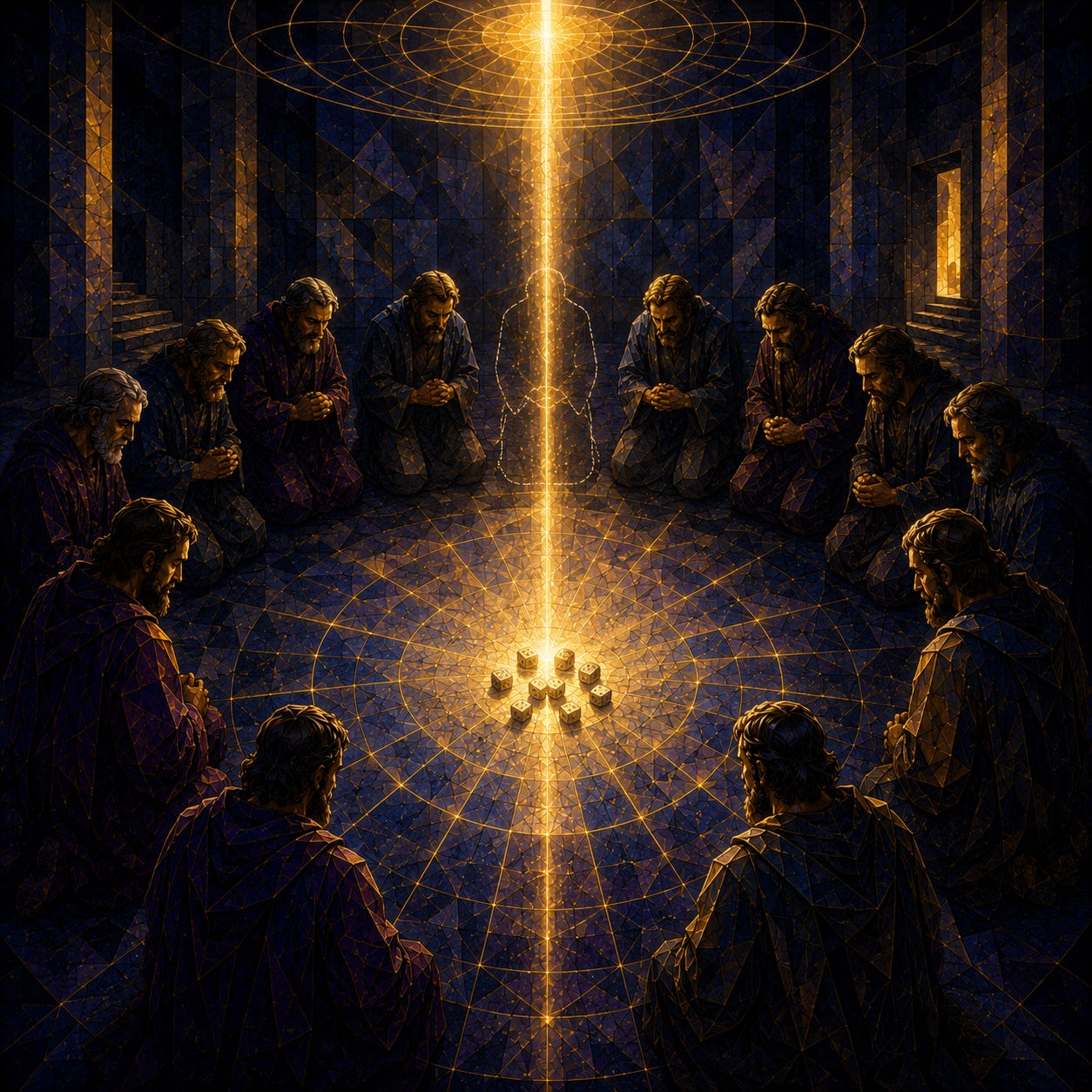
Such trust contains more peace than entire libraries of modern productivity literature.
The outcome is never random.
The Christian steward therefore works diligently, thinks carefully, studies faithfully, and acts responsibly, yet ultimately releases the obsession with sovereign control.
This is especially important at vocational thresholds.
There are moments when a man realizes the structures he once inhabited can no longer be carried by force of will alone. Sometimes this emerges through exhaustion. Sometimes through institutional corruption. Sometimes through betrayal. Sometimes through financial fear. Sometimes through the slow realization that maintaining the image of success has become its own form of dishonesty.
Acts 1 speaks directly into such moments because the apostles themselves are standing between worlds. Christ has risen. But Pentecost has not yet come. The old world is gone. The new world has not fully arrived.
And so they wait.
They pray the Psalms. They gather in one accord.
They return to the trustworthy word.
Empty speech.
The modern world runs on rhetoric detached from reality. Public relations language. Therapeutic jargon. Corporate spin. Political euphemism. Ecclesiastical branding. Sophistry everywhere.
But Scripture repeatedly drags us back to the text.
What is written?
Not what is implied. Not what is emotionally manipulated. Not what is strategically framed.
What is written?
The older one becomes, the more terrifyingly relevant this becomes. “All men are liars,” says the Psalmist. The painful wisdom of age often confirms it. Not because every person is consciously malicious, but because human beings constantly reshape reality to preserve self-image.
That includes churchmen. That includes leaders. That includes founders. That includes us.
This is why integrity increasingly becomes textual.
Put it in writing. Say what is true. Stop hiding behind atmosphere.
A contrite spirit therefore becomes not merely devotional language but administrative necessity. The man who cannot repent cannot steward authority. The man who must always justify himself eventually becomes incapable of truth.
Structurally forgiven.
The modern age treats forgiveness sentimentally. Scripture treats it strategically. A leader trapped in grievance eventually becomes administratively paralyzed. Vengeance consumes clarity. Personal betrayal metastasizes into institutional obsession. Entire organizations become distorted around unresolved bitterness.
Acts 1 does not permit this. Judas is named. The betrayal is acknowledged. The office is restored. The mission continues.
No endless fixation. No cult of outrage. No theatrical self-justification.
The kingdom moves forward because Christ remains King. This is where vocational transition becomes spiritually survivable. Many men reach middle age and discover that maintaining the system requires increasing compromise with Mammon, manipulation, or performance. The temptation becomes overwhelming either to cling tighter or to burn everything down in rage.
Acts offers a new path: release control without abandoning witness.
The founder must eventually let go. The office must outlive the personality. The mission cannot remain fused to the ego of the man who started it.
Founder syndrome is ultimately a theological problem before it is an organizational one. It assumes the institution survives through personal grip rather than divine providence.
Christ governs His Church.
Not us.
This truth is either liberating or terrifying depending upon how badly we crave control. The apostles themselves had to learn this. They wanted visible dominion. Christ gave them witness instead. They wanted immediate kingdom restoration. Christ gave them waiting. They wanted political triumph. Christ gave them Pentecost.
And Pentecost would not come until they first learned how to relinquish sovereignty.
That lesson remains painfully relevant. The Church does not advance by sword, salesmanship, marketing genius, or managerial manipulation. It advances through the proclamation of the trustworthy word under the reign of the Ascended Lord.
The Word does the work. The witness bears testimony. The Spirit awakens the dead. That is the architecture of Acts. And it remains the only stable architecture left when every human structure begins to shake. Because in the end, vocational thresholds, institutional betrayals, financial uncertainty, and personal exhaustion are not the final reality.
Christ reigns. The tomb is empty. The office endures. The Word remains.
And the Ascended Lord still governs His Church.

In the beginning was the Word…VDMA. We mostly get in our own way, because it is not the Way. “Listen to Him”. Pray, praise, and take instruction.
🔥