Philippians is a meditation on joy.
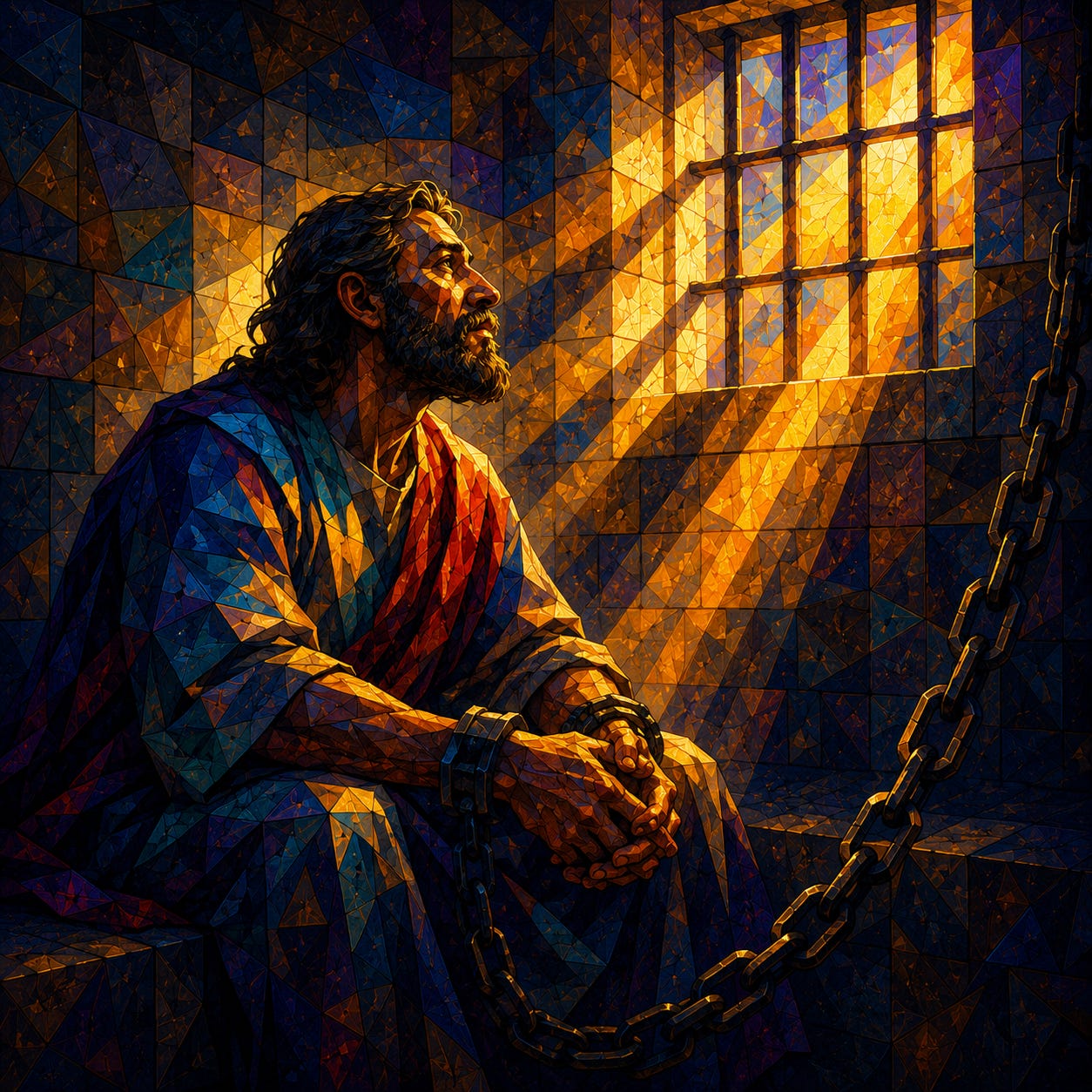
Paul writes from chains.
But before it is a lesson in joy, it is a lesson in sight. Surrounded by uncertainty, political power, personal enemies, and the possibility of execution, Paul remains clear-eyed.
He identifies himself not by rank or accomplishment but as a bondservant of Jesus Christ. The word is doulos: servant, slave, one owned by another.
Modern man imagines himself free, yet spends most of his life serving masters he did not choose. Careers, reputations, appetites, anxieties, debts, and ambitions all demand obedience. Paul begins elsewhere. He belongs to Jesus Christ. Because he belongs to Jesus Christ, he is free to tell the truth.
But the truth of Paul’s attention is that it is focused on “the Day of Jesus Christ.”
He is confident that He who began a good work will complete it until that Day. The future is not vague. History is moving somewhere. The resurrection guarantees an ending. The Kingdom is not a notion. Judgment is an approaching reality.
This becomes a first pillar.
Jesus Christ is coming back.
Paul does not measure success by comfort, influence, or immediate results. He measures everything by the Day. The present age is temporary. The Day is permanent. Once this is understood, many of the fears that dominate modern life begin to lose their grip.
The second pillar follows naturally.
Survival is not guaranteed.
Paul does not hide from this reality. He speaks openly about the possibility of death. His imprisonment is not theoretical. The empire possesses the authority to execute him. Yet he refuses to negotiate with fear.
“For to me, to live is Christ, and to die is gain.”
Paul is not speaking poetically.
Paul leaves no weapon in the hand of his enemies. Since life belongs to Christ and death leads to Christ, threat loses its power. Disarming the rulers and powers of the age, the governance of human machinations and its mighty boasting falls limp before the Day.
That does not change the third pillar.
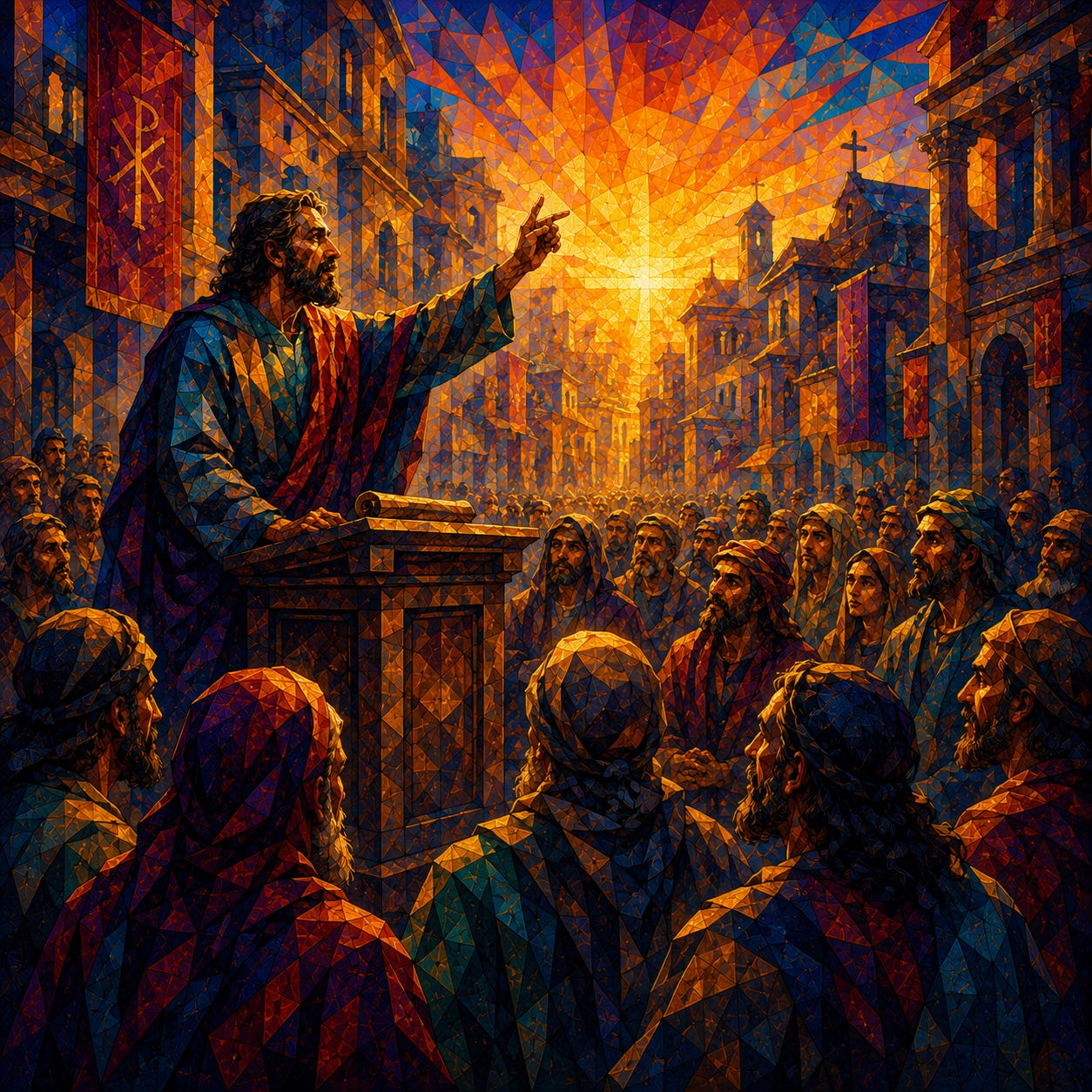
The Man of Lawlessness is loose.
Philippians 1 contains one of the most shocking assumptions in the New Testament.
Some preach Christ from envy and selfish ambition.
Their doctrine may be true. Their motives are not.
Scripture consistently warns that corruption rarely announces itself openly. It can arrive wearing the language of righteousness. Rivalry, vanity, self-promotion, and factionalism hide behind religious activity just as easily as behind politics.
Paul is neither cynical nor naïve. He understands that the battle between truth and falsehood passes through the human heart. The Christian must learn to discern appearance and reality.
Wisdom requires attention. Insight requires patience. Integrity begins by accepting that not every smiling face is sincere and not every public display is holy.
Paul refuses bitterness. Christ is still being preached. The Gospel is still advancing. The Kingdom remains undefeated. That confidence grants the fourth pillar.
Fraternity is a fellowship of trust.
Paul addresses the saints together with the overseers and deacons.
The church is not a collection of isolated spiritual consumers. We are a people.
Partnership, fellowship, prayer, affection, labor, and mutual encouragement.
Paul thanks God for them. He longs for them. He prays for them. He expects their prayers to sustain him.
This fellowship depends upon trust. And trust cannot be manufactured.
We moderns possess many forms of connection but very little trust. Philippians teaches us that Christian fellowship is not primarily about networking, entertainment, or institutional maintenance. It is about something deeper. Something wider. Something all-encompassing.
Justification
Jesus Christ is coming back.
Survival is not guaranteed.
The Man of Lawlessness is loose.
Fraternity is a fellowship of trust.
These pillars are the antidote to our latter day panic. They are clarity.
Paul’s chains are the proof. A man deprived of freedom remains free. A man facing death remains joyful. A man surrounded by rivals remains charitable. A man separated from his friends remains united to them.
Upright. Not because circumstances are easy. Not because the age is sane. Not because the future is predictable. But because the eyes of the servant remain fixed on the hand of the Master who holds every key.