

Understanding does not come before obedience.
Understanding grows out of submission.
The willingness to receive reality is a prerequisite to attempting to master it. This is why Proverbs (1:8) does not begin with abstract philosophy. It begins with parents.
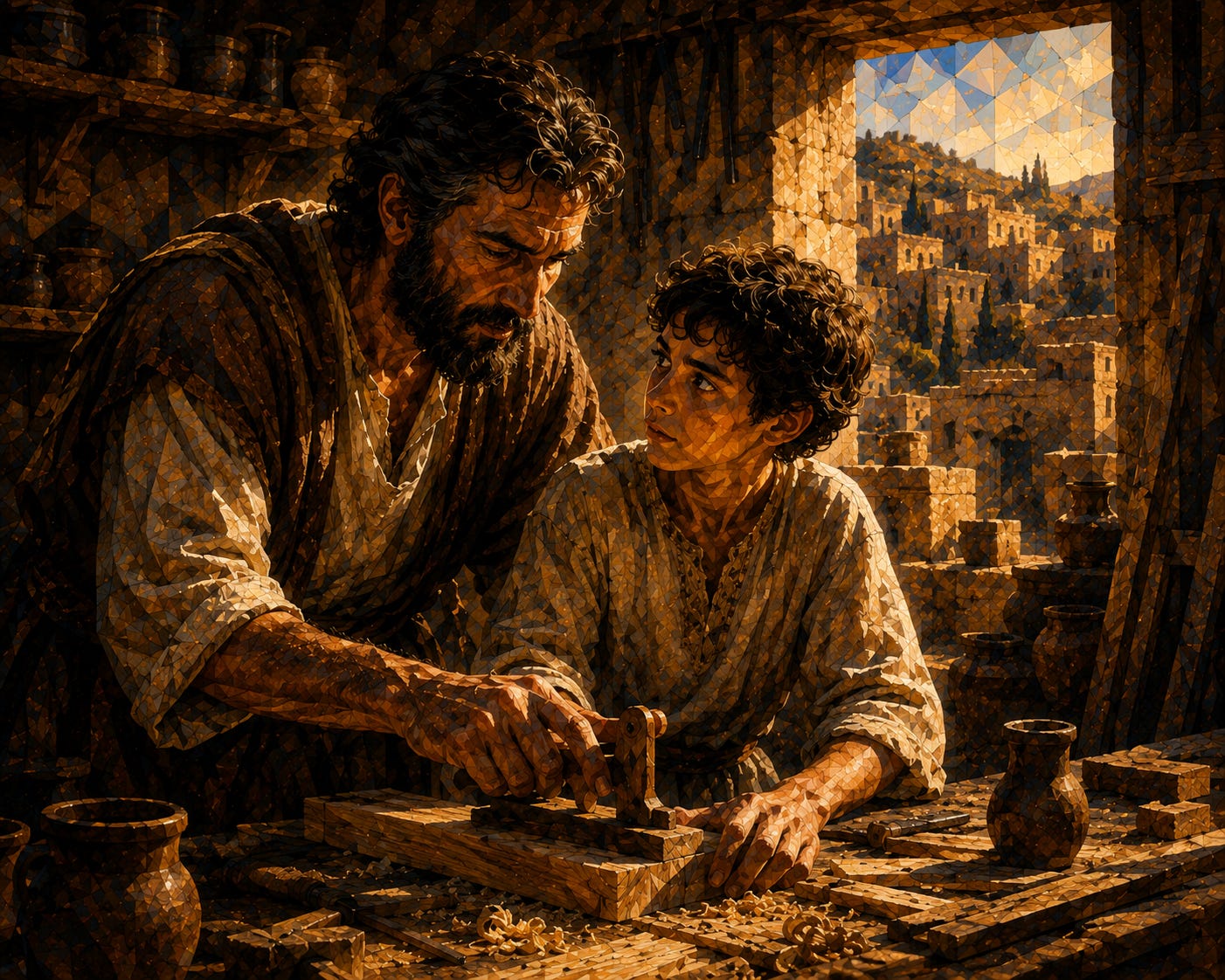
Hear, my son, your father’s instruction, and do not forsake the Torah of your mother.
Before kings. Before judges. Before priests. Before the academy.
Father and mother.
Not just because the family is society’s smallest unit. Because it is the first created icon through which the government of Jesus Christ enters history. The Commandment to honor father and mother is not just about respecting one’s folks. It is about learning how reality itself is given and received.
Every civilization must answer a single question:
Who has the authority to name the world?
Your father instructs. Your mother teaches. You listen. Only then do you begin to know.
This is the prototypical archetype of biblical philosophy.
The father is associated with the Hebrew musar—discipline, correction, formation. He establishes boundaries, distinctions, judgments, categories. His task is structural.
The mother gives torah. Not advice. Not opinions. Direction. Instruction. Authoritative teaching.
Throughout the civilizations surrounding Israel, wisdom belonged almost exclusively to elderly men, scribes, priests, or kings. Mothers raised children, but they were almost never presented as authoritative bearers of civilization’s intellectual inheritance. Proverbs quietly overturns the seen world with the facts of the nursery.
The mother’s Torah stands beside the father’s Discipleship. Not to replace it. To complete it.
The father teaches what the world is. The mother teaches what the world feels like from inside faithful obedience.
Patriarchy is often reduced to a complaint about authority. Scripture presents something richer: the Fatherhood of God giving boundary to the fruitfulness of man.
The Power of the Tongue
There is a reason we speak of a mother tongue. Vocabulary is learned first from the mother’s voice. Meaning arrives before analysis. The child does not first study grammar. He speaks. He inhabits language. Only later does he understand its structure.
This is precisely how biblical wisdom works. Submission precedes comprehension. Faith precedes philosophy. Obedience precedes analysis.

The modern academy insists that criticism is maturity. Proverbs insists that reception is maturity. One cannot judge what one has never first received.
This pattern appears everywhere in Scripture. Israel receives the Torah before understanding its depth. The disciples follow Jesus Christ long before they understand the Cross. Children obey parents years before they can explain why their parents were right. The pattern is neither accidental nor temporary. It is woven into creation itself.
Reality is received before it is interpreted.
This is why rebellion always presents itself as premature autonomy. The serpent does not first attack morality. He attacks mediation. “You shall be like God.”
Immediate knowledge. Immediate judgment. Immediate independence. No father. No mother. No received word. Only the isolated self determining reality. Every revolution since Eden has followed the same grammar. The promise changes. The syntax never does.
This explains why Proverbs immediately moves from parental instruction to the voice of sinners. “My son, if sinners entice you, do not consent.”
There are only two voices.
The household or the gang. The father or the mob. The mother’s Torah or the crowd’s slogans.
Every generation inherits language from someone. No one invents himself.
The criminals in Proverbs offer everything counterfeit households always offer: adventure, power, wealth, and belonging. The shared purse is a parody of inheritance. The violent brotherhood is a parody of family. Sin never abolishes creation. It counterfeits it. Evil is parasitic. It does not build. It steals.
So Lady Wisdom takes to the streets. From inside the household, home alone was never the destination. The mother’s Torah is not her own. It is the reception of public wisdom under the rule of the father’s justice.
The child is first a citizen. Then, one day, a ruler.
Proverbs trains kings.
Wisdom laughs when calamity comes. Truth always outlives illusion. Every false philosophy eventually collides with creation. Every counterfeit order eventually consumes itself. The wicked finally eat the fruit of their own way because reality cannot be permanently mocked. The universe remains obedient to its Creator even when man refuses to be.
Jesus Christ fulfills this entire pattern. He is the Wise Son. He receives the Father’s will without reservation. “My food is to do the will of Him who sent Me.”
His understanding never precedes His obedience. His obedience reveals His perfect understanding.
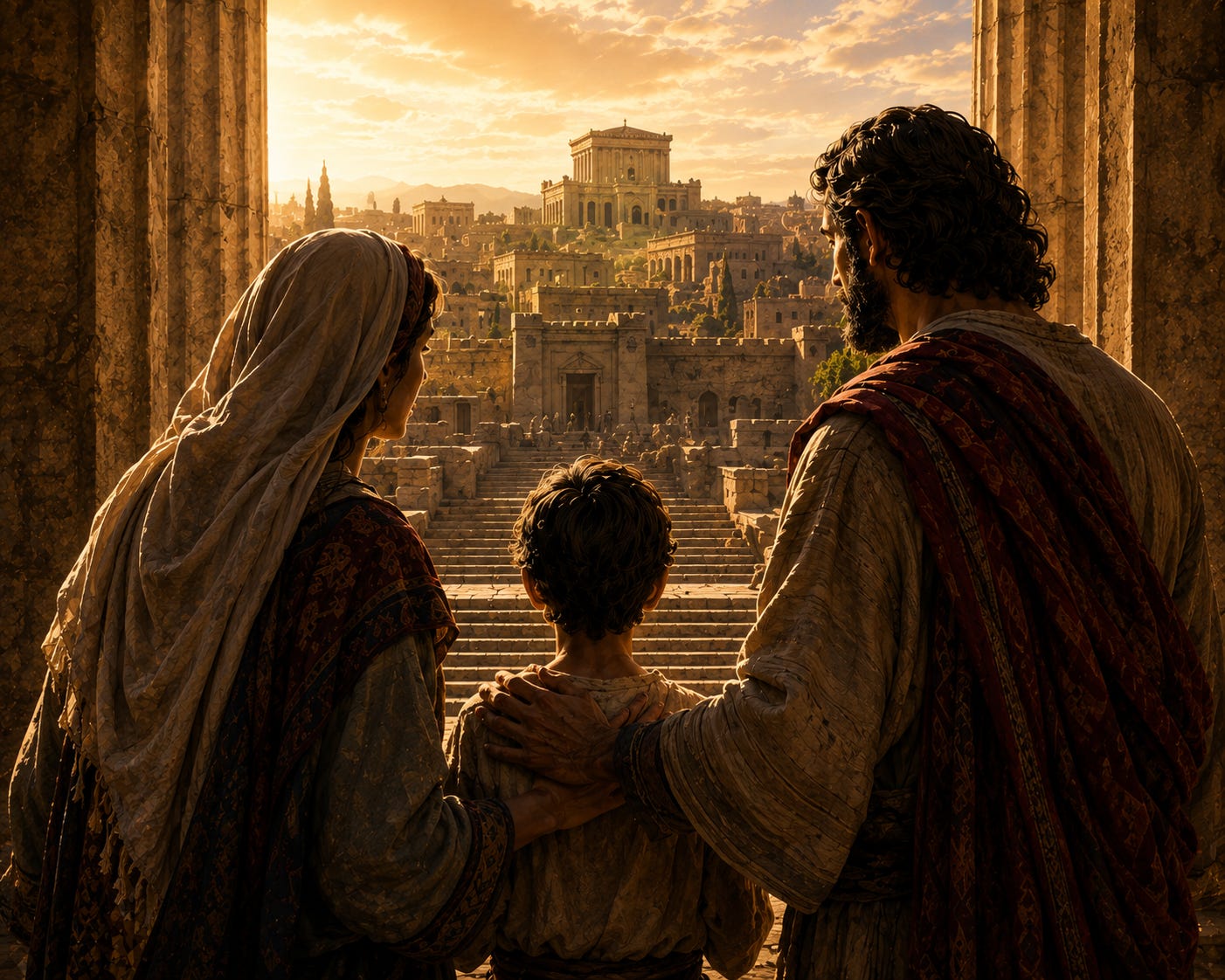
The Church therefore never invents truth. We receive it. We speak what we have heard. We hand down what was entrusted.
The Gospel comes to us as the Torah of Mother Church. The Church gives us language. The Church takes us into her prayers. The Church forms our imagination with her song. The Church nourishes us before we possess the maturity to grasp on our own.
This is not opposed to the Fatherhood of God. It is its earthly habitation. The Father begets. The mother carries. The Father names. The mother agrees with her teaching. The Father establishes. The mother follows as exemplar.
So, biblical philosophy begins not with autonomous reasoning but with covenantal reception. Only the obedient become truly free. Only those willing to receive the Words become capable of genuine creativity. Only those who submit to forms learn why those forms exist.

So did Eve, the one who teaches, determine that the law from the father wasn’t true or something to fill her flesh was missing? She decided to go to a counterfeit instructor. Could Satan not directly attack justice or the law giver?