

Unhindered: Shipwrecks, Households, and the Providence of God
The final chapters of Acts do not read like a triumphal march. They read like collapse.
The Apostle Paul drifts toward Rome as a chained prisoner aboard a dying ship. The sea strips the illusion of human control away piece by piece. Sailors panic. Soldiers calculate survival. Cargo disappears into the abyss. The sky itself goes dark for fourteen days. By every visible metric, the mission is ending in failure.
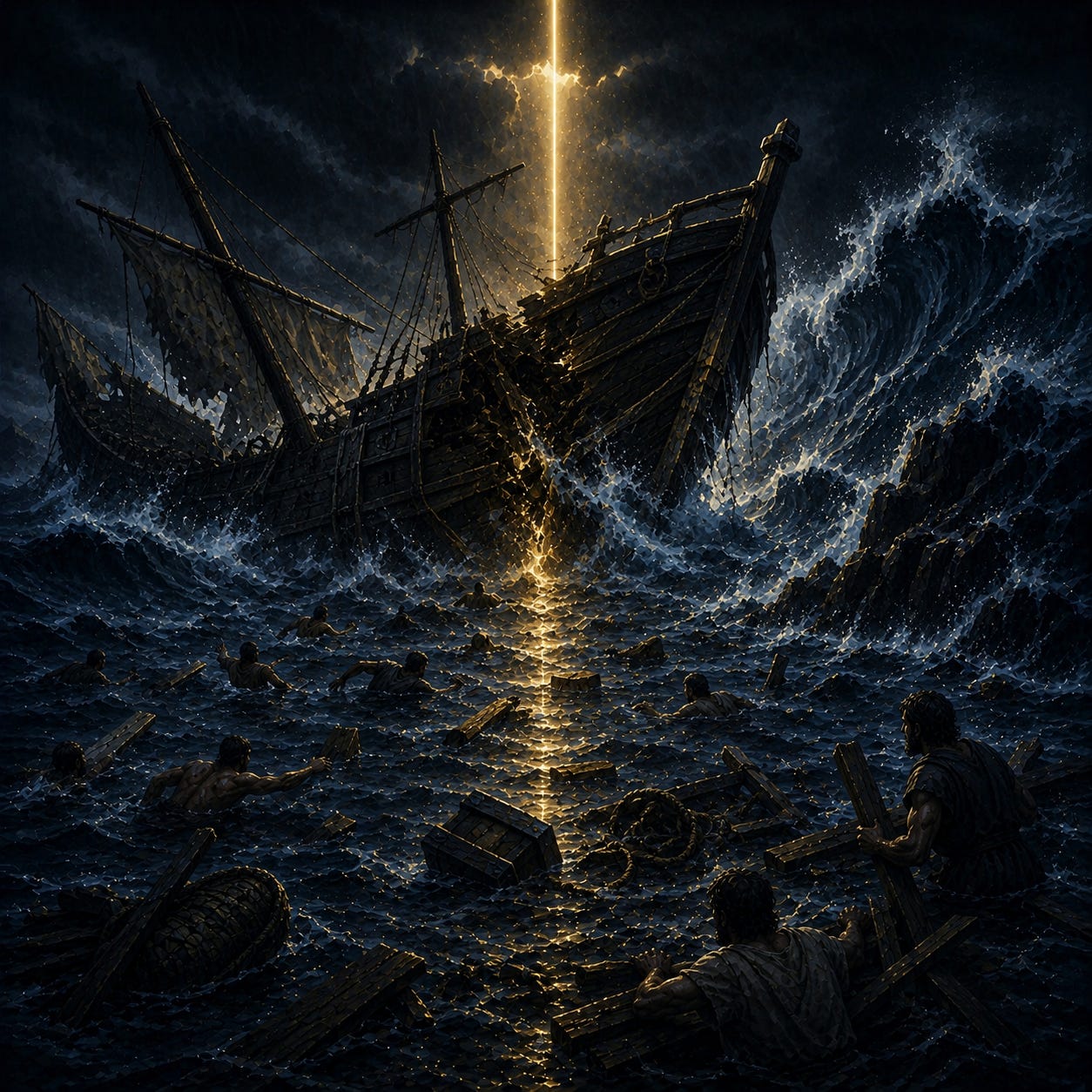
Yet Acts closes with one of the boldest declarations in Scripture: the Word of God remained “unhindered.”
That is the architecture of the Kingdom of God. The ship may break. The mission does not. The storm may swallow the vessel. The promise survives the waves.
Luke’s account is not merely history. It is a revelation of how providence works in the Christian life. Again and again throughout Acts 27–28, death and resurrection appear in miniature form. Chaos rises. God answers. Something collapses. Something greater emerges from the wreckage.
The pattern is older than Paul.
Joseph descends into prison before rising to authority. Israel passes through the sea before entering freedom. Jonah falls into the deep before reaching Nineveh. Jesus Christ Himself passes through death before resurrection glory.
Acts closes by showing that same pattern unfolding through the life of His apostle.
The Shipwreck: When God Breaks the Vessel but Keeps the Promise
After two weeks trapped inside a storm so violent that experienced sailors abandoned hope, the ship carrying Paul finally approached land.
What followed was controlled catastrophe.
The sailors cut the anchors loose. The rudders were freed for one final maneuver. The mainsail was raised. Then the vessel drove headlong into a shoal where two seas met.
Luke’s description is startlingly physical. The prow stuck fast. The stern remained exposed to the violence of the surf. Wave after wave struck the isolated vessel until the ship tore apart beneath the pressure.
The image is almost anatomical. In combat disciplines, a joint is broken by isolation. Lock the shoulder. Expose the elbow. Apply force until the structure snaps. The sea performed the same operation on the ship.
And still, not one soul perished.
Some swam. Others clung to broken boards and fragments of wreckage. But every one of the 276 passengers reached shore alive exactly as God had promised through Paul.
The vessel died so the people could live.
Think about that.
God did not promise the preservation of the ship. He promised the preservation of the mission. Christians often confuse those categories. We assume providence means the avoidance of collapse. Scripture repeatedly teaches the opposite. Sometimes God allows the structure itself to break apart so that His faithfulness becomes unmistakable.
The storm was not evidence of God’s absence. It was the stage upon which His promise was displayed.
The Strange Protection of Paul
One detail in the account is easy to miss. As the ship disintegrated, the soldiers prepared to kill the prisoners. Roman law held guards personally responsible for escaped captives. Executing the prisoners before they could flee was standard logic. But the centurion intervened.
Why?
Luke tells us plainly: he wanted to save Paul.
That shift is astonishing. At the beginning of the voyage, Paul was merely another prisoner under Roman custody. By the end, the Roman officer had learned to trust the judgment, courage, and spiritual clarity of the chained apostle more than the instincts of seasoned sailors. The empire had begun protecting the messenger it intended to transport in chains.
Acts quietly prepares us for the irony that defines its ending: Rome would eventually provide legal protection and armed guards for the very preacher proclaiming a Kingdom greater than Caesar’s.
The Viper and the Failure of Human Judgment
The storm ended, but the trial did not. Cold rain fell over Malta as the survivors gathered around a fire built by the islanders. Paul, still acting as servant even after surviving the wreck, gathered sticks for the flames.
Then the viper struck.
Driven out by the heat, the snake fastened onto his hand before the watching crowd. Immediately the islanders interpreted the event through the lens of pagan justice. Surely this man was a murderer. The sea had failed to destroy him, so divine vengeance had finished the task through the serpent’s fang.
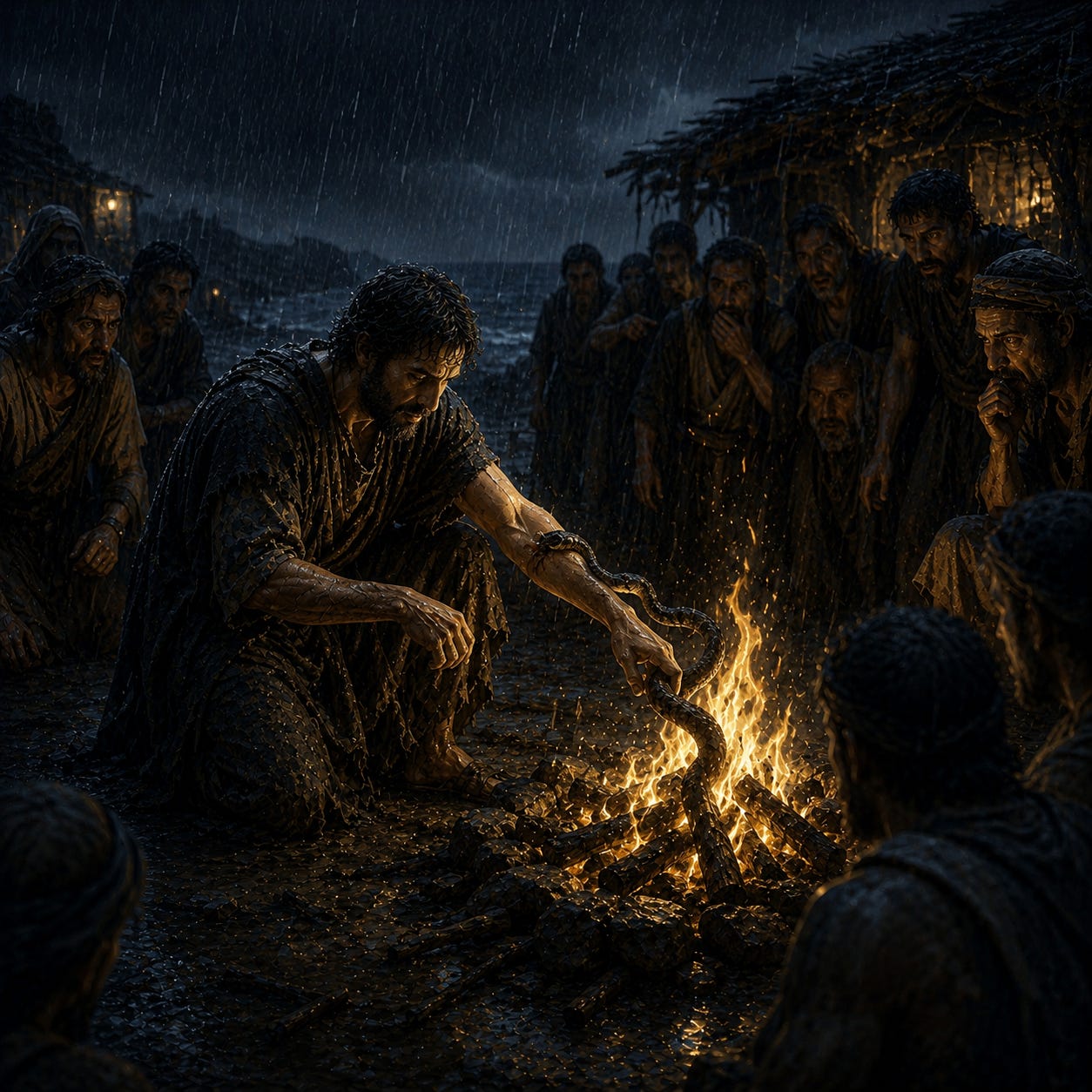
Paul simply shook the creature into the fire.
Nothing happened. No swelling. No collapse. No death.
The crowd instantly swung to the opposite conclusion: he must be a god. Human judgment often oscillates between condemnation and idolatry because it lacks the patience to see clearly. The crowd interpreted Paul entirely through circumstances. First the storm condemned him. Then survival exalted him.
Neither conclusion understood the truth. Paul was neither cursed nor divine. He was a servant of Jesus Christ whose mission was not yet complete.
The deeper point of the viper narrative is not spectacle but providence. The messenger of God is untouchable until God’s appointed work is finished. The fang could not override the vocation given by Christ. Jesus had already promised Paul that he would testify in Rome. Therefore Malta could not become his grave.
The serpent’s bite became another declaration that creation itself cannot prevent the fulfillment of God’s Word.
Resurrection Life on the Island
The miracle on Malta opened doors. Paul was welcomed into the house of Publius, the chief official of the island. There he found Publius’s father bedridden with severe illness, suffering from fever and dysentery.
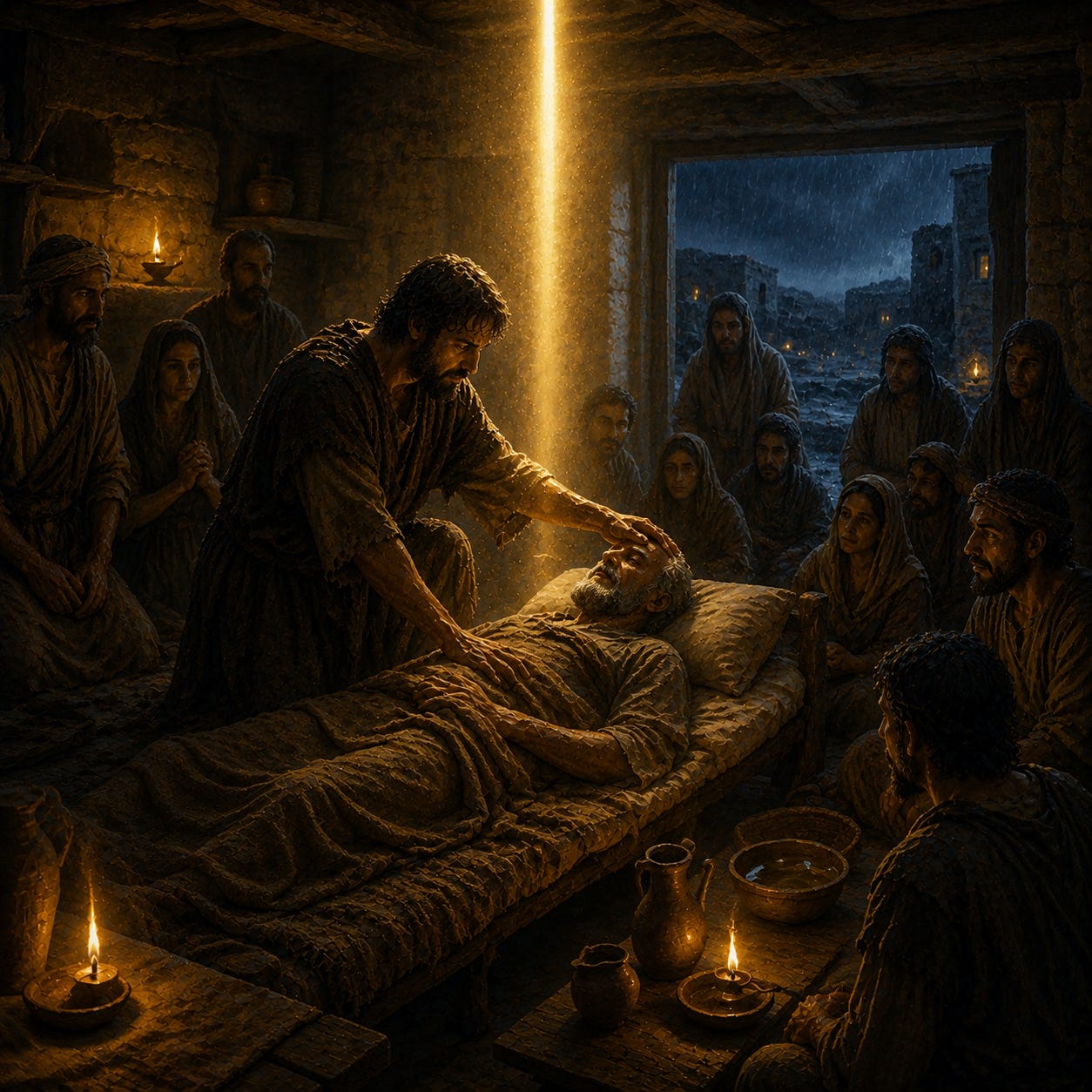
Paul entered not as physician but as witness. He prayed. He laid hands upon the man. Healing followed. Soon the island filled with the sick coming to receive mercy.
Acts deliberately slows down here. After storms, shipwrecks, and venom, Luke gives us a picture of restoration. Paul becomes a living emblem of resurrection life in the middle of a forgotten outpost of the empire.
The Kingdom of God does not move only through capitals and thrones. It appears in islands, prisons, roadside meetings, rented houses, and ordinary tables. The Gospel advances through the quiet persistence of Christ’s people carrying mercy into broken places.
The Ship of the Gemini
After wintering on Malta, Paul boarded another Alexandrian vessel bound for Italy. Luke records an unusual detail: the ship bore the figurehead of the “Twin Brothers,” Castor and Pollux of Gemini mythology.
At first glance, the reference feels incidental. It is not. The ancient twins symbolized paradox. One mortal. One immortal. One earthly. One heavenly. In many ways, the image mirrors the entire structure of Paul’s journey.
Acts 27–28 constantly holds together two realities at once. Paul is prisoner and preacher. Weak and unconquered. Shipwrecked and preserved. Near death and yet carrying resurrection wherever he goes.
Christian existence itself unfolds inside that tension. The believer lives in mortal flesh while already belonging to an eternal Kingdom. We inhabit a world still marked by storm and decay while carrying the promise of resurrection within us.
The ship of the Twin Brothers becomes an unintended symbol of the Christian condition itself: death and life moving side by side until Christ brings all things to completion.
Rome and the Unhindered Word
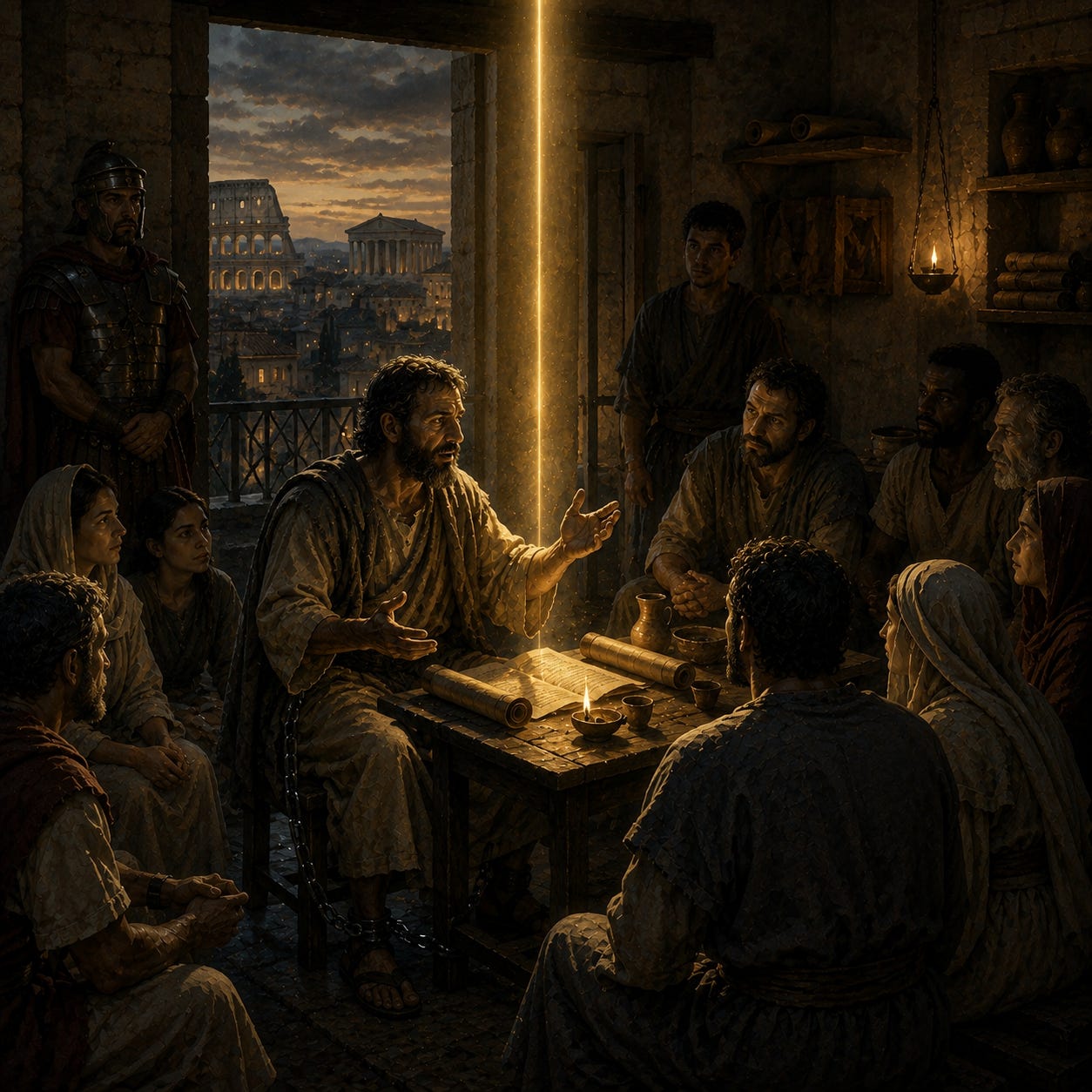
At last Paul arrived in Rome. And here the final irony of Acts reaches its climax. The apostle entered the heart of the empire not as conqueror but as captive. Yet Rome itself provided his protection, and his audience.
Paul was permitted to live in a rented home under guard. There he received visitors freely and proclaimed the Gospel openly.
Luke’s final emphasis is extraordinary. Paul preached “with all confidence and without hindrance.” That phrase lands with force only after everything that preceded it.
The sea could not hinder the Word. The shipwreck could not hinder the Word. The serpent could not hinder the Word. The chains could not hinder the Word.
Caesar’s empire could not hinder the Word.
Acts ends without narrating Paul’s death because the true subject of the book was never merely Paul. The subject was the unstoppable advance of the Kingdom of God through the risen Jesus Christ. Empires rise and collapse. Ships sink. Bodies weaken. Storms rage. But the Gospel continues moving.
The Household and the Grain of Creation
This same providential order appears not only in Acts but throughout Scripture’s vision of ordinary life. Modern people often imagine biblical domesticity as passive or restrictive because we have forgotten how Scripture speaks about vocation, labor, and stewardship.
The woman of Proverbs 31 is not idle. She is industrious, strategic, economically perceptive, and deeply rooted in the fear of the Lord. She seeks wool and flax. She manages trade. She purchases fields. She plants vineyards. She provides for her household and extends mercy to the poor.
Her strength is not performative rebellion against order. It is fruitful participation within God’s created design. Scripture presents the household as a place where love takes visible form through labor, trustworthiness, provision, mercy, and endurance. The home is not beneath the Kingdom of God. It is one of its primary theaters.
The Proverbs 31 woman is praised because her works bear fruit. Her husband trusts her. Her children rise and call her blessed. Her life strengthens everyone connected to her.
This is not shallow sentimentalism. It is covenantal realism. The Bible consistently rejects the fantasy that spiritual life can be detached from embodied faithfulness. Christianity is not Gnosticism. God cares about labor, hospitality, stewardship, generosity, marriage, food, clothing, children, and ordinary fidelity because God created human beings as embodied creatures.
The same providence that carried Paul through the storm also governs kitchens, tables, fields, workshops, and homes.
The Paradox is the Point.
Providence rarely looks triumphant while you are inside it.
Acts ends with a chained apostle preaching freely inside Rome. To the sailors, the voyage looked doomed. To the islanders, the viper looked fatal. To Rome, Paul looked defeated.
But heaven saw something different entirely.
The Kingdom of God was advancing through every storm.
This is why Christians can endure suffering without surrendering hope. We are not promised calm seas. We are promised the presence of Christ within them.
The ship may break apart beneath us. But the Word of God remains more buoyant than the wreckage. Jesus Christ is risen.
The Gospel cannot drown.


I find these meditations and teachings to be wonderfully edifying. This one is especially so. Thank you so much Pastor Fisk.
This gives me good meat for prayer. Thank you.