

This week I watched a video on X featuring David Lynch teaching about peace experienced through Transcendental Meditation.
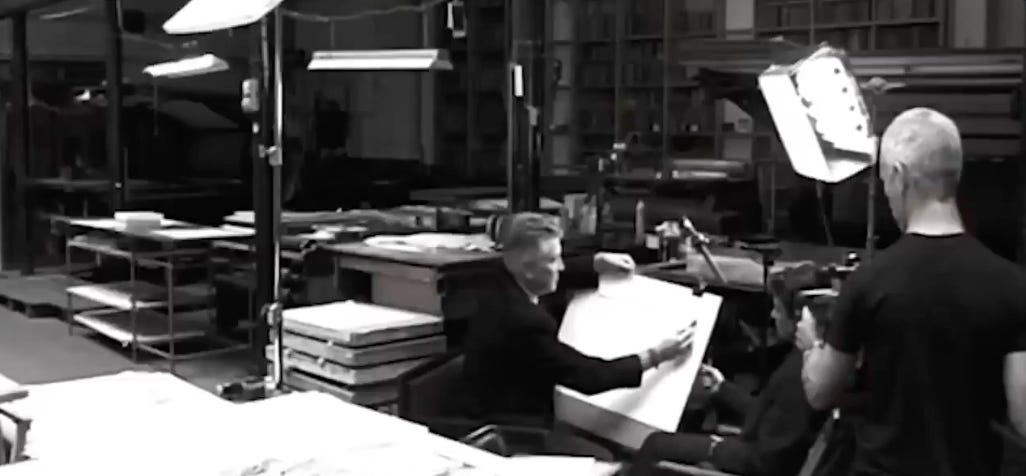
He spoke of entering a vast field, a benevolent quiet beneath the noise. I felt something close to jealousy, not because I want his metaphysics, but because I want the feeling of rest.
That reaction exposed a fracture I have felt for years. We teach forgiveness, but we often neglect inhabitation. We explain justification. We defend doctrine. But we do not always practice communion. We promise peace, yet train ourselves in propositions rather than presence.
So when someone outside the Church speaks of embodied calm that reliably “works,” it can be unsettling.
Facts are Facts
The question is not whether contemplation produces real effects. It does. The natural biochemistry of the human body responds reliably to stimuli. If you sit in silence for thirty minutes every day with your eyes closed, you will inevitably calm down and grow more comfortable with the experience.
But the question is not, “are there techniques for rest?” The question is how to center our present life in the flesh within the reality of Christian peace. Coming to terms with yourself is not the same phenomenon as being born again. Christianity is not another version of the world’s religions. Faith in Jesus Christ is categorically different.
Unambiguous Change
Meditation, in its better forms, trains attention. It quiets limbic reactivity. It lowers narrative churn. It produces spaciousness and non-reactivity. That is not illusion. It is not fake, and it should not be dismissed. It is creational architecture. It is design. The human nervous system can practice coherence. The mind can learn stillness. The flesh can be taught to loosen its grip on spiraling thoughts and feelings.
But coherence is not reconciliation. Regulation is not regeneration.
Jesus does not invite Nicodemus to calm down. He tells him he must be born from above. Born is not a metaphor for enlightenment. It is ontological language. Origin changes. Source changes. Life comes from somewhere else. Somewhere new.

“What is born of flesh is flesh. What is born of Spirit is spirit.”
No technique produces this. You cannot monetize it in an app. You cannot quiet your ego enough to strong-arm the Spirit.
Meditation works on the existing self.
Jesus Christ installs the source of life. God.
The Great Divide
Transcendental practice modifies consciousness. The Kingdom gives new birth. Paul drives the distinction deeper in Romans 8: “The mind set on the Spirit is life and peace.”
Not the mind emptied. Not the mind transcended. The mind set. Directed. Oriented. Transformed. In Spirit.
The Spirit of God is not ambient energy. He is a person. He dwells. He leads. He bears witness. He intercedes. He mortifies the compulsions of the flesh. He convicts. He cries out. He groans.
This is not detachment from desire. It is reordered desire. Not “there is no will and all is one,” but “Thy will be done—lead us.” Not the dissolution of identity. The granting of status: sonship.
Meditation seeks non-attachment. Jesus Christ seizes your heart. Meditation dissolves your tension. The Spirit declares adoption. Peace in Christ is not neutrality toward this world. It is war against the deceptions of the Evil One.
Fraternity
You belong to the Father through the Lordship of Jesus Christ. That difference cannot be flattened or flattered by practices that merely improve your feelings. In fact, the New Testament flatly refuses the notion that constant peace will be automatic once doctrine is delivered.
In Philippians 4, Paul names the habit: prayer, petition, thanksgiving.
He does not negate disciplined attention: “think on these things.” Obedience is repetition: “what you have seen and heard, practice.” With a promise: “And the peace of God will guard your hearts and your minds in Christ Jesus.”
Peace guards. The Spirit stands watch. God takes up residence inside of you. You are not dissolved into yourself or dispersed into the sea of everything. You are granted a posture of communion and called to duty in the body of the Man who has been taken up into God.
By Prayer
The Psalter assume this. Stillness is commanded. Waiting is learned. The soul is addressed. Fear is named and refused. The works of God are remembered. The story that never ends is told anew.
Israel’s prayer book is not abstract theology. It is a catechism of embodiment as trust.
In Matthew 6, Jesus names worry as a spiraling sin, then counters it with alternative contemplations: consider the birds; seek first the kingdom; refuse tomorrow’s haste.
This is not stoicism.
This is faith.
Stronger than Strength
The problem is not that the Bible is thin. The problem is that much of modern Christianity has become conceptual instead of participatory. We preach grace but neglect abiding in favor of excitements. We defend justification but neglect the formation of repentance as a posture. We teach sinners to confess but do not teach them to turn and live.
So seekers go elsewhere for experience, not because Jesus Christ is insufficient, but because we don’t act like we believe He is actually present.
I am not advocating a knock-off caricature of meditation, but I do believe attention should be trained. I believe mercy triumphs over mantras, but I also believe the body should be regulated.
I believe discipline means more than calling natural realities “spiritual.” Meditation is like brushing your teeth. It calms the heart, lowers impulse, and gives space to remember who you are. But who are you?
Only Jesus Christ reconciles that with the answer: man greatly loved. Only the Spirit produces holiness without the need for yet more self-sacrifice. Only the Father can be trusted even on the days your efforts fail.
Not Silence
Belonging.
Not transcendence. Ascension.
Not enlightenment. Adoption.
Not escape.
Born Again
If Christianity looks weak, it is not because Christianity lacks depth. It is because we gray and latter saints have reduced faith to a theory of pardon detached from expected habitation. We have chained communion to a momentary event and relegated baptism to a one-time experience. We have transformed grace into an idea, a math formula, and demanded cognitive ascent as the entry fee to sophistication, forgetting that if we have not love, we are nothing.
This morning I sat in the dark before the sun rose with my eyes closed for thirty minutes. No phone. No inputs. No works.
My cat climbed onto my lap. I did not begrudge myself my hot coffee.
I let thoughts and feelings come and go. I remembered the good and the bad. I worried and I prayed. I felt, and I let it go. I did not ignore, and I did not demand. Then I read a proverb. Found a Red Letter. Prayed a Psalm out loud.
I lived. I did not need more.
When it was over, that was enough. Tomorrow will take care of itself.

Great message, today! Thank you for your wonderful writings. :)
Thank you. We don’t live chasing life-hacks. Christ is sufficient and overflowing.