

The Disincarnation of the West
The history of philosophy is often narrated as a triumphal march toward enlightenment: reason over myth, liberty over tyranny, critique over dogma. But another reading is possible. The history of modern Western thought is also the slow exhaustion of a civilization’s confidence in its own foundations.
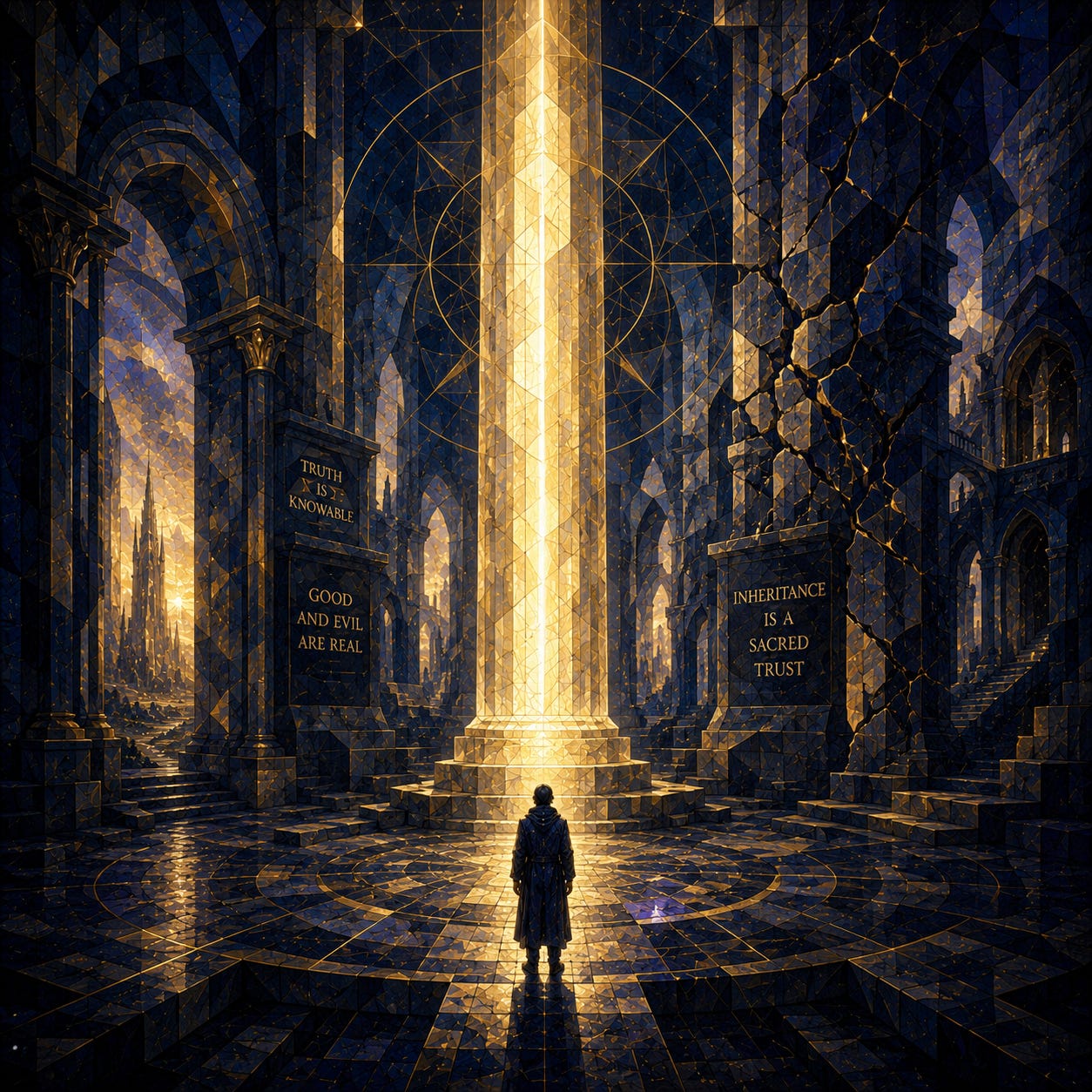
The West did not collapse first in its politics.
It did not collapse first in its universities, bureaucracies, corporations, or media systems. Those are late-stage symptoms. The deeper fracture happened when the Western mind began to lose the courage to say that truth exists, that good and evil are real, and that inheritance is a sacred responsibility.
That loss did not arrive all at once. Certainty dissolved into skepticism. Skepticism dissolved into irony. Irony dissolved into paralysis. What modernity often calls progress has frequently been something darker: a long retreat from metaphysical courage.
Before the great inversion, Western thought still produced architects of clarity. Descartes sought certainty through disciplined reason. Pascal saw both the grandeur and misery of man. Tocqueville understood that democracy cannot survive merely by procedure, but requires virtue, restraint, and transmission. These men disagreed profoundly, but they still operated inside a common assumption: reality is intelligible, truth is discoverable, and civilization must be cultivated or it decays.
That assumption was once the load-bearing wall of the West.
Then came the postwar wound. France, humiliated by occupation, shaken by the collapse of empire, disillusioned by nationalism, and bored by bourgeois prosperity, produced a new intellectual class. The children of civilization turned their intelligence against the civilization that formed them. The question shifted from “What is true?” to “Who benefits from calling this true?”
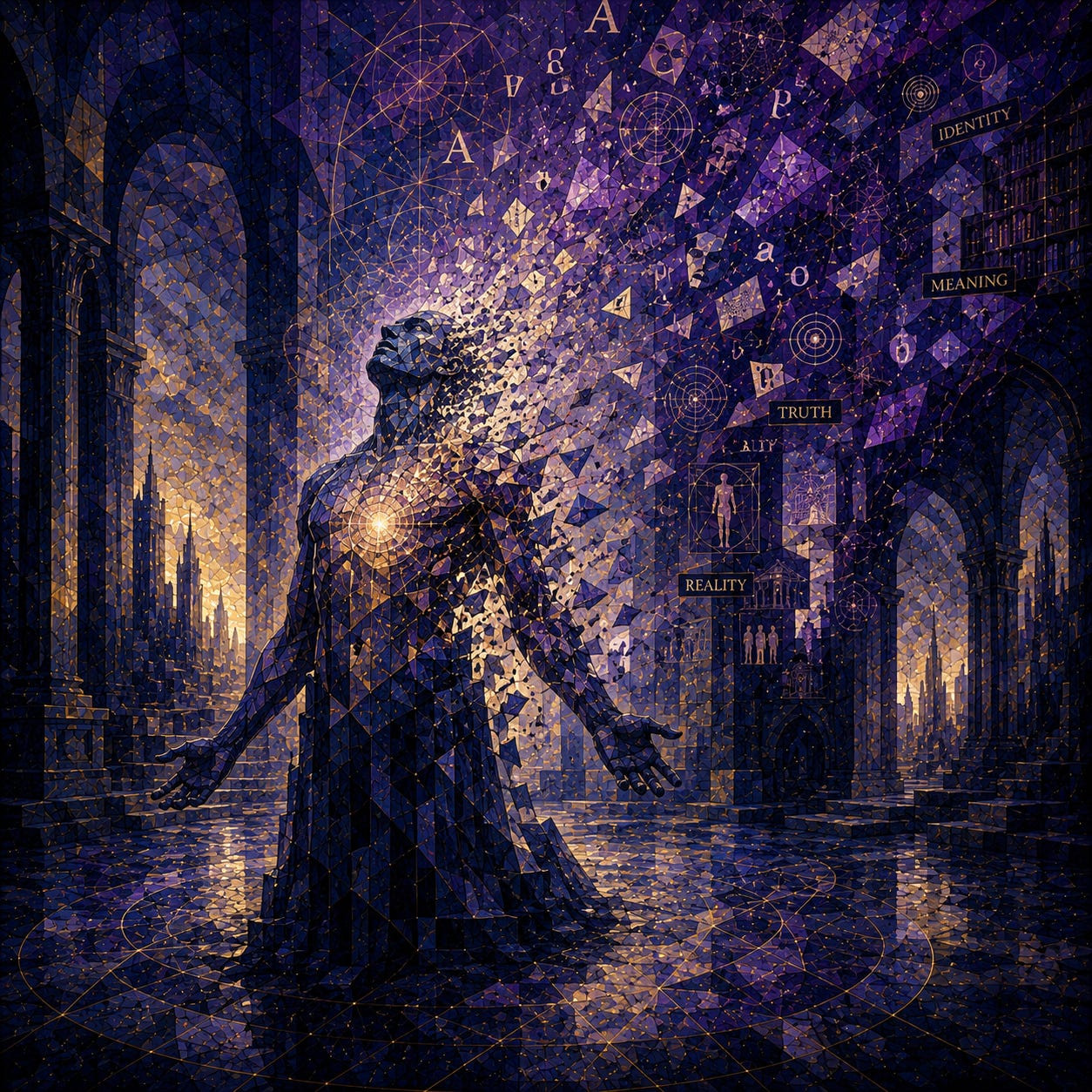
Michel Foucault taught the modern mind to see institutions as masks for power. The prison, the school, the clinic, the asylum, sexuality itself; all became structures of domination disguised as rational order. Jacques Derrida taught the mind to distrust stable meaning. Texts no longer spoke with authority. Meaning drifted, slipped, deferred, fractured. Gilles Deleuze taught suspicion toward rootedness itself. Hierarchy, permanence, identity, and order gave way to flux, multiplicity, desire, and becoming.
Each man saw something real. Institutions do corrupt. Language is not always simple. Human life cannot be reduced to brittle categories. But partial truths become poison when enthroned as total vision.
The enthroned thing was suspicion.
When French Theory crossed the Atlantic, it entered American soil uniquely prepared to weaponize it. America had immense technological power, immense economic energy, and immense unresolved guilt. It also retained a fierce moralism increasingly severed from Christian metaphysics. The result was explosive. What had been intellectual play in Paris became administrative theology in America.
Judith Butler radicalized identity into performance. Edward Said turned postcolonial critique into permanent suspicion of the West. Kimberlé Crenshaw fused the currents into intersectionality, where moral authority increasingly derived from proximity to victimhood. Universities catechized the system. HR departments operationalized it. Media moralized it. Bureaucracies enforced it.
The machinery of power remained.
But the civilization lost confidence in the legitimacy of its own existence.
This is why the modern West struggles to answer basic questions without embarrassment. What is a woman? What is a nation? What is marriage? What is beauty? What deserves preservation? What obligations transcend preference? What truths remain true regardless of consensus?
A civilization that cannot answer such questions does not become compassionate. It becomes weightless. And weightless civilizations cannot endure pressure.
The deepest irony is that deconstruction depends on the very structures it seeks to dismantle. It functions brilliantly inside cathedrals built by others. It requires stable institutions, literate populations, inherited moral capital, and enough residual order to prevent immediate collapse. It can expose hypocrisy. It can unmask corruption. It can mock piety. It can reinterpret beauty as propaganda.
But it cannot build cathedrals of its own.
A generation trained only to suspect cannot easily create. It can interrogate loyalty, but it cannot generate loyalty. It can dismantle inheritance, but it cannot transmit one. It can critique standards, but it cannot sustain excellence. It can analyze power everywhere and see beauty nowhere.
This is where Silicon Valley optimism fails. Technology cannot save a civilization suffering from metaphysical exhaustion. Artificial intelligence, biotech, crypto, automation, and endless connectivity are multipliers of capacity, not sources of meaning. Power without moral architecture does not heal fragmentation. It accelerates it.
The crisis is not that the West lacks intelligence. The crisis is intelligence severed from transcendence.
Builders require faith in permanence. Fathers require faith in transmission. Artists require faith that beauty reveals something real. Scientists require faith that truth is discoverable. Citizens require faith that sacrifice for future generations means something.
Without those faiths, civilization becomes a machine with no soul, a bureaucracy with no telos, a market with no moral horizon, a classroom with no inheritance, a people with no memory.
The answer is not reactionary rage. It is not nostalgia. It is not another ideological purification campaign.
The answer is reconstruction.
Patient, disciplined, reality-bound reconstruction.
The West must recover the three pillars it dynamited:
truth is knowable;
good and evil are real;
inheritance is a sacred trust.
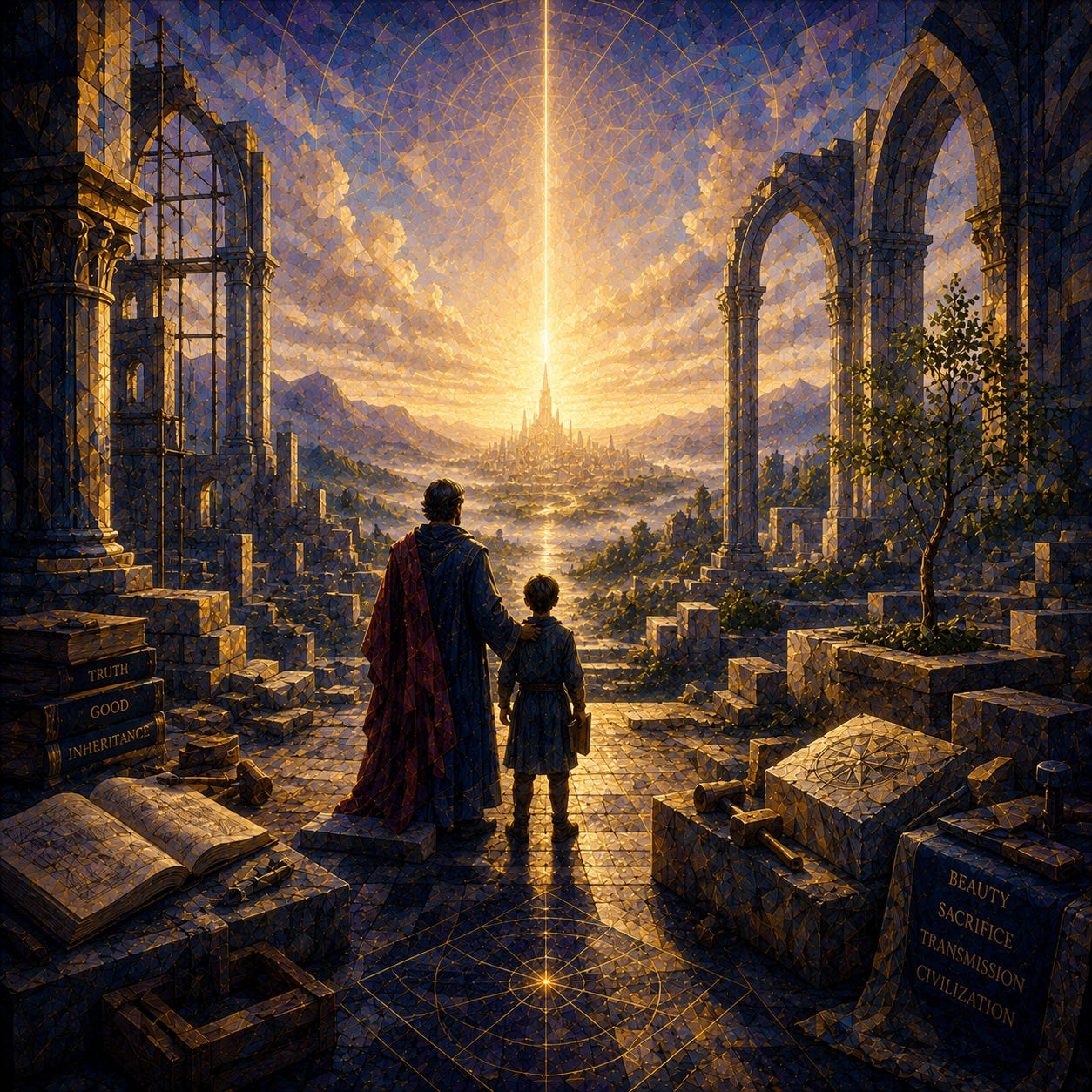
Not every past thing deserves preservation. Not every institution deserves defense. Not every hierarchy is righteous. But no civilization survives if it teaches its children that all foundations are merely oppression wearing old clothes.
Civilization requires more than critique. It requires gratitude, courage, judgment, correction, beauty, sacrifice, and transmission.
You cannot inhabit a critique. You must inhabit a world.
And worlds require foundations.

Go Deeper with

Very well stated. Thank you.
100% - I prefer "Reformation" over "Reconstruction" - but certainly nothing worth quibbling over.